
Project Details
- Project Location
- Baotou, Inner Mongolia, China - an industrial city whose economy is built around steelmaking, mining and heavy haulage
- Configuration
- Ten XY-8-P / PB batch-type horizontal rotary pyrolysis units, each with a 12 TPD design capacity
- Combined Design Capacity
- 120 TPD (10 units × 12 TPD, design values)
- Feedstock
- Waste tires (whole or cut, loaded in batches)
- Project Year
- 2019
- Original Project Status
- Delivered and commissioned in 2019
- Current Operating Status
- Not independently verified
- Supplier
- Shangqiu Jinpeng Industrial Co., Ltd. (PYROJIN)
Opening
Ten batch reactors in one yard is a statement about capital. A working ten-unit schedule is a statement about operations - and the two are not the same. The Baotou project, delivered and commissioned in 2019, is an archive case about that difference: ten 12 TPD batch pyrolysis units in an Inner Mongolian steel-industry city, sized against a dense waste-tire catchment and organized so the installed hardware turns on a daily rhythm. As a procurement list, the site offers 120 TPD of design capacity. As a production plan, it is a rotation - and the rotation, not the reactor count, makes it a plant rather than a yard of machinery.
Project Background & Configuration Logic
Baotou is an industrial city. Steelmaking, mining and heavy haulage concentrate large vehicles and large tires within a small radius, and an industrial workforce, power, fuel and transport corridors come with the territory. That is the environment a ten-unit site was designed to sit in: a catchment dense enough to justify a large appetite, and infrastructure strong enough to support it.
The configuration was designed around that catchment logic: ten batch units at 12 TPD design capacity each give 120 TPD combined - a scale that only makes sense where intake can be sustained in volume and cadence, because batch plants cannot smooth a weak supply by running faster. In an industrial region, tire arisings are a year-round stream of truck, bus and off-road tires, and the site was laid out to receive them whole or cut and stage them toward the reactor line. The scale was set by what the surrounding economy could feed, not by the number that filled the yard.
Core Technology & Production Analysis
Feedstock Density and the Appetite of Ten Units
A combined design capacity of 120 TPD is a large appetite, and batch equipment does not forgive an empty reactor: each unit is committed to a fixed cycle once loading starts. In general design terms, tire streams in an industrial region skew toward larger diameters - haulage and off-road tires - which carry a higher oil-yield reference range than passenger tires while contributing more steel wire per tonne. That mix raises the wire fraction handled at discharge and makes intake planning that keeps ten reactors fed in rotation essential. Whole or cut tires are loaded in batches, and storage had to bridge deliveries and the cycle.
The Batch Cycle as the Base Rhythm
Each unit is a horizontal rotary reactor, heated indirectly with the material under inert, anaerobic, micro-negative pressure, rotating at about 0.4 r/min in a Q345R boiler-steel shell. A typical design cycle runs roughly 22-24 hours: two hours of loading, four of preheat, ten of pyrolysis, four to six of cooling, and two of discharge. The significance is not any single stage but the cycle across ten units: at any hour the reactors sit in different phases - one loading, two preheating, four in pyrolysis, two cooling, one discharging. The plant's rhythm is the superposition of ten staggered cycles.
Ten Reactors vs. a Working Ten-Unit Schedule
This is the core distinction of the case. "Ten reactors" is a hardware statement - a count of vessels, burners and foundations. "A ten-unit schedule" is an operating statement - the sequence that decides each reactor's role at any hour. If all ten started together, shared systems would have to be sized for simultaneous peaks: ten condensers at full load, ten discharge events in one afternoon, flue-gas treatment hit by ten preheat phases at once. The working arrangement staggers starts so utility load is distributed: one unit's cooling overlaps another's pyrolysis, and discharge events - when steel wire and recovered carbonaceous material come out - are spread across the day rather than piled into one shift. That is the distance between design capacity on paper and sustainable throughput.
Loading, Discharge and the Daily Rotation of Material
Because discharge is a physical event, not a process reading, the schedule also governs labor and handling. Each discharge produces recovered carbonaceous material and steel wire; with staggered timing, one or two units discharge at a time, and the handling crew, cooling area and staging zone are used continuously instead of in bursts. Loading follows the same logic: tires move from storage to the reactor mouth at the rotation's pace.
Shared Utilities and Emission Treatment
Ten units share the site's utility backbone, and the treatment train was designed around that. Flue gas passes through a spray tower for alkaline neutralization and an adsorption tower for desulfurization and dust removal - designed to meet local emission requirements under proper operating conditions. The process side runs under micro-negative pressure to keep gas inside the system. Non-condensable gas from pyrolysis may be returned to the heating system where the installed design and operating conditions permit; the specifics depend on the installed configuration.
Product Streams, Storage and Local Outlets
The main recovered streams are pyrolysis oil (a fuel oil), recovered carbonaceous material, and steel wire. In a steel-industry region, the wire fraction fits established local scrap channels, though sales depend on local market conditions and testing. Recovered carbonaceous material needs further processing and testing before commercial-grade consideration, and oil yields are not fixed: they depend on tire type, batch condition and operating parameters, and need testing rather than assumption.
Photo 1
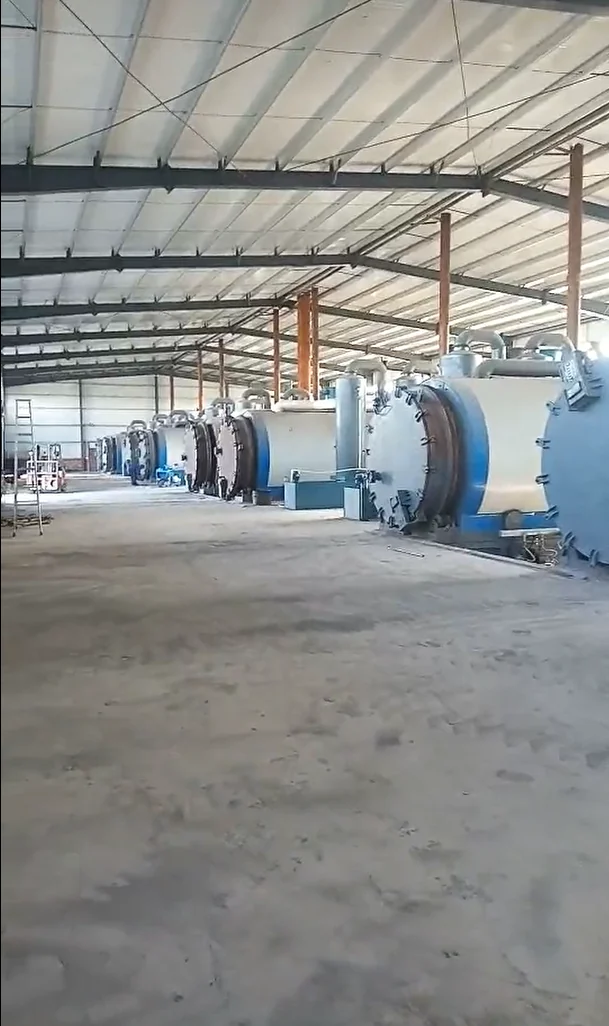
Overall view of the ten-unit batch pyrolysis site in Baotou, Inner Mongolia, showing the reactor line and shared process areas behind the working schedule. Photo taken during installation and commissioning in 2019.
Photo 2
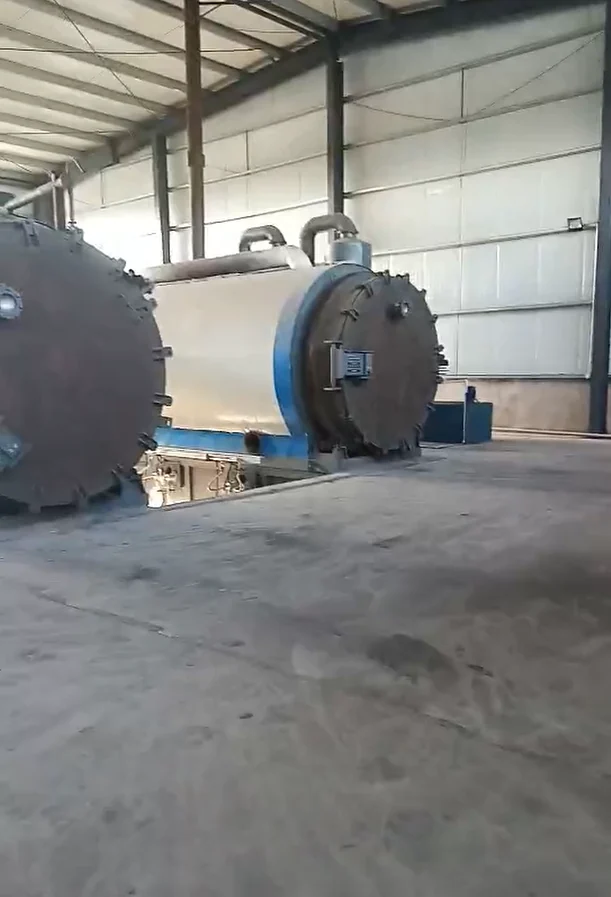
Process detail of a batch unit at the Baotou site - reactor, heating and condensation arrangement - behind the multi-unit rotation. Photo taken during installation and commissioning in 2019.
Project Specifications
| Item | Project specification |
|---|---|
| Location | Baotou, Inner Mongolia, China |
| Project year | 2019 |
| Status | Historical archive project; current operating status not independently verified |
| Feedstock | Waste tires (whole or cut, loaded in batches) |
| System | XY-8-P / PB batch-type horizontal rotary pyrolysis units; indirect heating; inert, anaerobic, micro-negative pressure |
| Number of units | 10 |
| Capacity per unit | 12 TPD design capacity |
| Combined design capacity | 120 TPD (design value) |
| Production model | Batch operation with staggered multi-unit scheduling |
| Main recovered streams | Pyrolysis oil (fuel oil), recovered carbonaceous material, steel wire; non-condensable gas may be returned to heating where design and operating conditions permit |
| Supplier | Shangqiu Jinpeng Industrial Co., Ltd. |
What the Project Demonstrates
The Baotou case demonstrates that Jinpeng's large batch configurations are delivered as operating systems, not collections of reactors: the ten-unit scale was matched to a dense industrial feedstock catchment, and production logic is a staggered schedule that spreads loading, pyrolysis, cooling, discharge and utility load across the day. For clients considering a similar site, three checks matter: whether the local catchment can sustain the combined design capacity in volume and cadence; whether storage, discharge handling and utilities are sized for a distributed rather than simultaneous load; and whether the operation is planned as a rotation from day one. Evaluators should watch the schedule - phasing of starts, spread of discharge events, balance of shared systems - because that is where a ten-unit site is made or broken.
About Jinpeng
Shangqiu Jinpeng Industrial Co., Ltd. designs and manufactures batch, semi-continuous, and continuous pyrolysis plants, oil distillation systems, and supporting equipment for waste tires, waste plastics, oil sludge, rubber-derived materials, and other suitable carbon-rich feedstocks. Project configuration is developed around material characteristics, production objectives, site conditions, and applicable local requirements. For project discussions, visit www.pyrolysis-machine.com.
Disclaimer
This retrospective describes the documented project configuration from the original delivery and commissioning period. All capacities are design values; actual throughput depends on feedstock condition, operating parameters and site management. Yields and product properties - including the quality of the pyrolysis oil, recovered carbonaceous material and steel wire - are not guaranteed and should be confirmed by testing. Energy and emissions performance depends on auxiliary systems and actual operating conditions, and the final design must comply with applicable local regulations.
Archive Note: "This retrospective is based on Jinpeng's project records and photographs from the original delivery and commissioning period. It describes the documented project configuration and does not constitute verification of the plant's current operating status."