
Pyrolysis-Based Waste-to-Energy Plants
From feedstock testing and optional preparation to pyrolysis, energy use, oil distillation and residue management, build a verifiable project boundary for industrial, municipal or excavated landfill waste.
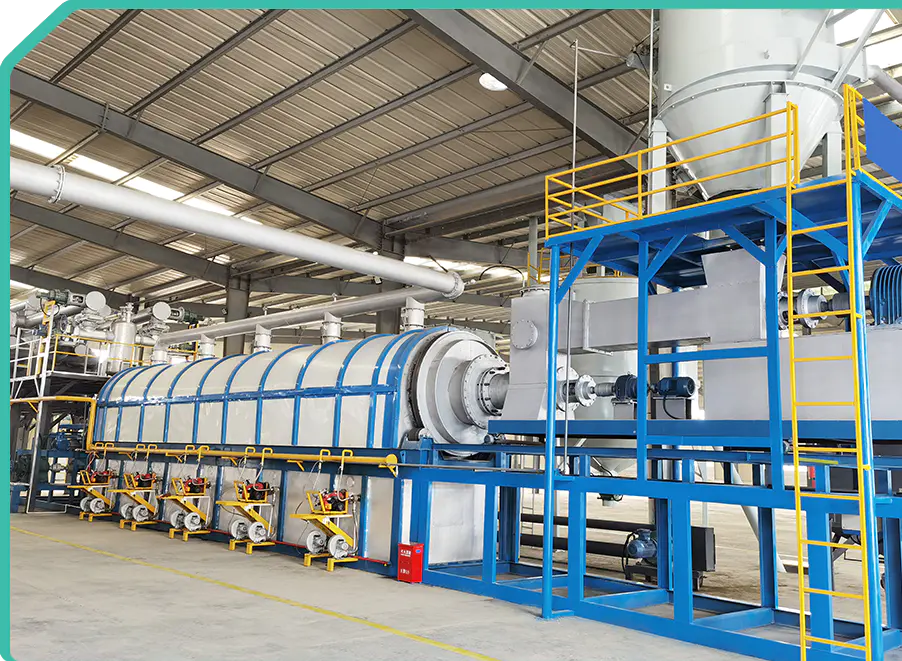
Use optional sorting or an integrated mixed-waste pyrolysis route
Municipal or excavated landfill waste can follow either of two project routes. Sorting, drying and inert removal can improve feed consistency and product quality, while an integrated mixed-feed and pyrolysis system can reduce separate sorting equipment, land and labour costs.
Integrated mixed-waste pyrolysis can substantially reduce front-end sorting cost. The resulting carbonaceous solid residue will generally contain more ash and inorganics and therefore needs a tested downstream handling route. Moisture, ash, chlorine and metals also affect energy demand, oil and gas cleanup, emissions control and maintenance, so the complete system is configured from representative feed testing.
Select a solid-waste recycling plant by feedstock
A solid waste recycling machine is not a single model. Each feedstock requires its own acceptance criteria, preparation, reaction conditions, emissions controls and product-quality plan.
Size-controlled tyre feed for batch or continuous oil, gas, steel and carbonaceous-material recovery.
Review the waste tyres and rubber equipment routeCompatible waste plasticsPolymer sorting, chlorine control and contamination testing before a plastic-to-oil process is specified.
Review the compatible waste plastics equipment routeMunicipal or excavated landfill wasteUse optional front-end sorting or an integrated mixed-feed route, selected around feed composition, plant configuration and required products.
Review the municipal or excavated landfill waste equipment routeCompatible medical wasteA compliance-led route covering segregation, contained feeding, thermal treatment and controlled residues.
Review the compatible medical waste equipment routeOil sludge and oily solidsRepresentative sampling defines pretreatment, recovered liquids and management of water, solids and residue.
Review the oil sludge and oily solids equipment routeBiomass and biocharMoisture, particle size and intended biochar specification guide the carbonization line design.
Review the biomass and biochar equipment routeFour engineering gates for a waste-to-energy project
Validate feedstock and product outlets before discussing equipment size and return on investment. This sequence reduces the risk of buying a plant for unsuitable material or producing outputs without an approved user.
- 01
Characterize the waste
Measure composition, moisture, ash, halogens, metals, particle size, daily supply and seasonal variation. A waste recycling plant cannot be selected from the material name alone.
- 02
Choose preparation and feed control
Choose sorting, shredding, drying or de-packaging when they improve project economics, or configure an integrated feed and pyrolysis system for characterized mixed waste.
- 03
Select the conversion route
Batch or continuous pyrolysis, condensation, non-condensable-gas reuse, solid-product handling and optional oil distillation are configured around the tested feed and required outputs.
- 04
Verify the complete project
The mass and energy balance, auxiliary power, emissions controls, water use, residues, product quality, local permits and downstream users must be checked together before investment.
Equipment can support a goal; it cannot prove the carbon result
Circular-economy project
Document waste source, input mass, recovered products, unusable residues and final destinations to create a traceable mass balance.
ESG waste-management project
Include permitting, worker health, safety, emissions, water, energy and community effects in project metrics instead of reporting only equipment or throughput.
Carbon-neutrality project
Define a baseline, calculate project energy, transport, emissions and displacement effects, then support any conclusion with an applicable GHG method and independent verification.
Define the plant from real feed data, not a generic package
Share the waste source, composition analysis, daily volume, moisture, particle size, available utilities, target outputs, project country and local environmental requirements.