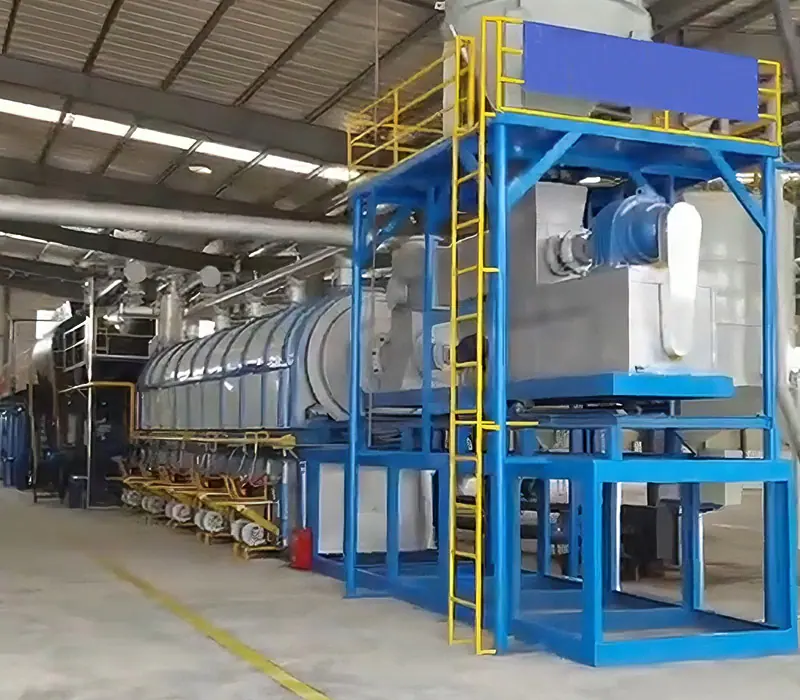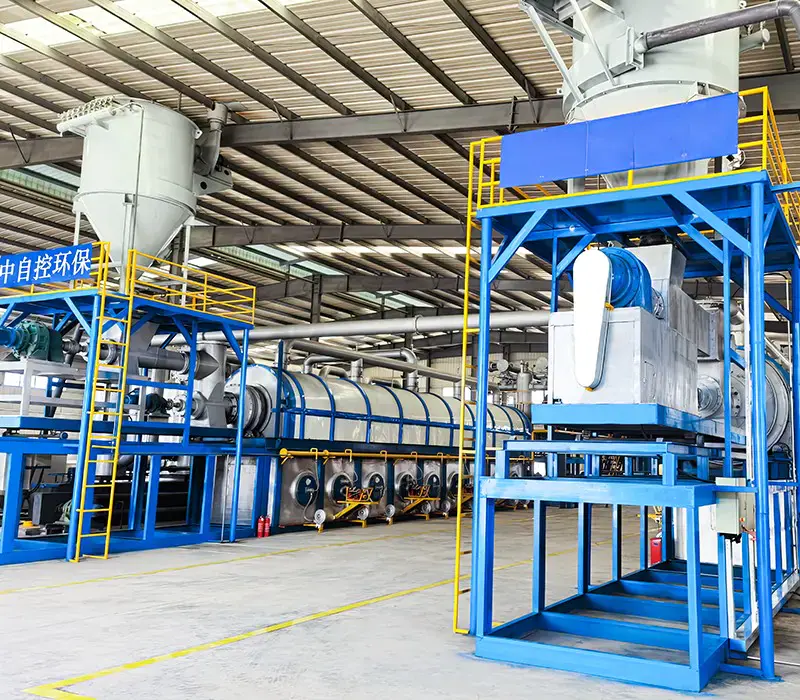
Waste tyre pyrolysis equipment

Continuous Tyre Pyrolysis Plant

Review Pyrojin continuous tyre pyrolysis plant equipment for prepared waste tyres and rubber, including process configuration, outputs and project requirements.

2026-07-20
Request a quote
Buyer qualification roadmap

Continuous tyre pyrolysis plant: from project fit to acceptance

Use this sequence to turn a general equipment enquiry into a comparable technical brief. Model numbers, capacities, yields, utility demand and emission performance are not universal: they must be tied to a representative feed specification, a defined site and written acceptance conditions.

01

Project fit and operating model

Decision: Decide whether a continuous line fits the real feed supply and operating calendar better than a batch system.

Evidence to prepare
  • Annual tyre availability, delivery pattern and storage plan
  • Planned shifts, operating days, shutdown windows and staffing model
  • Documented continuous-versus-batch selection basis
02

Feedstock window and preparation

Decision: Define the tyre and rubber fractions the line must accept before selecting feeding or reactor equipment.

Evidence to prepare
  • Representative samples, tyre mix, contamination and moisture data
  • Steel removal strategy and required particle-size distribution
  • Shredder, screening, conveying and buffer-storage boundaries
03

Throughput and performance basis

Decision: Set the capacity basis and the conditions under which performance will be measured and accepted.

Evidence to prepare
  • Hourly feed rate, annual throughput and availability assumptions
  • Feed specification used for mass and energy balances
  • Guaranteed values, test duration, tolerances and exclusion conditions
04

Process configuration and battery limits

Decision: Map every included system and every interface the buyer must provide outside the equipment package.

Evidence to prepare
  • Process flow and equipment list from preparation through solids handling
  • Heating, condensation, non-condensable-gas and flue-gas treatment scope
  • Civil works, storage, packaging and downstream upgrading interfaces
05

Outputs and offtake specifications

Decision: Define saleable or usable specifications for every output instead of relying on generic yield percentages.

Evidence to prepare
  • Sampling and test methods for tyre-derived oil and recovered carbon material
  • Steel, gas, wastewater and residue handling requirements
  • Named offtake route, upgrading step and rejection criteria for each stream
06

Site, utilities and layout

Decision: Confirm that the proposed site can supply the utilities, access and space required by the complete line.

Evidence to prepare
  • Plot plan, logistics routes, storage volumes and maintenance clearances
  • Electrical load, cooling-water duty, fuel, nitrogen and compressed-air basis
  • Drainage, firewater, communications and local ambient design conditions
07

Safety, emissions and permitting

Decision: Translate local permit conditions into design features, monitoring points and acceptance tests.

Evidence to prepare
  • Applicable waste, air, water, fire, pressure-equipment and zoning rules
  • Hazard review, interlocks, shutdown logic and gas-leak response philosophy
  • Emission limits, sampling locations, test methods and responsible parties
08

Maintenance and lifecycle plan

Decision: Evaluate maintainability and expected operating cost across the planned service life, not only the initial equipment price.

Evidence to prepare
  • Cleaning and inspection intervals tied to the actual feedstock
  • Critical spares, wear parts, specialist tools and local service coverage
  • Planned downtime, training, remote support and obsolescence responsibilities
09

Commercial scope and acceptance

Decision: Make the proposal comparable by aligning scope, exclusions, schedule, warranties and acceptance criteria.

Evidence to prepare
  • Responsibility matrix for design, supply, installation and commissioning
  • Payment milestones linked to drawings, inspection, delivery and testing
  • Factory and site acceptance protocols, remedies and warranty triggers
10

RFQ input package

Decision: Issue one controlled project brief so every supplier prices the same technical basis.

Evidence to prepare
  • Feedstock data, site location, throughput basis and target outputs
  • Required battery limits, utilities, permit conditions and delivery boundary
  • Evidence register covering drawings, calculations, certificates and references
Prepare before requesting a configuration

Send one evidence-led project brief

Include feedstock samples or analysis, the required operating calendar, site utilities, target output specifications and local permit conditions. This makes technical and commercial proposals easier to compare.

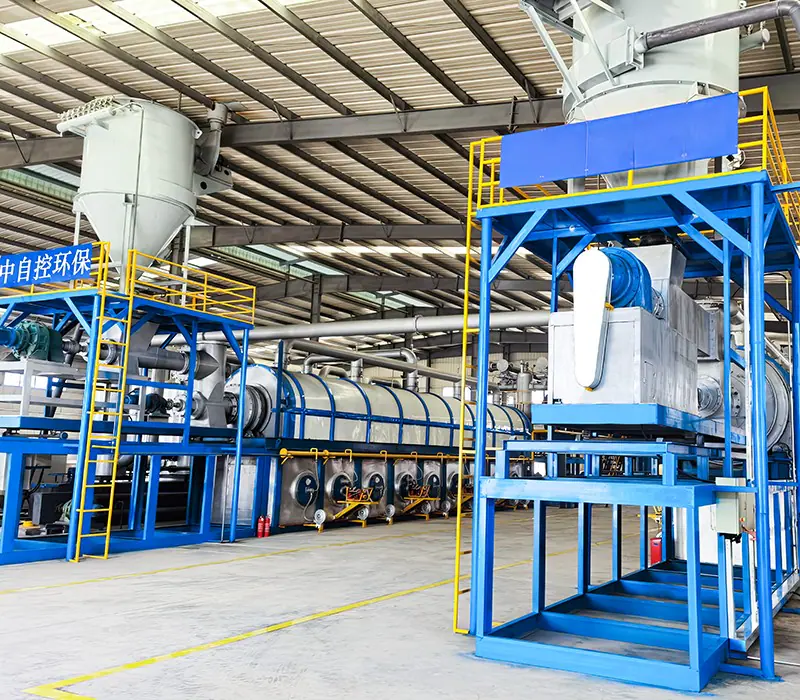
The Pyrojin continuous tyre pyrolysis plant converts pre-crushed tyre rubber powder into fuel-grade pyrolysis oil, steel wire and carbon black in a sealed, continuous process. It is built for medium and large-scale operators running 24/7 at 20-50 tonnes per day, with automated feeding and discharge to minimise manual handling.

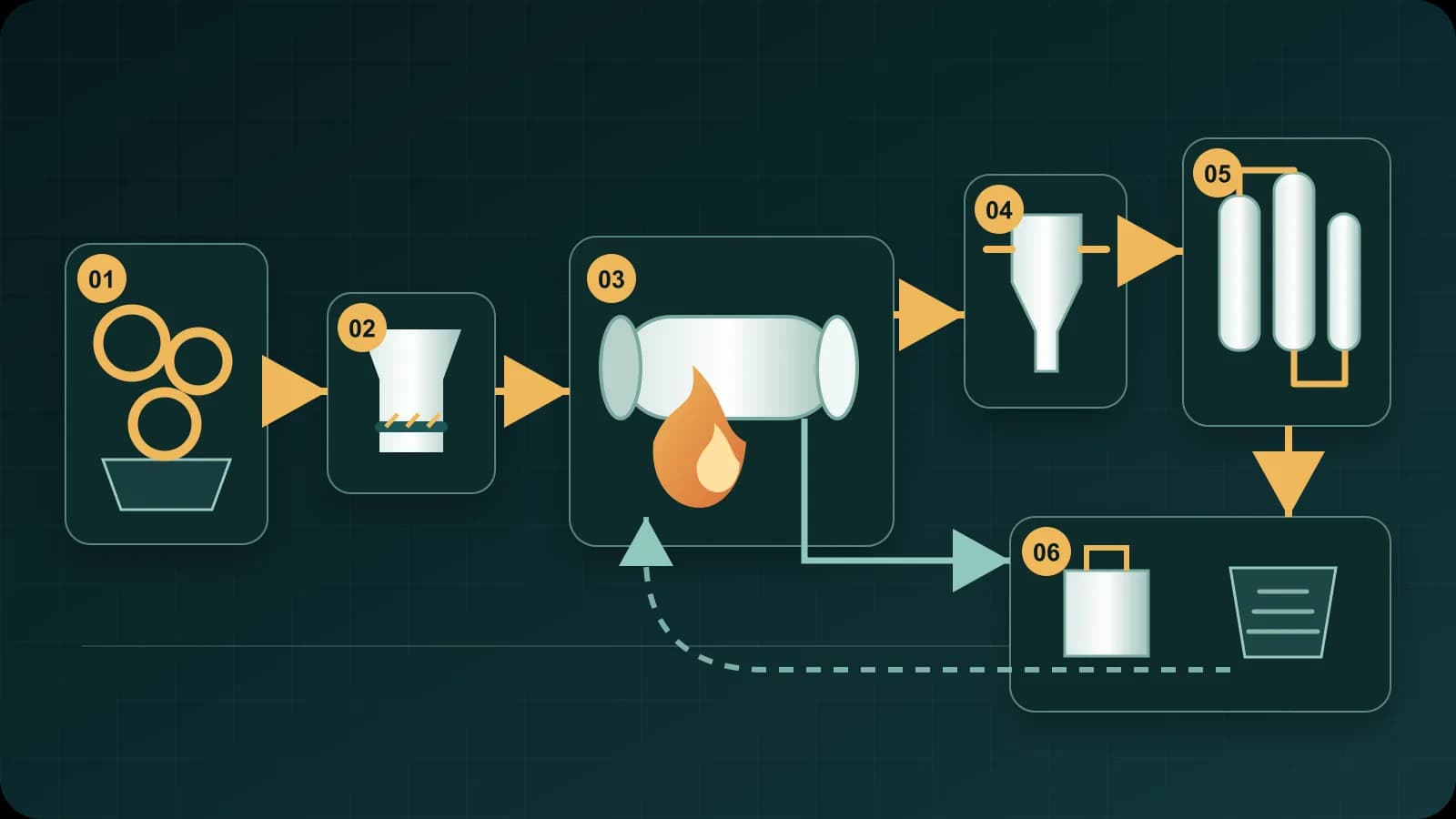
How a Continuous Tyre Pyrolysis Plant Works

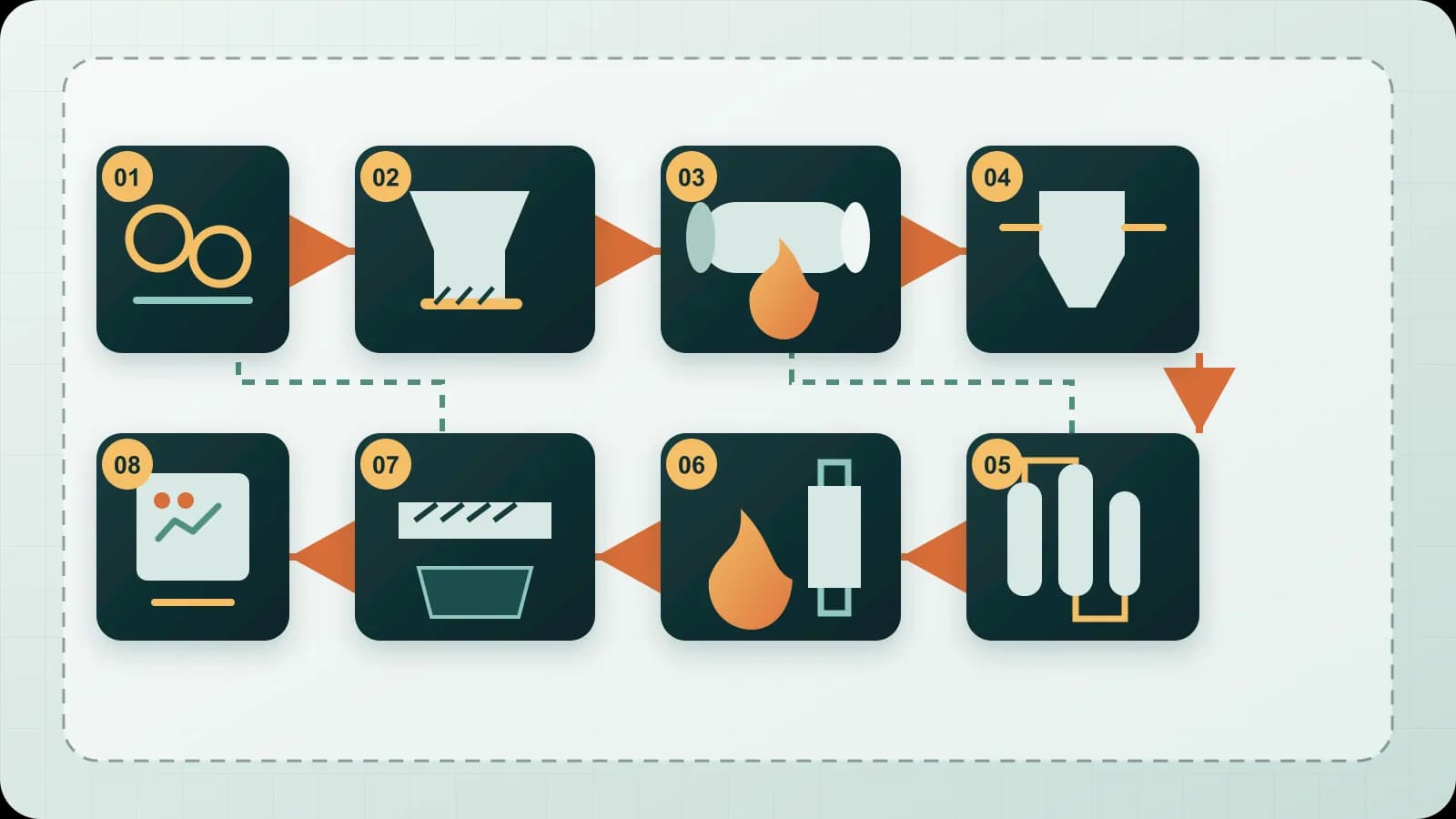
  1. Rubber powder is conveyed into the reactor through a sealed, nitrogen-protected feeding system.
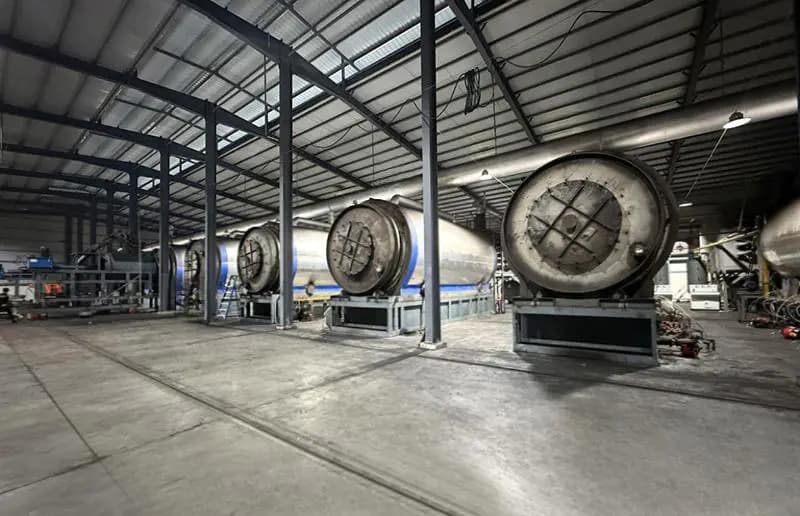
  2. The powder is indirectly heated above 200 °C under slight negative pressure with no oxygen contact.
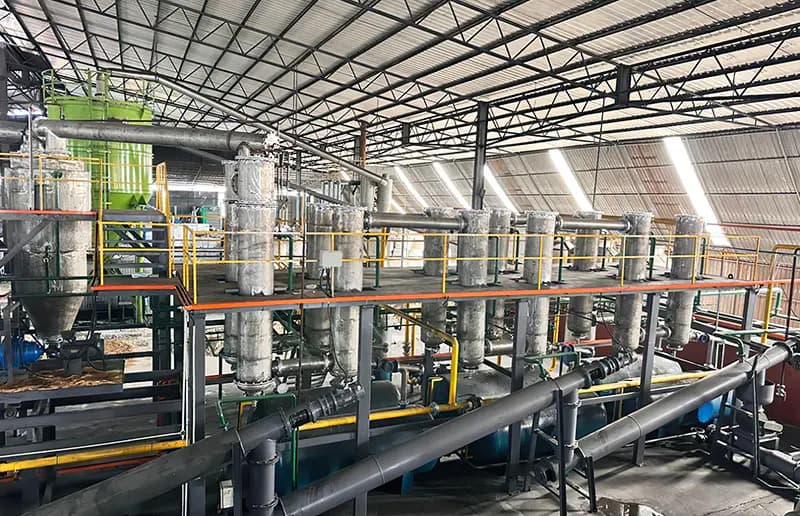
  3. Oil vapour is condensed into liquid fuel oil; non-condensable gas is separated.
  4. Purified non-condensable gas is recycled to fuel the furnace, cutting external energy use by about 50%.
  5. Flue gas is treated through alkali neutralisation (desulphurisation) and an adsorption tower before Treated discharge.
  6. Carbon black is discharged through a water-cooled screw conveyor to automatic packaging - the whole line stays enclosed and automated.

Models and Specifications

ModelPC-30PC-40PC-50
Capacity30 t/day40 t/day50 t/day
Furnace sizeφ1700×12500 mmφ2500×12500 mmφ2500×15000 mm
Gross weight90 t100 t150 t
Working power100-120 kW100-120 kW100-120 kW
Heating methodIndirect heat (oil, natural gas or electricity)Indirect heat (oil, natural gas or electricity)Indirect heat (oil, natural gas or electricity)
Working pressureSlight negative pressureSlight negative pressureSlight negative pressure
Shipping2×FR+5×40' HQ2×FR+5×40' HQ4×FR+5×40' HQ

Series capacity covers 20-50 t/d. Main reactor runs at slight negative pressure, horizontal rotation 0.3 rpm, circulating-water cooling, noise ≤85 dB, installation footprint approx. 50 m × 20 m, 1-2 operators per shift.

Outputs and Yields

  • Fuel oil (40±3%) - fuel-grade pyrolysis oil for industrial use and further refining.
  • Steel wire (≈13%) - recovered for scrap-metal recycling.
  • Carbon black (≈35%) - recycled raw material for rubber, plastics and other industries.

Key Equipment Features

  • Dual-gear screw sealed feeding for tyre powder under pressure.
  • Multi-stage sealed slag discharge holding residue at about 50 °C.
  • Slight-negative-pressure gas containment with emission controls configured to project requirements.
  • Automatic cleaning system for furnace and condenser coke removal.
  • High-speed rail drive with tapered bearings for smooth, low-noise running.
  • Self-powered gas recycling cutting about 50% of external energy use.
  • Lean-manning automation (1-2 operators per shift).
  • Temperature-control system configured around the selected process.
  • Automatic nitrogen safety system for leak sealing and alarming.
  • Centralised control console for real-time line monitoring.

Continuous vs Batch Pyrolysis

Continuous (PC)Batch (PB)
Scale≥10,000 t/year≈3,000 t/year
Operation24/7Single furnace per day
AutomationHigh (1-2 operators)Moderate manpower
FeedstockRubber powder (pre-crushed)Whole tyres accepted

Choose continuous for high-volume, round-the-clock output and lower labour; choose batch for lower upfront investment and whole-tyre feeding.

Frequently Asked Questions

  • What is the delivery time? The delivery schedule and departure port are confirmed in the commercial quotation.
  • What payment methods do you accept? Mainly T/T; other methods on request.
  • Are you a factory or a trading company? We operate our own factory in Shangqiu, Henan, China.
  • What is the warranty? Warranty, installation, training and maintenance support are defined in the supply contract.
  • What information do I need for a quote? Raw material, daily processing volume, project location and target outputs.

Get a Configuration Quote

Send your feedstock, daily volume and project location, and a Pyrojin engineer will prepare a matching line configuration, layout and investment estimate.

Waste tyre pyrolysis equipment

Plan a continuous waste tyre pyrolysis line

A continuous tyre pyrolysis plant combines tyre preparation, sealed feeding, thermal conversion, oil condensation, gas handling and solid discharge. Plant design should be confirmed against tyre composition, particle size, throughput, output use and local environmental requirements.

Project Verification Passport

Confirm performance boundaries before contract

Project enquiry

Need configuration advice for your feedstock?

Contact Pyrojin