
Condition the feed
Separate free water and screen solids before defining hot equipment.
Sampling method, water, solids and mixed-oil history.Configure a waste engine oil distillation plant from feed analysis, target fractions, residue route, throughput and site utilities.
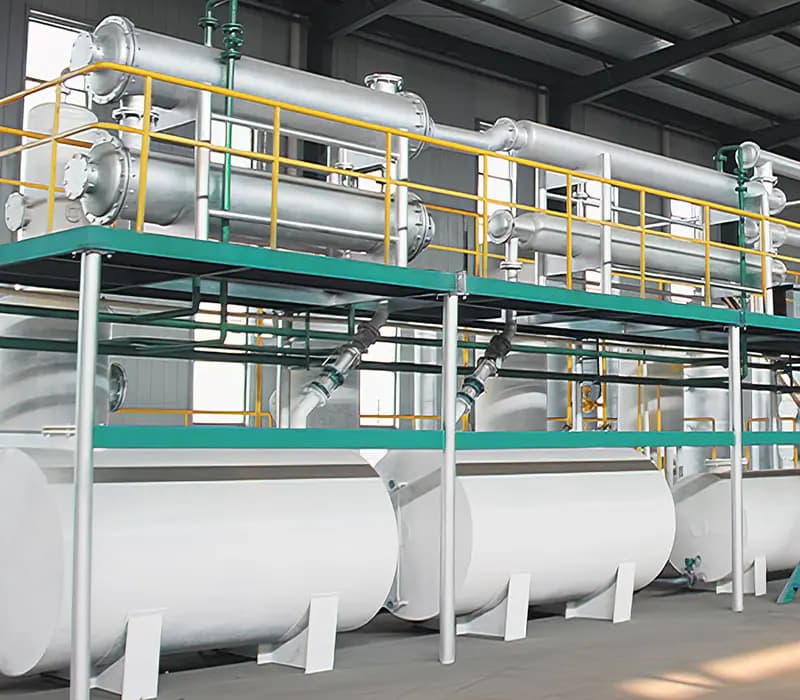
This page owns equipment enquiries for used engine and lubricating oils. It does not promise a standard recovery rate or finished-product grade before representative tests.
Separate free water and screen solids before defining hot equipment.
Sampling method, water, solids and mixed-oil history.Confirm lighter fractions from measured boiling behaviour.
Curve, target cut and condenser-duty basis.Add reduced pressure only when useful heavier material and thermal limits support it.
Reduced-pressure data and agreed stability boundary.Specify polishing, acceptance tests, bottoms, condensate and gas handling.
End-use specification and local compliance route.Configuration, capacity, recovery, energy use, emissions and product quality remain project-specific until confirmed by testing, engineering documents and contract acceptance criteria.
Record the buyer's sample result separately from the supplier's accepted design boundary. An empty field is an open action, not assumed compatibility.
| Input | Buyer result / evidence | How it changes scope | Supplier boundary / owner / date |
|---|---|---|---|
| WaterMethod, free water and total water result | Not supplied | Sets dehydration, venting and safe heat-up requirements. | Not supplied |
| SolidsSediment method, particle range and representative result | Not supplied | Sets filtration, fouling allowance and clean-out plan. | Not supplied |
| AdditivesOil service history and relevant additive/ash screen | Not supplied | Informs deposits, polishing and product-test scope. | Not supplied |
| Mixed oilsSupplier, tank and cross-contamination history | Not supplied | Determines batch segregation and additional screening. | Not supplied |
| MetalsRelevant metal panel with test method | Not supplied | Informs residue classification, fouling and product limits. | Not supplied |
| Target fractionsEnd use, cut ranges and acceptance test methods | Not supplied | Sets atmospheric/vacuum cuts and downstream polishing. | Not supplied |
| Residue routeExpected receiver, classification and local acceptance | Not supplied | Sets bottoms handling, storage and project feasibility. | Not supplied |
Used engine and lubricating oils vary in water, solids, additives, oxidation products and mixed-oil contamination. Plant configuration should be based on laboratory feed analysis, target fractions, residue route and local product and environmental requirements.
Compare combined atmospheric and vacuum equipment.
Open Vacuum distillation plant range Atmospheric engine oil distillationCompare an atmospheric-only route for suitable feeds.
Open Atmospheric engine oil distillation Pyrolysis oil distillation plantReview the separate configuration for tyre or plastic pyrolysis oil.
Open Pyrolysis oil distillation plant Waste oil distillation projectReview the preserved distillation project case section.
Open Waste oil distillation projectEach link has one job: compare the portfolio, make the pressure decision, scope the equipment, inspect public project evidence, then submit the missing data.