Batch biomass carbonization

Batch Biomass Pyrolysis Reactor

Review batch biomass pyrolysis reactor equipment for suitable agricultural or woody feedstocks, with preparation and biochar product requirements.

2026-07-20
Request a quote

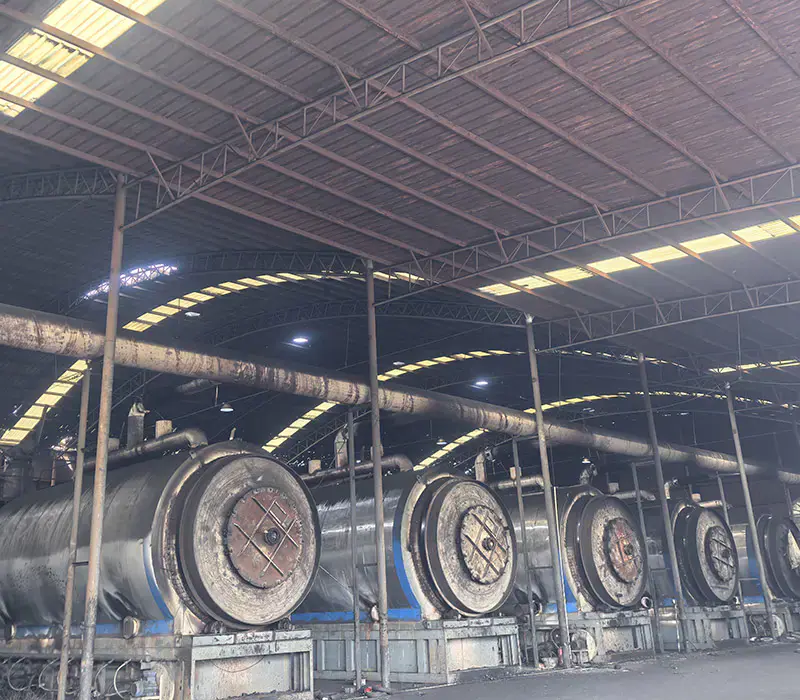
The Pyrojin biomass to biochar batch reactor converts agricultural and woody residues - acai berries, rice husks, wood chips, straw and more - into biochar through slow pyrolysis at 350-500 °C. The controlled temperature range maximises biochar yield at 30-35%, producing a porous, highly adsorptive char suited to soil improvement, carbon sequestration and agricultural production. A flue-gas recirculation system reuses part of the pyrolysis tail gas as fuel, cutting fuel use by 40% compared with conventional designs.

How a Biomass to Biochar Batch Reactor Works

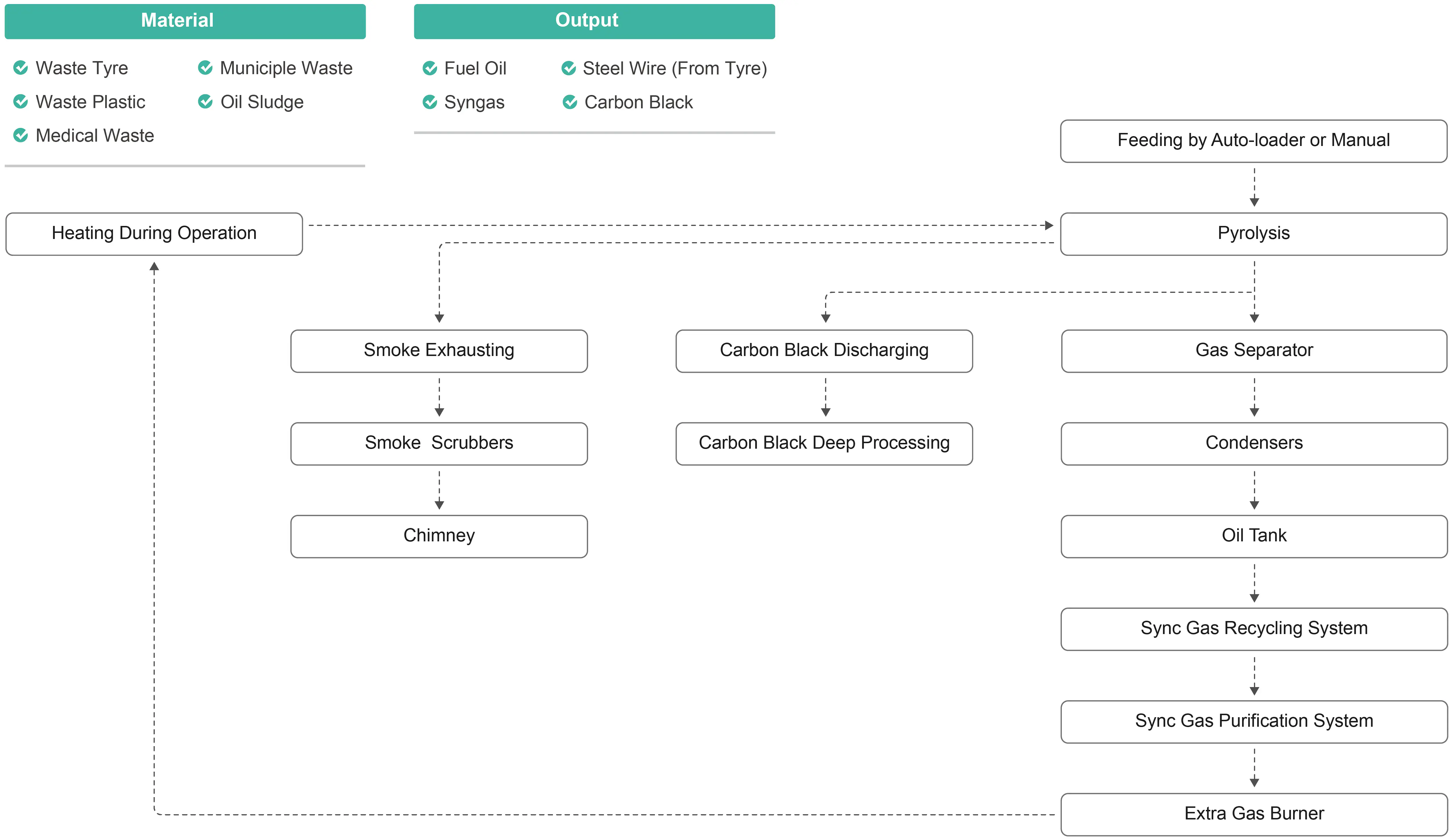
  1. Crop and woody residues (acai berries, rice husks, wood chips, straw) are loaded; dry and wet materials can be mixed-fed.
  2. The reactor is sealed and heated indirectly in a low-oxygen, anaerobic environment, so the flame never contacts the biomass.
  3. Slow pyrolysis at 350-500 °C breaks the biomass down thermally, maximising the solid biochar fraction.
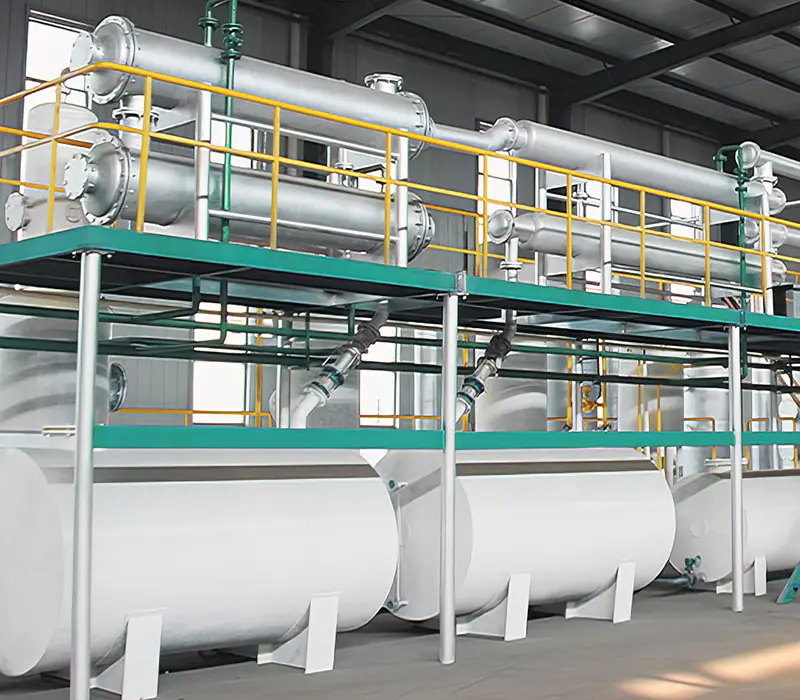
  4. By-products - tar and combustible gas - are recovered and recycled to improve overall economic return.
  5. A flue-gas recirculation system reuses part of the tail gas as fuel, reducing external energy use.
  6. Flue gas passes through a spray tower for acid-base neutralisation (desulphurisation), then an adsorption tower, before discharge under the project's permitted limits.
  7. The solid residue is discharged as biochar - not carbon black or steel wire.

The system runs as a closed loop, lowering harmful emissions and supporting a more environmentally friendly production process.

Models and Specifications

ModelPB-10PB-12PB-15
Capacity10 t/day12 t/day15 t/day
Furnace sizeΦ2500×7500×18 mmΦ2500×8800×18 mmΦ2800×8800×18 mm
Gross weight53 t55 t60 t
Working power30-50 kW30-50 kW30-50 kW
Heating methodIndirect heatIndirect heatIndirect heat
Working typeBatchBatchBatch
Working pressureNormal pressureNormal pressureNormal pressure
Shipping1×FR + 2×40' HQ1×FR + 2×40' HQ1×FR + 2×40' HQ

Series capacity covers 1-15 t/d; PB-10/12/15 are the three standard models. Main reactor: horizontal rotation at 0.4 rpm, circulating-water cooling, external gear transmission, noise ≤85 dB, installation footprint approx. 35 m × 20 m, 4-6 operators per shift.

Outputs: Biochar, Tar and Combustible Gas

  • Biochar (30-35%) - porous structure with good adsorption, for soil improvement, carbon sequestration and agricultural production increase.
  • Tar - a by-product recovered and recycled to improve overall economic return.
  • Combustible gas - recycled as fuel through flue-gas recirculation, cutting fuel use by 40%.

Key Equipment Features

  • Slow pyrolysis at 350-500 °C maximising biochar yield (30-35%).
  • Porous, highly adsorptive biochar suited to soil improvement, carbon sequestration and agricultural production.
  • Flue-gas recirculation reusing pyrolysis tail gas as fuel, cutting fuel use 40% versus conventional designs.
  • Wide feedstock adaptability (acai berries, rice husks, wood chips, straw) with dry/wet mixed feeding.
  • Indirect heating for uniform temperature control and longer reactor life (extended lifespan).
  • Low investment cost and compact footprint for fast payback.
  • External gear-ring drive for quiet, stable rotation.
  • Combustible gas recycling for lower fuel consumption.
  • Fully sealed horizontal rotary design for clean, closed operation.
  • Slight negative pressure with automatic submerged-arc welding and ultrasonic NDT for safety.
  • Multi-furnace tandem operation to reduce heat loss.
  • Multi-stage flue-gas purification for acid neutralisation and dust removal.

Batch vs Continuous Pyrolysis

Batch (PB)Continuous (PC)
Scale≈3,000 t/year≥10,000 t/year
OperationOne furnace per day24/7
AutomationModerate manpowerHigh (1-2 operators)
FeedstockAgricultural / woody residuesPre-shredded biomass

Choose batch for smaller biomass volumes and flexible dry/wet mixed feeding; choose continuous for high-volume, round-the-clock throughput.

Frequently Asked Questions

  • What biomass can be processed? Agricultural and woody residues such as acai berries, rice husks, wood chips and straw; dry and wet materials can be mixed-fed.
  • What is the biochar yield? Slow pyrolysis at 350-500 °C produces 30-35% biochar.
  • What is the delivery time? The delivery schedule and departure port are confirmed in the commercial quotation.
  • What payment methods do you accept? Mainly T/T; other methods on request.
  • Are you a factory or a trading company? We operate our own factory in Shangqiu, Henan, China.
  • Do you provide installation support? Installation, commissioning, training, warranty and maintenance support are defined in the supply contract.
  • What is the capacity? Standard PB-10/12/15 models cover 10/12/15 t/day (1-15 t/d range); capacity can be customised.
  • What information do I need for a quote? Feedstock type, daily volume, project location and target outputs.

Get a Configuration Quote

Tell us your feedstock type, daily volume and project location, and a Pyrojin engineer will prepare a matching configuration, layout and investment estimate.

Batch biomass carbonization

Define feed preparation and biochar specifications

Batch biomass pyrolysis equipment is configured around biomass species, moisture, particle size, ash and the required biochar properties. Representative material testing and product objectives should guide the reactor and gas-handling design.

Project Verification Passport

Confirm performance boundaries before contract

Project enquiry

Need configuration advice for your feedstock?

Contact Pyrojin