
A continuous oil sludge pyrolysis plant needs more than a daily tonnage target. Its receiving, conditioning and feeding systems must address the sludge delivered over time, while downstream equipment must accept the resulting streams. The procurement question is whether the proposed line can handle the documented variation within an agreed operating basis, not whether a catalogue calls the process continuous.
1. Establish a continuous-feed envelope
Document changes in water, hydrocarbon content, solids, physical consistency and relevant contaminants across representative deliveries. Ask for evidence that the proposed preparation and feeder combination can handle that range. Define storage, blending or separation responsibilities without assuming those packages are included. The test should cover the feed presented to the reactor, not simply a convenient sample collected before conditioning.
2. Compare operating periods consistently
Separate steady operation from startup, shutdown, cleaning and planned maintenance. State whether throughput refers to incoming wet sludge or prepared feed, and record the observation period. A recovery percentage requires a clear denominator: total wet feed, dry matter and measured feed hydrocarbons are different bases. Nominal equipment capacity does not establish yearly availability or the quantity of acceptable product.
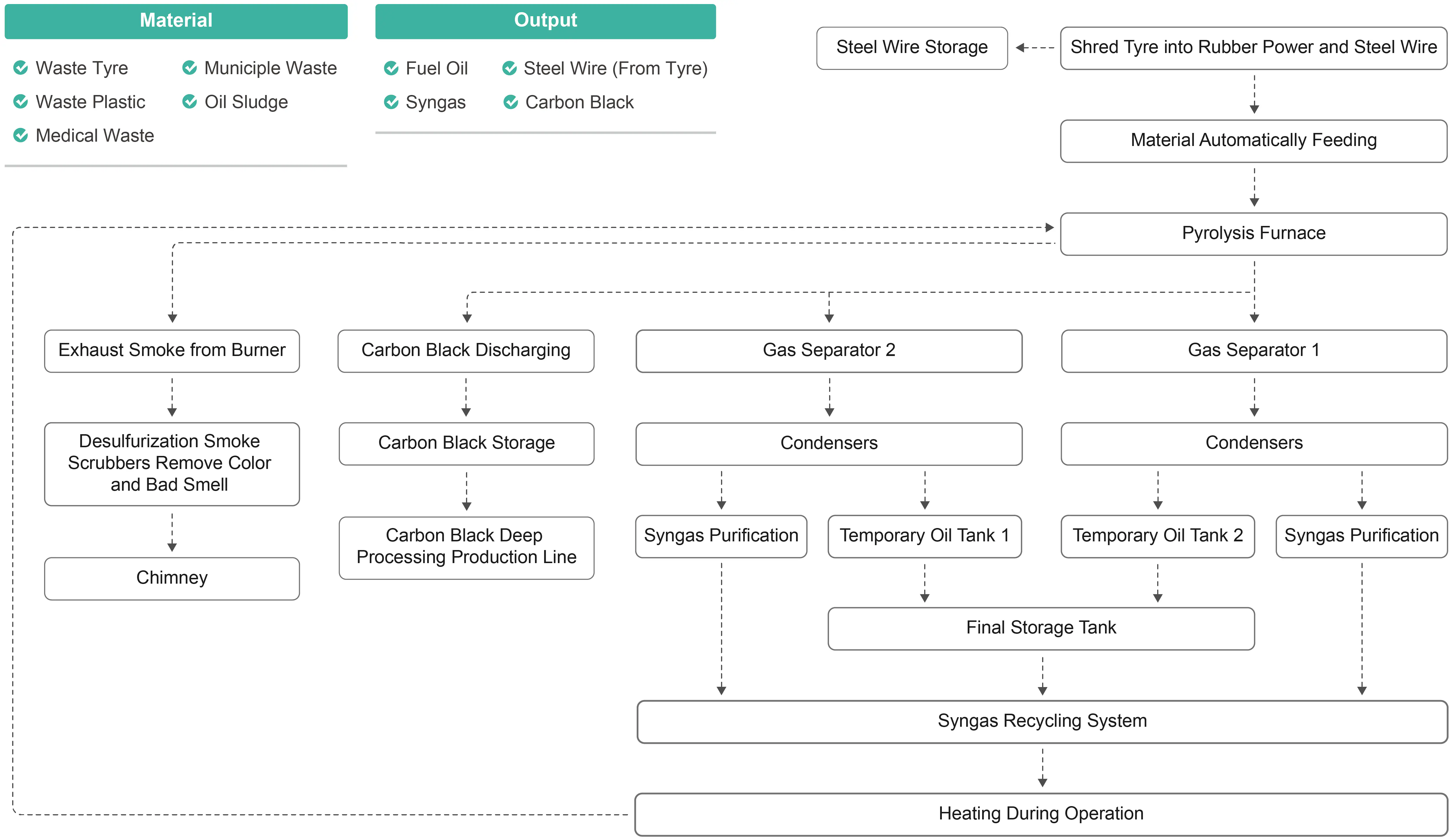
3. Match each output to its receiver
Specify how recovered liquids will be sampled, separated from water and evaluated for the intended use. Keep off-specification liquids, process gas and solids visible in the balance. IFC's petroleum-refining guidance calls for process-waste testing and classification against applicable requirements; it does not classify the output of a particular Pyrojin system.
For a larger industrial waste recycling plant, define this as an oil-sludge subsystem. Acceptance of unrelated industrial materials requires a separate assessment.
4. Verify energy and containment claims
Request a utility balance covering conditioning, heating, cooling, pumps and other supplied auxiliaries. Internal gas reuse may be a proposed heat source, but it is not proof that external fuel or electricity disappears. Ask how variable operation and unavailable gas use are represented. Containment, monitoring, control interfaces and site safety responsibilities need documented design and commissioning evidence; sealing or a pressure label alone cannot justify a promise of zero leakage.
Is continuous always better than batch?
No. Compare feed regularity, maintenance organization, output acceptance and the complete supply boundary against the batch option.
Can one oil-yield figure cover every sludge?
No. Composition, measurement basis and the tested operating conditions must accompany a result.
What information helps specify the feeder?
Representative physical-consistency and composition data, expected variation, delivery form and evidence from a suitable feeding trial.