
Handan sits in the industrial belt of southern Hebei, surrounded by steel plants, logistics corridors, and a dense network of freight traffic. Where there are trucks, there are worn-out tires - and for years, the region's end-of-life tires flowed toward low-value outlets: crushing, informal reprocessing, or simply stockpiling.
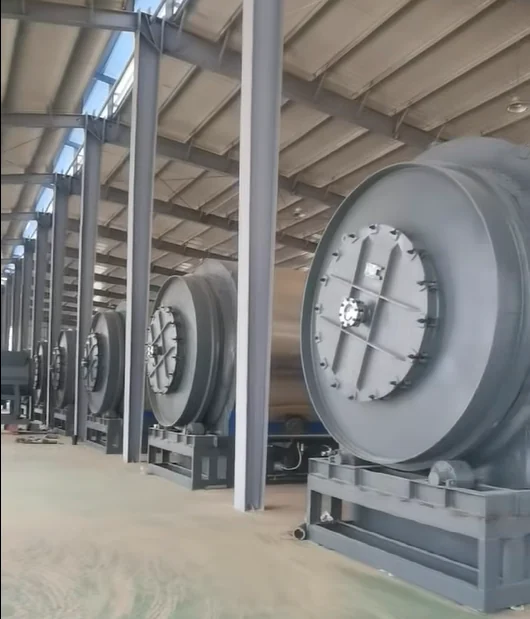
In 2025, one local operator decided to build a proper processing line instead. The equipment they installed was six sets of 15TPD batch-type tire pyrolysis plants supplied by Shangqiu Jinpeng Industrial Co., Ltd., giving the site a combined design capacity of 90 tons of waste tires per day.
The Question Every Buyer Asks First: How Many Lines?
Before anything is welded, every tire recycling investor runs into the same decision. Do you buy one big reactor, or several smaller ones?
Jinpeng's standard batch range is 10TPD and 15TPD per unit, with 30TPD and 50TPD available in continuous configuration. For Handan, six 15TPD batch lines made sense for reasons that only become obvious once a plant is actually running.
Batch pyrolysis is a cycle, not a stream. Each reactor is loaded, sealed, heated, held, cooled, and emptied. A single reactor running alone produces in waves - hours of output, then hours of nothing while it cools and reloads. Six reactors, sequenced so that loading and discharge are staggered, smooth those waves into something closer to steady daily production. The condensing system, the oil storage, the labor shifts, and the truck schedule all get easier to plan.
Downtime stops being a crisis. Refractory lining wears. Seals need inspection. With six independent units, servicing one costs roughly a sixth of throughput rather than shutting the plant. The operator can schedule maintenance during normal working hours instead of racing to restart.
Capital can be staged. A multi-line layout lets an operator match installed capacity to the tires they can actually collect - and add lines later when collection volume justifies it, rather than paying up front for capacity that sits idle.
What Actually Comes Out
Waste tire pyrolysis is attractive because almost nothing is wasted. Inside a sealed, oxygen-limited reactor at controlled temperature, rubber breaks down into four output streams, each with its own buyer:
Fuel oil condenses out of the oil-gas stream and is sold as industrial fuel or sent for further refining - typically the largest revenue line for a plant of this type.
Carbon black is discharged as solid residue after each cycle. Depending on quality and further processing, it moves into rubber compounding, pigment, or construction material markets.
Steel wire is recovered from the reactor after discharge and sold directly to steel scrap buyers - a clean, low-effort revenue stream with no additional processing required.
Combustible gas that does not condense is routed back into the heating system, displacing purchased fuel and lowering the plant's operating cost per ton.
Engineering Details Behind the Six Lines
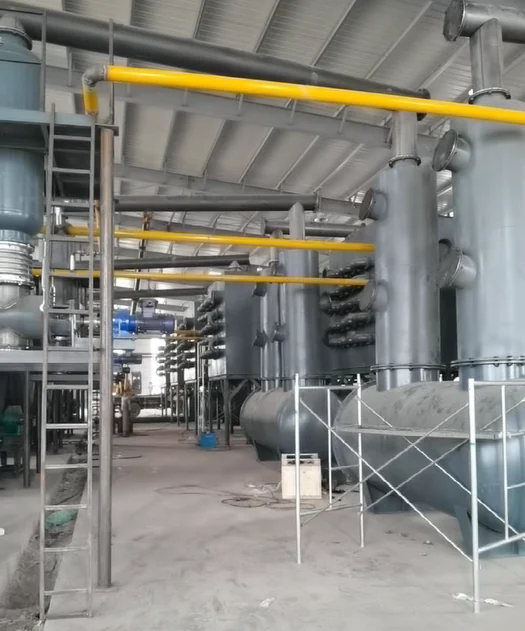
Each of the six units delivered to Handan was built around the same core specification:
Horizontal batch reactor with reinforced sealing door and multi-layer insulation, holding thermal stability across the full cycle
Automatic feeding and discharge systems, reducing manual handling and shortening turnaround between batches
Multi-stage condensing and oil collection, recovering pyrolysis oil from the oil-gas stream
Non-condensable gas recycling into the heating system
Flue gas treatment configured to applicable Chinese environmental discharge standards
Independent safety interlocks and pressure relief devices on every reactor
| Location | Handan, Hebei Province, China |
|---|---|
| Units | 6 sets |
| Capacity per unit | 15 TPD |
| Total capacity | 90 TPD |
| Reactor type | Batch |
| Feedstock | Waste tires |
| Products | Fuel oil, carbon black, steel wire, combustible gas |
| Year | 2025 |
Why This Case Matters for Other Operators
The Handan plant is not the largest installation Jinpeng has delivered - the company's Indonesia MSW facility runs 21 lines. But it may be the more useful reference point for most buyers, because 90TPD is roughly the scale at which a regional tire collection network can reliably keep a plant fed.
That is the real constraint in this business. Reactor capacity is easy to buy; consistent feedstock supply is not. A plant sized beyond its collection radius runs half-empty, and a plant sized below it leaves margin on the table. Six 15TPD lines in a freight-heavy industrial region like Handan represents a deliberate match between installed capacity and available tires.
For operators evaluating a similar investment, the sequence worth copying is straightforward: establish your reliable monthly tire volume first, size the line count to that number, and leave physical space in the plant layout for the lines you will add later.
Common Questions
What is batch-type tire pyrolysis? A processing method in which waste tires are loaded into a sealed reactor in fixed quantities and heated in an oxygen-limited environment, causing the rubber to thermally decompose. Once the cycle completes and the reactor cools, carbon black and steel wire are discharged and the next batch is loaded.
How much can a 15TPD unit process? Approximately 15 tons of waste tires per 24-hour operating period. The Handan facility's six units provide a combined design capacity of up to 90 tons per day.
What products come from waste tire pyrolysis? Fuel oil, carbon black, steel wire, and non-condensable combustible gas. Yields vary with tire type, rubber composition, moisture content, and operating parameters.
Why six 15TPD lines instead of fewer larger units? Staggered cycles smooth daily output, single-unit maintenance costs only a fraction of throughput, and capacity can be added in stages as tire collection volume grows.
What pyrolysis equipment does Jinpeng manufacture? Batch-type plants at 10TPD and 15TPD, continuous-type plants at 30TPD and 50TPD, plus semi-continuous configurations for suitable feedstocks such as rubber powder.
Can this configuration work outside China? Yes. The same modular multi-line batch layout has been supplied internationally, adjusted for local feedstock characteristics, environmental regulations, and site conditions.
Shangqiu Jinpeng Industrial Co., Ltd. manufactures batch, semi-continuous, and continuous pyrolysis plants for waste tires, waste plastics, rubber powder, and municipal solid waste recycling. To discuss a project in your region, visit www.pyrolysis-machine.com or contact our team.
Disclaimer: All content in this document is generated based on Shangqiu Jinpeng Industrial Co., Ltd.'s public standards and project experience, and is provided for technology and project reference purposes only. Actual output rate, power consumption, and product quality depend on real operating conditions. For further information, please visit our official website: www.pyrolysis-machine.com