
Two first-party archive records identify a four-unit batch waste-plastic configuration in Binzhou, Shandong, but they do not agree on the year or unit capacity. A Chinese archive-folder label says four 12-ton units in 2025; a later English document says four 15 TPD units in 2026 and derives 60 TPD. Without a contract, nameplate, delivery record or acceptance file, neither version is treated as resolved.
Evidence boundary reviewed: 4 September 2026
Record status
Classification: conflicting first-party supplier archive, not an independently audited operating case. The two internal records agree on Binzhou, waste plastics, batch operation and four units. They conflict on 2025 versus 2026 and 12 versus 15 TPD per unit. Their two image sets are different and contain no geolocation or operating data that can settle the conflict.
A third first-party source deepens the conflict: a legacy Pyrojin page labels the same equipment scene as a 2025 waste-tyre project with four 15 TPD units and claims it entered operation. No project-level evidence supports that feedstock or operating claim, so the legacy page is retired into this neutral record rather than used to decide between versions.
What the supplier archive records
| Archive field | Recorded value |
|---|---|
| Location and high-level configuration | Three first-party records associate the archive with Binzhou and four batch units; feedstock, year, capacity and operating status conflict or remain unverified |
| Archive record A | Chinese folder label: four 12-ton batch plastic units, 2025 |
| Archive record B | English document: four 15 TPD batch plastic units, 2026 |
| Archive record C | Legacy supplier webpage: waste tyres, four 15 TPD units, 2025 and claimed operation; project evidence not attached |
| Combined capacity | Record B states 60 TPD; record A would imply a different arithmetic total, so no capacity is confirmed |
| Photographic material | Two different first-party image sets; no verifiable site marker, nameplate, feed or operating measurement |
| Evidence classification | Unresolved supplier archive; site performance and current status are unverified |
What is established - and what remains unverified
Each statement below is intentionally limited to the evidence available in the supplier archive. A marketing sentence, photograph or nameplate figure is not substituted for an acceptance test.
| Question | Record status | Use boundary |
|---|---|---|
| Is the project feedstock established? | Conflicting | Two newer archive records label waste plastics; a legacy supplier page labels the same equipment scene as waste tyres. No feed record, customer confirmation or dated run data resolves the conflict. |
| Is the project year established? | Conflicting | One internal label states 2025 while the English document states 2026. No dated contract, delivery or acceptance record resolves the difference. |
| Is unit or combined capacity established? | Conflicting | One record says 12 tons per unit; the other says 15 TPD and 60 TPD combined. Treat all capacity values as unverified pending primary transaction or equipment records. |
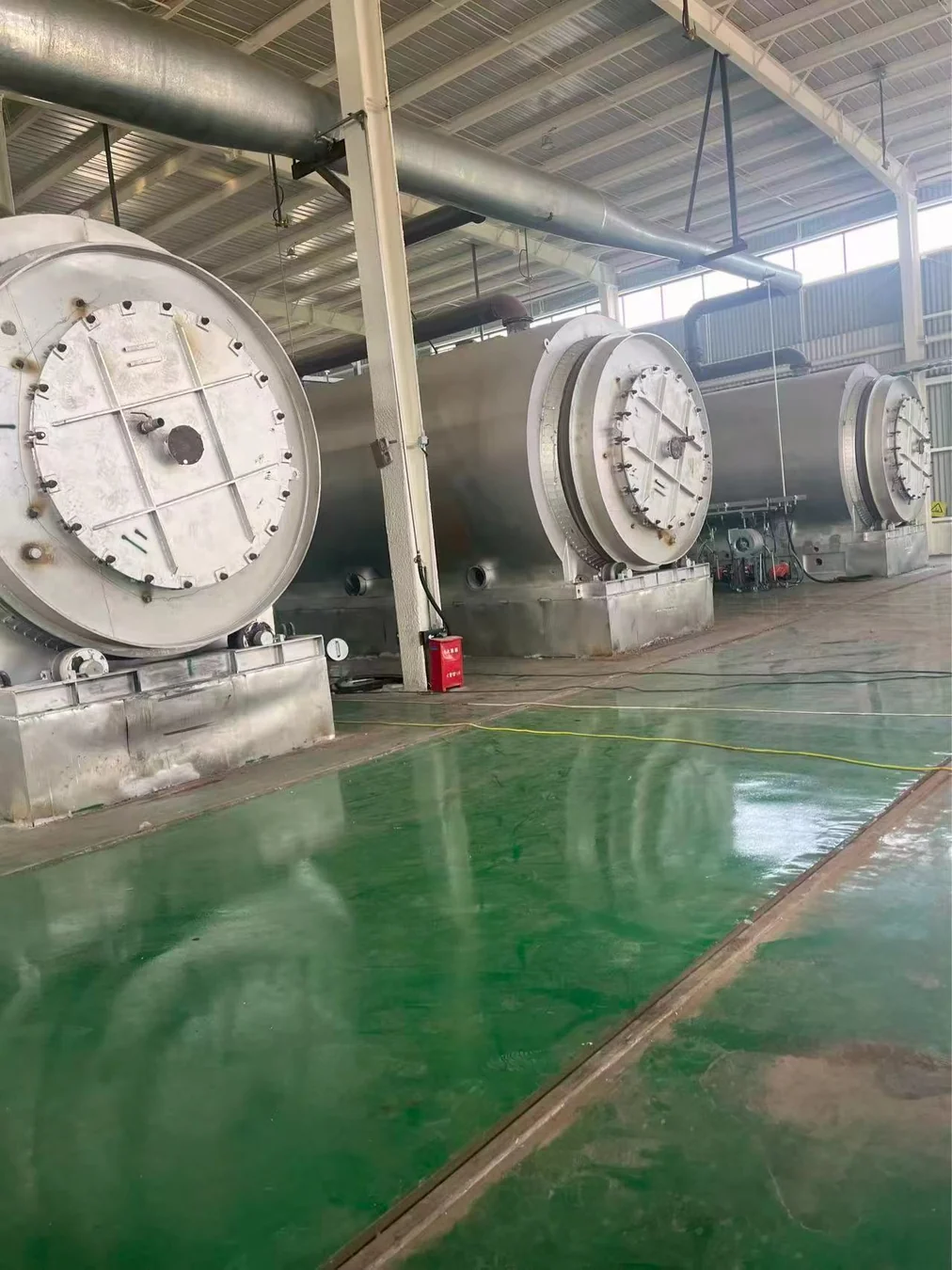
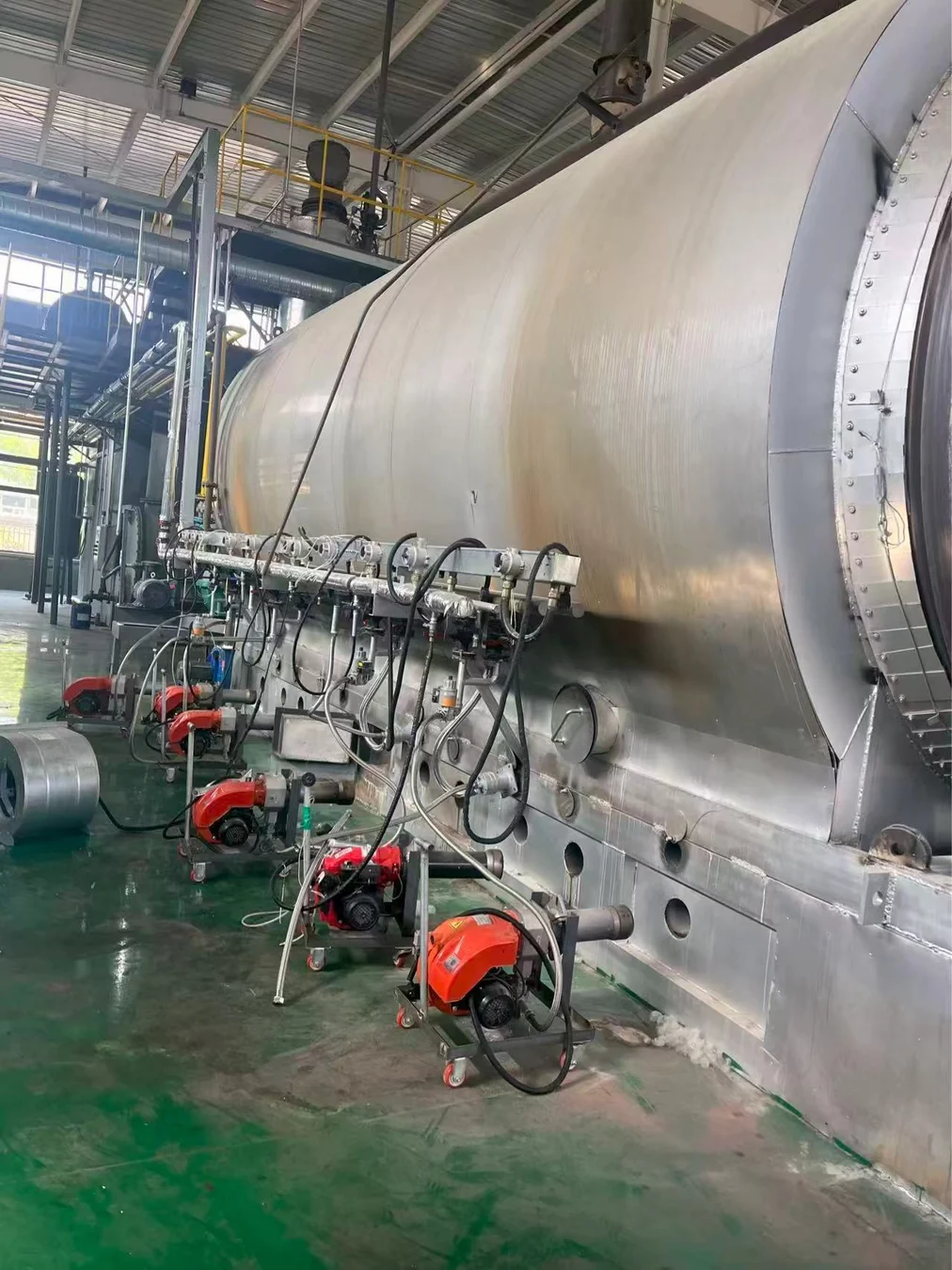
| Do the archive photographs show physical equipment? | Visible but non-attributive | The image sets show horizontal vessels and associated equipment, but not a verifiable location, customer, date, feedstock, complete unit count or performance. |
| Was any throughput demonstrated in operation? | Not established | No dated stable-run test, calibrated feed measurement, cycle record, downtime record or annual history is published. |
| Were products and yields verified? | Not established | No representative feed analysis, closed mass balance, sampling method, product specification or laboratory result is published. |
| Were compliance and economics verified? | Not established | No permit, emissions test, maintenance history, availability calculation, offtake contract, utility record or audited financial result is published. |
Archive photographs: visible facts only
The two images displayed below are the pair embedded in the later English document. A separate Chinese archive folder contains two different photographs. None of the four files has location metadata or visible operating measurements, so no image is used to choose between the conflicting year or capacity records.
Design capacity is not production evidence
The archive does not support one confirmed capacity figure. Record A labels four units at 12 tons each in 2025. Record B labels four units at 15 TPD in 2026 and states a 60 TPD combined design capacity. The arithmetic in each label cannot resolve which source is correct; the year, per-unit rating and total must remain disputed until a dated contract, equipment nameplate, delivery list or acceptance record is supplied. A third legacy webpage combines 2025 with four 15 TPD units, but adds no transaction or acceptance evidence. It therefore confirms the conflict, not the rating.
Achieved throughput depends on the agreed feed envelope, loading basis, batch duration, heating and cooling time, cleaning, residue discharge, planned maintenance, unplanned stops and shared downstream capacity. A valid comparison must also state whether the quoted day includes all cycle steps and whether the figure applies to the reactor or the full line.
For waste plastics, the phrase 'waste plastics' is not a feed specification. Polymer mix, chlorine and other halogens, moisture, ash, metals, inerts, additives, bulk density and physical form must be sampled and tied to acceptance limits before capacity, product or utility claims are transferred to another project.
What a buyer can learn without inventing results
The record is still useful when treated as a configuration reference rather than a performance testimonial:
- Use a calendar model to test how four batch cycles, cleaning and maintenance could be scheduled; do not assume staggered reactors automatically create steady output.
- Check the complete battery limits for reception, sorting, size reduction, sealed feeding, condensation, gas handling, solids handling, storage, utilities, controls and emissions management.
- Specify isolation and shared-utility arrangements so maintenance on one unit can be assessed without assuming the rest of the line remains available.
- Tie the design feed envelope to representative sampling and a deviation procedure; location or regional industry is not proof of feed quality or quantity.
- Write a site acceptance protocol with calibrated measurements, stable-test duration, mass-balance closure, sampling points, tolerances, exclusions and remedies.
Evidence needed before using this record as a performance benchmark
A decision-grade case file should add at least these project-specific records:
- Customer or site confirmation that can be publicly disclosed, with permission and date.
- Purchase, delivery or installation record identifying the four-unit scope and battery limits.
- Commissioning and acceptance protocol signed by the responsible parties.
- Representative plastic-feed sampling plan, composition and contaminant results.
- Dated stable-run logs with calibrated feed mass, cycle steps, stops and utilities.
- Closed mass balance and product laboratory reports tied to named specifications.
- Applicable permits, emissions inventory, control equipment and monitoring or test reports.
- Maintenance history, availability calculation and evidence for any commercial claim.
Continue from record to project basis
Use the product pages for commercial configuration details and the buying guide to prepare feed, site and acceptance inputs. This case page owns only the Binzhou supplier-record intent; it does not replace a product specification or procurement guide.
- Review the continuous plastic pyrolysis route
- Review the batch plastic pyrolysis route
- Prepare the plastic-pyrolysis buyer inputs
- Request the Binzhou evidence checklist
Source basis and disclosure
Source basis: (A) Chinese supplier archive-folder label 'Shandong Binzhou, four waste-plastic batch units, 12 tons, 2025' with two JPG images; and (B) Pyrojin's August 2026 English document 'Plastic Is Not Rubber: A 4-Line Waste Plastic Pyrolysis Plant in Binzhou, Shandong' with two different embedded images. Review date: 4 September 2026. Both are first-party records, neither is independent certification, and their conflict remains unresolved. Stable output, capacity, year, regional feed quality, oil market, yields, compliance and profitability are not presented as confirmed facts. A third source, the retired legacy Pyrojin Binzhou tyre webpage, described the same equipment scene as a 2025 four-by-15-TPD tyre project and claimed operation without attached project evidence.