
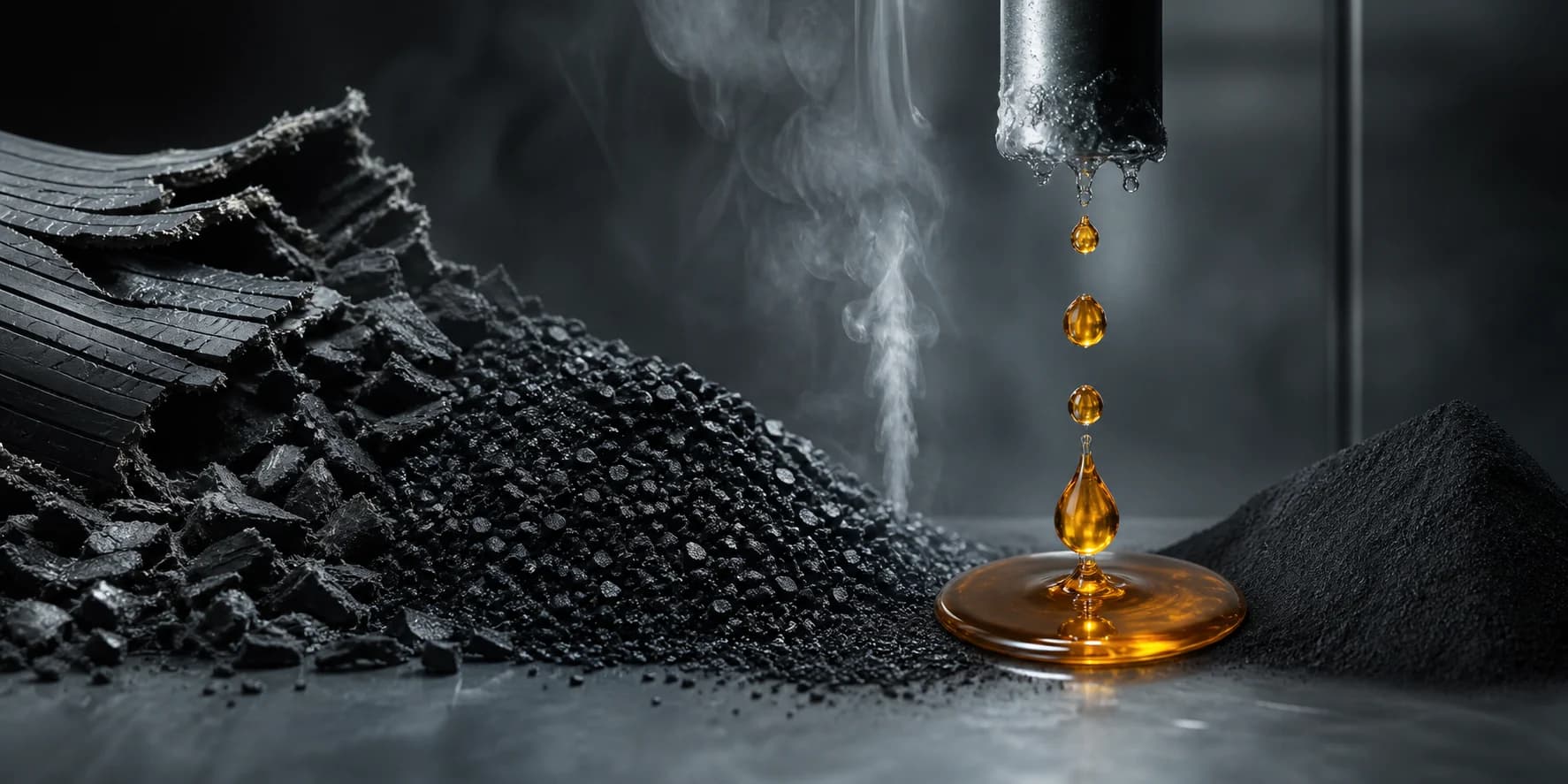
A continuous pyrolysis plant is an integrated line, not only a reactor. A project must coordinate feed preparation, sealed metering, thermal conversion, vapor handling, condensation, non-condensable gas management, solids discharge, emissions controls and product storage. Its suitability depends on the measured feed and operating plan.
Continuous operation can support long industrial campaigns when material remains inside a documented acceptance window and the site can maintain stable feeding, controls, utilities and downstream handling. It should not be selected from a generic capacity, yield or payback claim.
How a continuous pyrolysis line works
- Receiving and characterization: record the waste source, classification, representative composition, moisture, particle size, contaminants and seasonal variation.
- Preparation: apply sorting, size reduction, drying, dewatering, blending or metal removal only where required by the tested material and selected feeding system.
- Sealed metering: introduce prepared feed at a controlled rate while limiting air ingress and uncontrolled vapor release.
- Thermal conversion: manage temperature, pressure, residence conditions and heat input inside an agreed operating window.
- Vapor and liquid handling: separate entrained solids and condense recoverable fractions using equipment configured for the actual vapor composition.
- Gas and emissions management: monitor non-condensable gas use, combustion, flue-gas treatment and every identified emission point.
- Solids and product handling: cool, contain, sample and route carbonaceous material, metals, water and other residues according to their tested properties and local rules.
Each interface can limit the whole line. A reactor may reach its design duty while the project still underperforms because preparation, condensation, gas treatment, solids cooling or product storage is undersized.
Define the feed acceptance window first
Continuous feeding favors a predictable material flow, but “predictable” must be measurable. The project specification should state the permitted ranges for size distribution, moisture, ash, halogens, metals, inerts and other relevant contaminants. It should also identify rejected materials and the action required when a limit is exceeded.
| Feed question | Why it matters | Evidence to prepare |
|---|---|---|
| Is the supply stable through the year? | Campaign length and buffer storage depend on actual deliveries, not nameplate demand. | Monthly supply history, contracts and seasonal forecast. |
| Can the feed be metered and sealed? | Oversize pieces, bridging, sticky material or gas paths can disrupt feeding. | Particle-size distribution, bulk behavior and feeding test. |
| What enters with the target material? | Water, ash, chlorine, metals and inerts affect heat demand, corrosion, cleanup and residues. | Representative laboratory analysis and sampling method. |
| What preparation is feasible on site? | Preparation changes land, power, labor, rejects and project cost. | Preparation flow, mass balance and reject route. |
Operating controls, containment and safety
A buyer should request the control narrative, cause-and-effect matrix and alarm philosophy rather than accepting “fully automatic” as a specification. Review feed-rate control, reactor temperature and pressure, seal condition, gas composition or pressure where applicable, condenser temperatures, liquid levels, solids discharge, combustion safeguards and emergency isolation.
Start-up, shutdown and maintenance are part of the design boundary. Define inerting or purging requirements, safe access, lockout, hot-material handling, combustible-gas detection, fire protection and the destination of off-spec or emergency material. Local hazard review and permitting determine the final requirements.
Products, utilities and residues need specifications
Do not treat “oil,” “gas” and “char” as guaranteed saleable outputs. The feed and operating conditions determine composition. Agree the sampling methods, storage limits and intended downstream use before assigning value. If additional distillation, gas cleaning, solid upgrading or disposal is required, include it in the project boundary.
A project-specific mass and energy balance should account for feed, recovered liquids, non-condensable gas, solids, water, metals, rejects and unaccounted loss. It should also identify electricity, heating fuel, cooling, water, compressed air, nitrogen or other inert gas, and emissions-control consumables. Avoid transferring laboratory or reference-plant yields to a different feed without testing.
Plan availability around the complete line
“Continuous” does not mean maintenance-free or permanently online. Establish the planned campaign length, cleaning sequence, inspection points, wear components, lubrication, critical spares and restart procedure. The supplier should define whether availability excludes planned maintenance, feed shortages, downstream stoppages or utility interruption.
Verify access around screws, seals, condensers, filters, pumps and solids handling. Confirm which tasks can be isolated and which require stopping the full line. The staffing plan should distinguish normal control-room work from inspection, laboratory testing, maintenance and emergency response.
Environmental and permitting boundary
Pyrolysis does not remove the need for waste, air, water, fire, storage and product-use approvals. The regulatory route depends on the jurisdiction, waste classification, gas and residue status, final product use and any downstream combustion. List every controlled outlet and residue instead of using an unqualified “emission-controlleds” statement.
Continuous pyrolysis plant buyer checklist
- Feed acceptance envelope supported by representative analysis and a written sampling plan.
- Complete process flow diagram, equipment list and battery limits.
- Mass and energy balance with conditions, units and unaccounted loss.
- Operating narrative for start-up, normal campaign, planned shutdown and emergency isolation.
- Utility schedule, emissions-control scope, wastewater route and residue destination.
- Product test methods, acceptance specifications and off-spec handling.
- Reference evidence for a comparable feed and configuration, with differences explained.
- Maintenance intervals, wear-parts list, critical spares and response responsibilities.
- Site interfaces, civil works, commissioning, training, performance test and acceptance criteria.
- Lifecycle cost scenarios based on actual utilization and local product acceptance, not fixed ROI.
Compare the operating routes
Use the continuous vs batch procurement guide before selecting an operating mode. Then review the continuous pyrolysis plant range, the batch pyrolysis plant range and the industrial pyrolysis equipment hub. For an engineering screen, submit feed data, operating hours and target product requirements.
Technical reference basis
- Technical review of semi-continuous and continuous pyrolysis.
- Review of municipal-waste pyrolysis reactor development.
- UK environmental permitting guidance for waste thermal treatment.
These references describe specific technologies, materials and regulatory contexts. Project results still require feed testing, site engineering and local approval.