
How Pyrolysis Helps Separate Composite Materials: Insights from Jinpeng's Yangzhou Project
A solar panel can generate electricity for twenty to thirty years. Once it reaches the end of its service life, however, a different challenge begins. What appears to be a simple combination of glass and an aluminum frame is actually a tightly laminated, multi-layer composite. Recovering its materials means separating those layers without unnecessarily damaging the glass, silicon cells and metals-or transferring the environmental burden to another process.
A Solar Panel Is a Material Stack Held Together by Design
The most visible parts of a crystalline-silicon photovoltaic module are the front glass and aluminum frame. Beneath the glass are EVA or POE encapsulant films, silicon cells, copper ribbons, silver-containing contacts and a backsheet. These materials are laminated together so the module can withstand decades of heat, moisture, wind and ultraviolet exposure.
That durability creates the central recycling problem: the stronger the bond during use, the harder the materials are to separate at end of life. Direct crushing is straightforward, but it can break glass, silicon and metals into mixed particles, reducing separation efficiency and material value. Chemical routes can target selected layers, but reagent consumption, liquid effluent treatment and cost must be considered. High-temperature combustion also requires careful control of emissions, particularly when fluorinated backsheets are present.
Why Pyrolysis Can Serve as a Delamination Step
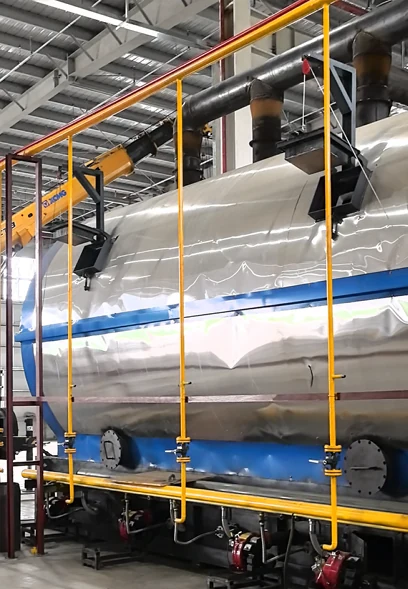
A photovoltaic module recycling project is currently under installation in Yangzhou, Jiangsu Province. The approach is not to burn complete panels. Aluminum frames, junction boxes and cables are removed first. The remaining module structure is then heated in a sealed, oxygen-limited environment so that the encapsulant and selected backsheet polymers decompose and gradually lose their bonding function.
If a retired module is compared with a tightly compressed laminate, direct crushing is similar to smashing the whole stack at once. Pyrolysis delamination is closer to loosening the adhesive between the layers first. The purpose is to preserve the relative integrity of the glass, cells and ribbons wherever practicable, creating better conditions for downstream separation, cleaning and material refining.
How an End-of-Life Module Moves Through the Recycling Process
Process summary: module identification and dismantling → size reduction where required → sealed oxygen-limited pyrolysis delamination → oil-gas condensation and off-gas treatment → separation of glass, cells and ribbons → downstream material refining and reuse.
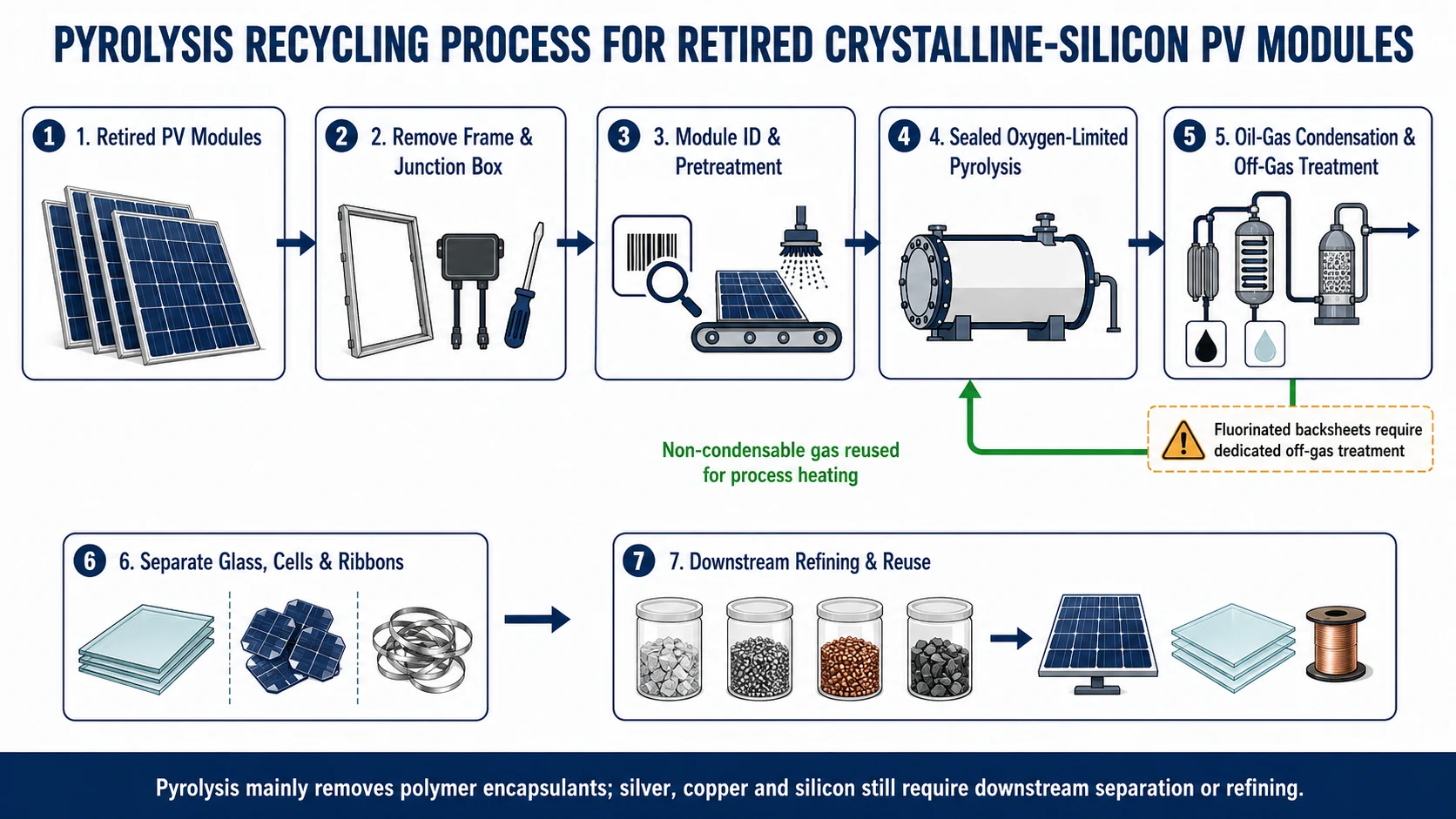
1. Identify and dismantle the module. Glass-backsheet modules, dual-glass modules and different backsheet formulations do not require identical pretreatment or emission-control strategies. After identification, aluminum frames, junction boxes and cables can be removed so that materials not requiring thermal treatment do not enter the pyrolysis system.
2. Perform controlled pyrolysis delamination. Encapsulating polymers decompose under oxygen-limited heating. The resulting vapors pass to condensation and gas-cleaning systems. Subject to process safety and control requirements, non-condensable combustible gas can be prioritized as a supplementary heat source for the system. Oil and gas yields are not fixed; they depend on polymer type, polymer content and operating conditions.
3. Separate and refine the solid materials. After delamination, glass, silicon cells, copper ribbons and other components move to cleaning, sorting or refining. Pyrolysis improves separability; whether each fraction can enter a higher-value market still depends on downstream processing and the receiving party's quality specifications.
Which Materials May Be Recovered After Pyrolysis?
Pyrolysis does not convert a photovoltaic module into one product. It releases materials that were previously bonded together so they can be handled through separate recovery routes. The principal value usually lies in aluminum, glass, silicon and metals, rather than only in the relatively small amount of oil and gas produced from polymer layers.
| Material or Component | Primary Processing Stage | Potential Recovery Route |
|---|---|---|
| Aluminum frame, junction box and cables | Front-end dismantling | Separate recovery of aluminum, copper and reusable components |
| Glass | Pyrolysis delamination, separation and cleaning | Reuse through a suitable glass recovery channel after quality testing |
| Cells or silicon-containing fraction | Post-delamination separation and further refining | Silicon recovery or other material applications |
| Ribbons and copper-/silver-containing fractions | Physical sorting and metallurgical or chemical refining | Recovery of non-ferrous and precious metals |
| Encapsulant and selected backsheet polymers | Pyrolysis, condensation and gas treatment | Condensed liquid or process fuel gas, subject to testing and local compliance |
Table 1. Main components of end-of-life crystalline-silicon photovoltaic modules and potential recovery routes.
Does Pyrolysis Automatically Mean Pollution-Free Recycling?
No. Pyrolysis avoids direct contact between the material and an open flame and makes it easier to collect process gases in a closed system. However, choosing pyrolysis does not automatically guarantee compliant emissions. Environmental performance depends on whether feedstock identification, sealed feeding, temperature and pressure control, vapor condensation, non-condensable gas management, off-gas purification and operational monitoring work as one integrated system.
Fluorinated backsheets require particular attention. Module materials vary by production period and manufacturer. A project should identify fluorine-, chlorine- and other sensitive constituents at the front end and configure appropriate absorption, adsorption or other gas-treatment units accordingly. Public research from IEA PVPS Task 12 also shows that practical photovoltaic module recycling normally combines dismantling, mechanical processing, thermal treatment, chemical treatment and downstream refining rather than relying on a single technology.
What the Yangzhou Project Demonstrates for Jinpeng
Pyrolysis is most widely recognized for the treatment of waste tires and plastics. The underlying principle can also be assessed for other feedstocks containing suitable thermally decomposable organic fractions, including selected oil sludges, biomass and industrial composite wastes. Each feedstock behaves differently, so reactor design, operating temperature, residence time, condensation and gas treatment must be matched to the material. There is no universal set of parameters that can process every waste stream effectively.
For Jinpeng, the Yangzhou project is not simply another reactor installation. It applies established thermal-processing experience to a new composite-material context. The system must connect front-end dismantling, stable feeding, pyrolysis delamination, vapor handling, emission control and downstream separation interfaces. Success depends not only on whether a reactor can reach the required temperature, but also on whether these stages can be organized into a practical resource-recovery route.
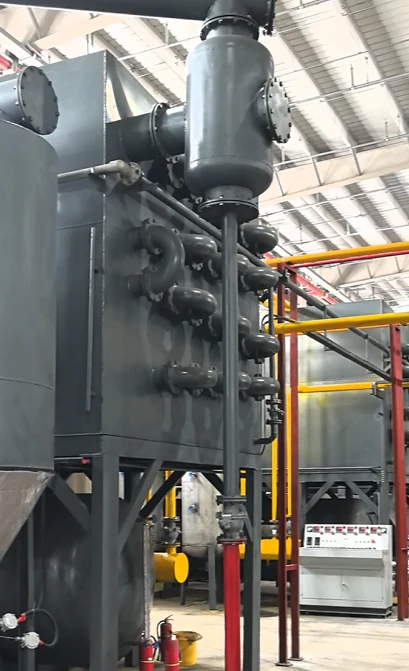
Founded in 2008, Shangqiu Jinpeng Industrial Co., Ltd. develops and manufactures pyrolysis, distillation and related resource-recovery equipment. The company has delivered more than 1,600 equipment sets, holds over 60 patents and certificates, and maintains ISO 9001, ISO 14001 and relevant CE certifications.
These figures demonstrate accumulated experience, but a project ultimately depends on continuous delivery across feedstock analysis, process design, manufacturing, installation, commissioning and operator training. The Yangzhou project therefore represents more than an additional equipment reference: it shows Jinpeng's continuing development from a pyrolysis equipment manufacturer into an engineering partner for integrated waste-to-product solutions.
Photovoltaic Recycling Requires a Complete Value Chain
As earlier generations of solar modules enter retirement, the industry must ensure that clean-energy equipment remains responsibly managed at the end of its life. Recycling performance should not be judged only by whether a module is processed. It should also be assessed by whether materials are separated effectively, emissions and residues are controlled, and recovered fractions have reliable downstream destinations.
Pyrolysis is not the only answer to photovoltaic module recycling, and it should not be presented as a shortcut that replaces every other step. Its practical value is more specific: it can address one of the most difficult stages in composite-material recovery by breaking down polymer bonding layers and opening a route to mechanical separation, refining and reuse. The Yangzhou project illustrates how thermal-processing technology can extend from conventional waste applications into the circular use of new-energy materials.
Reference note
The technical boundaries described in this article are informed by the public IEA PVPS Task 12 report on photovoltaic module recycling, Jinpeng's published company information and actual project information from Yangzhou.
Disclaimer: Processing capacity, recovery rates, product distribution and product quality depend on feedstock composition, module design, operating parameters, actual plant conditions and local project requirements. This article does not constitute a performance guarantee for any specific project.