
Cuatro líneas por lotes, cada una con una capacidad de diseño de 12 TPD, configuradas alrededor de una captación de neumáticos a escala de condado, con ciclos escalonados que determinan el personal y el ritmo operativo del sitio.
Detalles del Proyecto
- Ubicación del Proyecto
- Chibi, Hubei, China
- Configuración
- 4 × XY-8-P/PB plantas de pirólisis rotativa horizontal por lote (Φ2800×8800 clase de reactor)
- Capacidad de Diseño Combinada
- 48 TPD (4 unidades × 12 TPD de diseño)
- Materia prima
- Neumáticos de desecho (enteros o cortados)<
- Año del Proyecto
- 2018
- Estado Original del Proyecto
- Entregado y puesto en marcha en 2018
- Estado de Operación Actual
- No verificado de manera independiente
- Proveedor
- Shangqiu Jinpeng Industrial Co., Ltd. (marca PYROJIN)
Apertura
Chibi es una ciudad a nivel de condado, y su problema de neumáticos desechados es a escala de condado: un flujo limitado y de renovación lenta de neumáticos de pasajeros y camiones recogidos de carreteras locales, talleres de reparación y pequeños recolectores, en lugar del flujo industrial denso que genera un centro urbano importante. Una planta de pirólisis por lotes de cuatro unidades es una configuración que se adapta naturalmente a esta escala. Con una capacidad de diseño combinada de 48 TPD, es lo suficientemente grande para absorber los desechos regulares de neumáticos de un condado en un ritmo de procesamiento, y lo suficientemente pequeña para que la recepción, almacenamiento y personal estén al alcance de una operación modesta. El problema de diseño realmente interesante a este tamaño no es el reactor en sí, sino la cadencia: cómo se programan, alimentan y asignan el personal de las cuatro líneas por lotes, cada una ejecutando un ciclo de aproximadamente un día, para que el sitio funcione como una planta única en lugar de cuatro máquinas independientes.
Antecedentes del proyecto y lógica de configuración
La configuración fue diseñada en torno a las características de una cuenca a escala de condado. El suministro de neumáticos fuera de uso a este nivel llega de manera irregular: semanas intensas después de los picos de servicio de vehículos, semanas más tranquilas en medio, y una planta por lotes tolera mejor esa variabilidad que un proceso que debe alimentarse de manera continua para mantener su punto de diseño. Cuatro líneas con 12 capacidad de diseño de TPD le dan al sitio un punto medio práctico: con una entrada ligera, una o dos líneas pueden manejar el volumen de la semana mientras las demás están en espera; en los picos estacionales, las cuatro pueden funcionar. La 12 línea de TPD (clase de reactor Φ2800×8800) es la unidad por lotes de tamaño medio de Jinpeng, dimensionada para neumáticos enteros o cortados y operada en un ciclo de aproximadamente 22-24 horas. Debido a que las cuatro líneas comparten la misma clase de reactor, los repuestos, hábitos operativos y entrenamiento de los operadores son comunes en todo el sitio. La orientación para la instalación y la capacitación de los operadores formaron parte del alcance de la entrega, y el diseño se organizó de manera que las cuatro líneas pudieran compartir áreas de proceso mientras permanecen individualmente operables.
Tecnología Principal y Análisis de Producción
Dimensionamiento para una Cuenca a Escala de Condado
Un condado no genera suficientes neumáticos como para justificar una planta continua, cuya economía depende de un suministro constante y de alto volumen. Cuatro líneas por lotes con una capacidad de diseño combinada de 48 TPD coinciden con los desechos limitados de una zona de recolección a escala de condado, dejando espacio para el crecimiento: las plantas por lotes de esta clase se pueden conectar en serie, y se pueden añadir más líneas al mismo sitio a medida que aumenta la entrada. La cuestión práctica para el operador no es el rendimiento máximo, sino si el sitio puede suavizar los picos de entrada -por eso la capacidad de almacenamiento y preparación de neumáticos importa tanto como el número de reactores.
El Ciclo Escalonado: Ritmo de un Sitio de Cuatro Líneas
Cada línea XY-8-P/PB opera un ciclo por lotes de aproximadamente 22-24 horas: carga alrededor de dos horas, precalentamiento alrededor de cuatro, la fase principal de pirólisis alrededor de diez, enfriamiento de cuatro a seis, y descarga alrededor de dos. Si las cuatro líneas comenzaran juntas, el sitio alternaría entre períodos de inactividad y períodos frenéticos. La lógica de diseño de un sitio por lotes con varias líneas es escalonar: con los tiempos de inicio desplazados, a cualquier hora una línea está cargando o descargando mientras las demás están en pirólisis o enfriamiento. Esto distribuye las fases manuales más intensas a lo largo del día, mantiene el flujo de producto de manera más constante y permite que los servicios compartidos -agua de enfriamiento, manejo de gas, electricidad- reciban una carga más uniforme.
Carga y Preparación de Materia Prima
Debido a que la ventana de carga es de solo unas dos horas por línea, la materia prima preparada debe estar lista cuando un reactor se encuentre disponible. Los neumáticos de pasajeros enteros pueden cargarse directamente; los neumáticos más grandes o de tamaño excesivo se benefician de ser cortados para ajustarse a la boca del reactor y embalarlos de manera más eficiente. Cada línea vuelve a un estado de carga aproximadamente una vez al día, y eso marca el ritmo de preparación: cortar y organizar puede realizarse de manera constante entre ciclos en lugar de apresuradamente, siempre y cuando la zona de preparación esté dimensionada para al menos un lote completo por delante.
Estructura del Personal y el Turno de Cuatro Líneas
Las plantas por lotes de esta clase están diseñadas para uno o dos operadores por línea, pero cuatro líneas no requieren cuatro equipos separados, porque las fases del ciclo demandan atención diferente. Durante la fase de precalentamiento y la fase constante de pirólisis, las principales tareas del operador son monitorear la temperatura, la presión y la condición de micro-presión negativa; la carga y descarga son las ventanas de trabajo manual. Con ciclos escalonados, un pequeño equipo puede concentrarse en la línea que está cargando o descargando mientras mantiene las otras bajo observación. Este es el modelo de personal que hace práctico el lote de cuatro líneas a escala del condado: un puñado de operadores capacitados puede manejar todo el sitio cuando el horario está diseñado en torno a ellos.
Pirólisis, Condensación y Manejo de Gases
Los reactores se calientan de manera indirecta -el material no entra en contacto con la llama- y operan a baja presión, en condiciones inertes y anaeróbicas, con el sistema mantenido a micro-presión negativa para contener el gas de proceso. La carcasa del reactor rota lentamente (0.4 r/min) para exponer material fresco y promover una transferencia de calor uniforme. El vapor que sale del reactor pasa al sistema de condensación; el principal producto líquido es el aceite de pirólisis, que se recolecta y almacena como fuel oil. No es diésel: alcanzar combustible de calidad diésel requiere destilación adicional, hidrotratamiento y pruebas de certificación. El gas no condensable del proceso puede ser devuelto al sistema de calentamiento donde el diseño instalado y las condiciones de operación lo permitan. Los gases de combustión del lado de calentamiento pasan a través de una torre de pulverización con licor alcalino y una torre de adsorción para desulfurización y despolvado -una cadena de tratamiento diseñada para cumplir con los requisitos locales de emisiones aplicables bajo condiciones de operación adecuadas.
Flujos de salida y logística a nivel del sitio
Una línea de lote de neumáticos produce tres salidas físicas más el flujo de gas: aceite de pirólisis, material carbonáceo recuperado y alambre de acero. En un sitio a escala de condado, la pregunta logística es a dónde va cada flujo. El aceite se almacena en tanques y se despacha a compradores de fuelóleo; el alambre de acero se envía como chatarra; el material carbonáceo recuperado se acumula a granel y debe gestionarse como un producto o intermedio con sus propios requisitos de manejo y pruebas: no es negro de carbono de grado comercial a menos que se procese profundamente y se pruebe. Los rendimientos varían según el tipo y la condición del neumático, por lo que la planificación del almacenamiento y despacho debe basarse en rangos, no en números fijos.
Foto 1
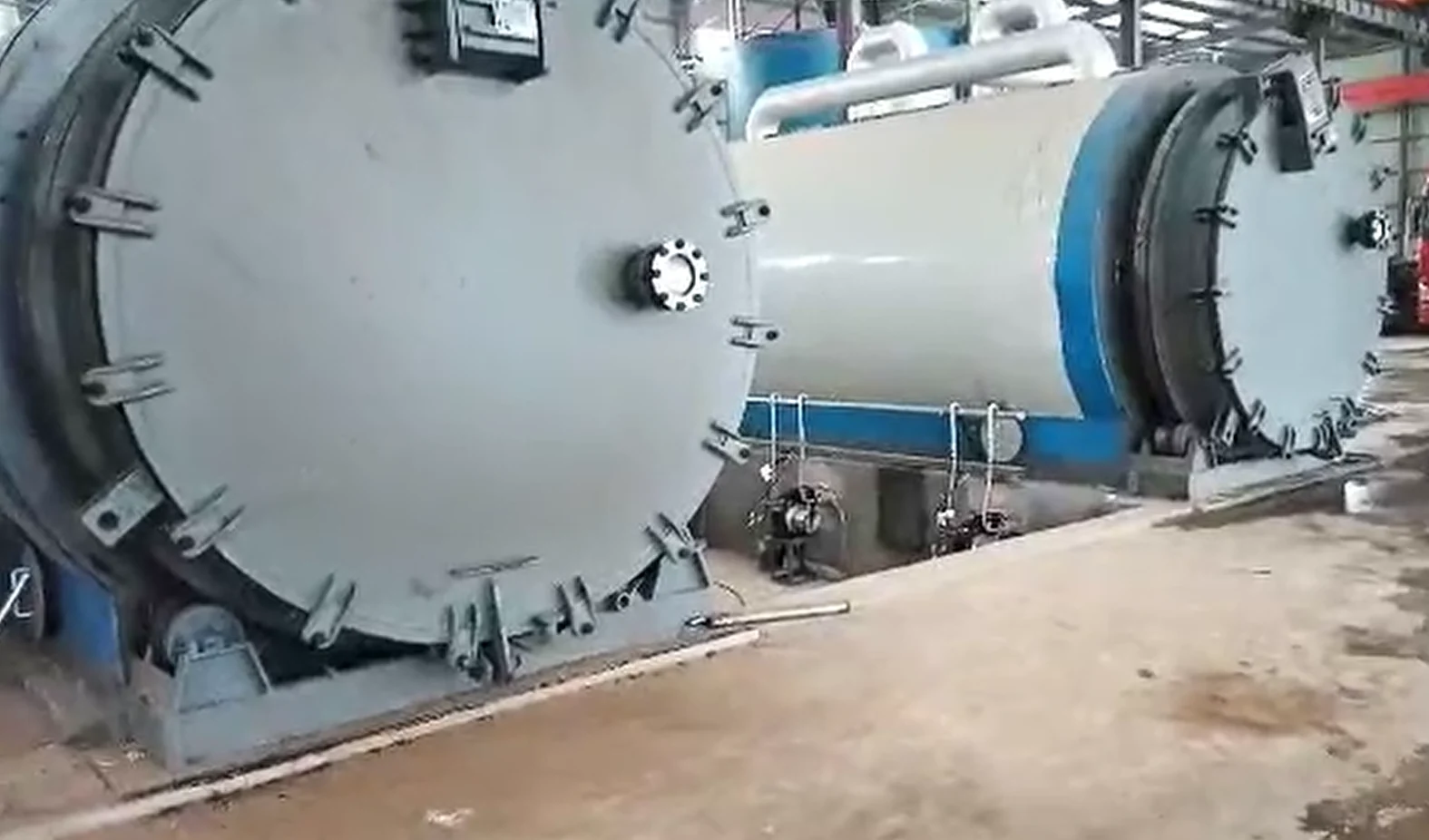
Vista general de la planta de pirolisis de neumáticos de cuatro unidades en Chibi, Hubei, mostrando las líneas de reactores y las áreas de proceso compartidas. Foto tomada durante la instalación y puesta en marcha en 2018.
Foto 2
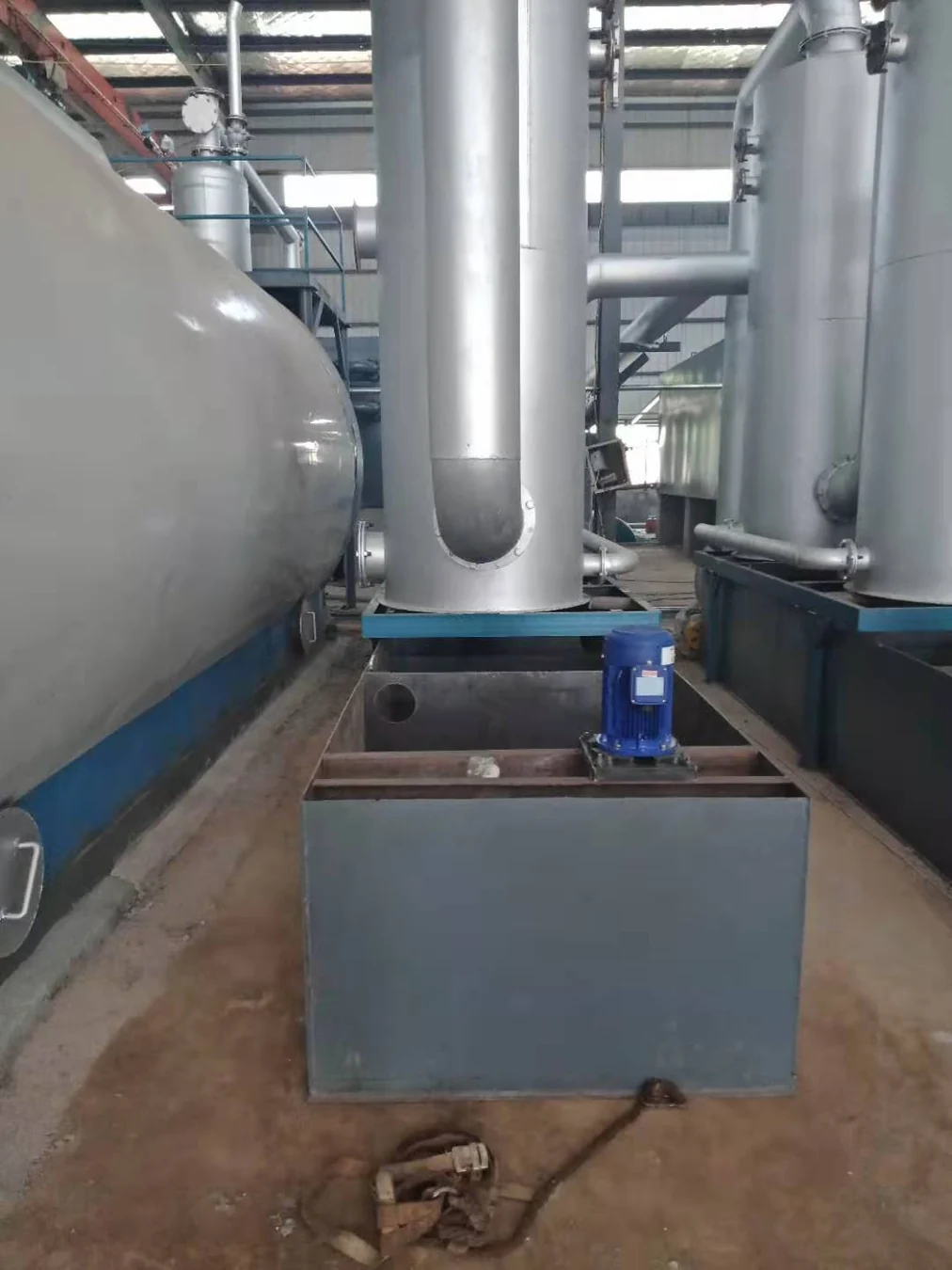
Detalle del proceso en el sitio de Chibi mostrando la preparación de materias primas y el área de carga de una línea de reactores. Foto tomada durante la instalación y puesta en marcha en 2018.
Especificaciones del proyecto
| Artículo | Especificación del proyecto |
|---|---|
| Ubicación | Chibi, Hubei, China |
| Año del proyecto | 2018 |
| Estado | Proyecto de archivo histórico - entregado y comisionado en 2018 |
| Materia prima | Neumáticos de desecho (enteros o cortados)< |
| Sistem | Pirólisis por lotes (XY-8-P/clase PB) |
| Número de unidades | 4 |
| Capacidad por unidad | 12 TPD (diseño) |
| Capacidad combinada de diseño | 48 TPD |
| Modelo de producción | Ciclos de lote escalonados en cuatro líneas |
| Principales flujos recuperados | Aceite de pirólisis (combustible), material carbonoso recuperado, alambre de acero; el gas no condensable puede retornarse a la calefacción donde el diseño instalado y las condiciones de operación lo permitan |
| Proveedor | Shangqiu Jinpeng Industrial Co., Ltd. |
Lo que demuestra el proyecto
Este proyecto demuestra de qué se trata realmente un sitio de lotes de cuatro líneas a escala de condado: un horario de trabajo más que un recuento de reactores. Cuatro unidades de la misma clase, escalonadas en ciclos de aproximadamente 24 horas, proporcionan a una tripulación modesta un ritmo diario manejable de carga, monitoreo y descarga, y dan al sitio tolerancia para un suministro irregular de materia prima. Para un cliente similar que evalúa una planta de pirólisis de neumáticos de escala media, los puntos a examinar son la planificación de la entrada y almacenamiento para una cuenca delimitada, las ventanas de carga y descarga y cómo se dotan de personal, y cuántas líneas pueden operar económicamente al nivel de entrada esperado. El valor de esta entrada de archivo es como referencia para esa lógica de dimensionamiento y programación.
Acerca de Jinpeng
Shangqiu Jinpeng Industrial Co., Ltd. diseña y fabrica plantas de pirolisis por lotes, semicontinuas y continuas, sistemas de destilación de aceite y equipos de apoyo para neumáticos desechados, plásticos desechados, lodos de aceite, materiales derivados del caucho y otras materias primas ricas en carbono adecuadas. La configuración del proyecto se desarrolla en torno a las características del material, los objetivos de producción, las condiciones del sitio y los requisitos locales aplicables. Para discusiones sobre el proyecto, visite www.pyrolysis-machine.com.
Aviso Legal
Todas las capacidades en este artículo son valores de diseño; el rendimiento real depende del tipo y la condición de la materia prima, las prácticas operativas y las condiciones del sitio. Los rendimientos y propiedades del producto varían según la materia prima y las condiciones del proceso y deben confirmarse mediante pruebas de la materia prima realmente procesada. El desempeño energético y de emisiones depende de los sistemas auxiliares instalados y de la operación real, y el diseño final debe cumplir con las normativas locales aplicables.
Nota de archivo: Esta retrospectiva se basa en los registros del proyecto de Jinpeng y fotografías del período de entrega y puesta en marcha originales. Describe la configuración del proyecto documentada y no constituye una verificación del estado operativo actual de la planta.