Pyrolysis equipment

From the Jinpeng Project Archive: 2×12 TPD Batch Waste-Tire Pyrolysis Project in Dandong, Liaoning, 2018

Two batch-type horizontal rotary pyrolysis units with a combined design capacity of 24 TPD, configured for a port/border city where inbound feedstock and outbound product movement set the production rhythm.

2026-08-20 7 minutes
이 상세 자료의 본문은 현재 영어 원문으로 제공됩니다. 내비게이션과 문의 절차는 한국어로 이용할 수 있습니다.

Project Details

Project Location
Dandong, Liaoning Province, China - a coastal city on the Yalu River where road, rail, and cross-border freight converge.
Configuration
Two XY-8-P / PB-class batch-type horizontal rotary pyrolysis plants (Φ2800×8800 reactor class), operated as independent batch lines.
Combined Design Capacity
24 TPD (2 × 12 TPD per-unit design capacity).
Feedstock
Waste tires, whole or pre-cut, loaded in batches.
Project Year
2018.
Original Project Status
Delivered and commissioned in 2018; archive holds installation and commissioning photographs.
Current Operating Status
Not independently verified.
Supplier
Shangqiu Jinpeng Industrial Co., Ltd.

A Logistics Question First, an Engineering Answer Second

A waste-tire pyrolysis plant is a materials-movement problem wearing an engineering solution. Feedstock must arrive steadily enough to keep reactors fed, and products must leave steadily enough that storage never becomes the bottleneck. Dandong sharpens both sides of that equation: a coastal city on the Yalu River with port facilities and cross-border road and rail links, where freight moves in several directions at once. The two-unit batch installation recorded in the 2018 archive was configured with this reality in view: at 24 TPD of combined design capacity, it processes in measured batch steps, making the discipline of inbound supply and outbound dispatch as important as the reactor cycle.

Project Background & Configuration Logic

Two 12 TPD batch lines instead of a single larger unit is a deliberate configuration, not a default. While one reactor cools and discharges, the other can preheat or pyrolyze, and the phases of the two lines can be staged so receiving, processing, and dispatch do not compete for the same hours. In a border-coastal city, truck arrivals are less predictable than in a dense industrial cluster: supply can come from municipal collection points, surrounding counties, or freight in the port corridor. The configuration was therefore designed so that intake can be buffered in the yard, batches can be phased across two reactors, and the plant keeps its rhythm even when arrivals cluster unevenly. Two units also mean the site is not dependent on a single reactor - routine service on one line need not stop the other. As with Jinpeng's standard delivery, installation guidance and operator training were part of the delivery scope.

Core Technology & Production Analysis

Inbound Feedstock Movement: Receiving Tires in a Port City

For a batch plant, the feedstock question is not how many tires the yard can hold, but how reliably they arrive in step with the batch cycle. Waste tires reaching a Dandong-area site would typically travel by truck from municipal collection points, garages, and surrounding counties, in loads of whole or pre-cut tires. The receiving area is the buffer between irregular arrivals and a fixed process schedule: a full day of design intake can arrive in a few concentrated loads, provided the storage yard holds several days of material. Design logic for a port/border location weighs the mix of collection sources, seasonal tire generation, and freight distance, then sizes covered and open storage accordingly. The plant's appetite is steady across each cycle; supply only needs to match it on average.

Staged Loading and the Batch Cycle

The batch cycle on this class of equipment runs roughly 22-24 hours: 2 hours of loading, 4 of preheat, 10 of active pyrolysis, 4-6 of cooling, and 2 of discharge. With two reactors, these phases can be staged so the lines alternate - one discharging while the other preheats - smoothing the demand for labor, heat, and cooling water across the day. Staging is what lets a 24 TPD combined design capacity behave like a steadier process than any single batch: the design intent is that at any given hour some part of the site is producing, though each reactor completes a discrete cycle.

Pyrolysis and Condensation Inside the Reactor

Each reactor is a horizontal rotary vessel of Q345R boiler steel, rotated at about 0.4 revolutions per minute and heated indirectly so the material does not contact the flame. The system operates at low pressure in an inert, anaerobic atmosphere under slight negative pressure - the design basis for keeping the process sealed and controlled. As tires are heated through the pyrolysis phase, the vapor stream passes to the condensation system, where the condensable fraction is recovered as pyrolysis oil: a fuel oil, not a diesel product. Reaching diesel-grade fuel would require further refining and certification testing. The non-condensable portion continues to the gas-handling side of the plant.

Outbound Product Movement: Oil, Carbonaceous Material, and Steel

Three recoverable streams leave a tire pyrolysis plant, and each moves differently. Pyrolysis oil is a liquid fuel oil, collected in storage and dispatched by road tanker or drum; being liquid, its outbound logistics are simplest to schedule once storage is sized. Recovered carbonaceous material - the solid fraction, which is not commercial-grade carbon black unless deep-processed and tested - moves in bulk or bagged form and tolerates the most flexible dispatch windows. Steel wire is the densest stream, accumulating until a load is economical to move. Industry design references for passenger and truck tire feedstock commonly place oil yield in the 40-45% range, but no fixed yield is promised; actual results depend on feedstock condition and operating practice. In a port city, road dispatch is the baseline, and the port adds the possibility of moving larger volumes by coastal shipping - a logistics option, not a claim about how this site shipped.

Non-Condensable Gas and Site Energy Logic

Non-condensable gas from pyrolysis may be returned to the heating system where the installed design and operating conditions permit - standard design logic for reducing purchased fuel demand on batch plants of this class. Flue gas from the heating side passes through the installed treatment system: a spray tower for alkaline neutralization followed by an adsorption tower for desulfurization and dedusting, designed to comply with applicable local emission requirements under proper operating conditions. Discharge is treated and subject to local requirements.

Two-Unit Scheduling and Maintenance Flexibility

Beyond production, the two-unit layout changes maintenance and growth. With two reactors, one line can be cooled, opened, and serviced while the other continues its cycle, so routine maintenance need not force a full site shutdown. Staffing is modest - this class of plant is typically operated by one to two operators per line - and the units can be run independently or, where the configuration permits, linked in series. For a first project at a border-coastal location, two units are large enough to justify organized logistics and small enough to manage with a small crew.

Photographs from the Archive

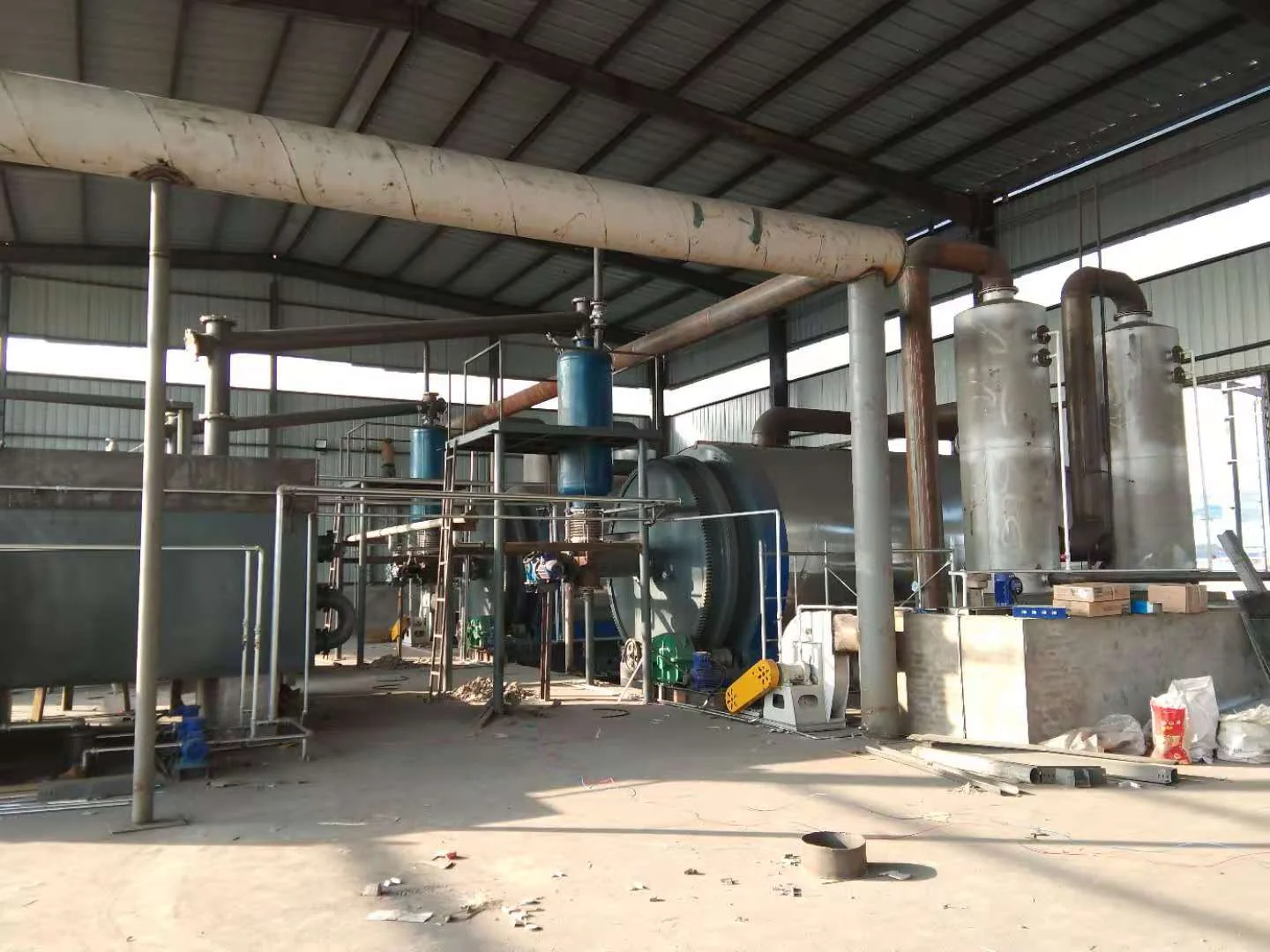
Dandong, Liaoning Province, China - a coastal city on the Yalu River where road, rail, and cross-border freight converge. project equipment

Overall view of the two-unit batch pyrolysis site in Dandong, Liaoning, showing the layout and scale of the 2×12 TPD installation. Photo taken during installation and commissioning in 2018.

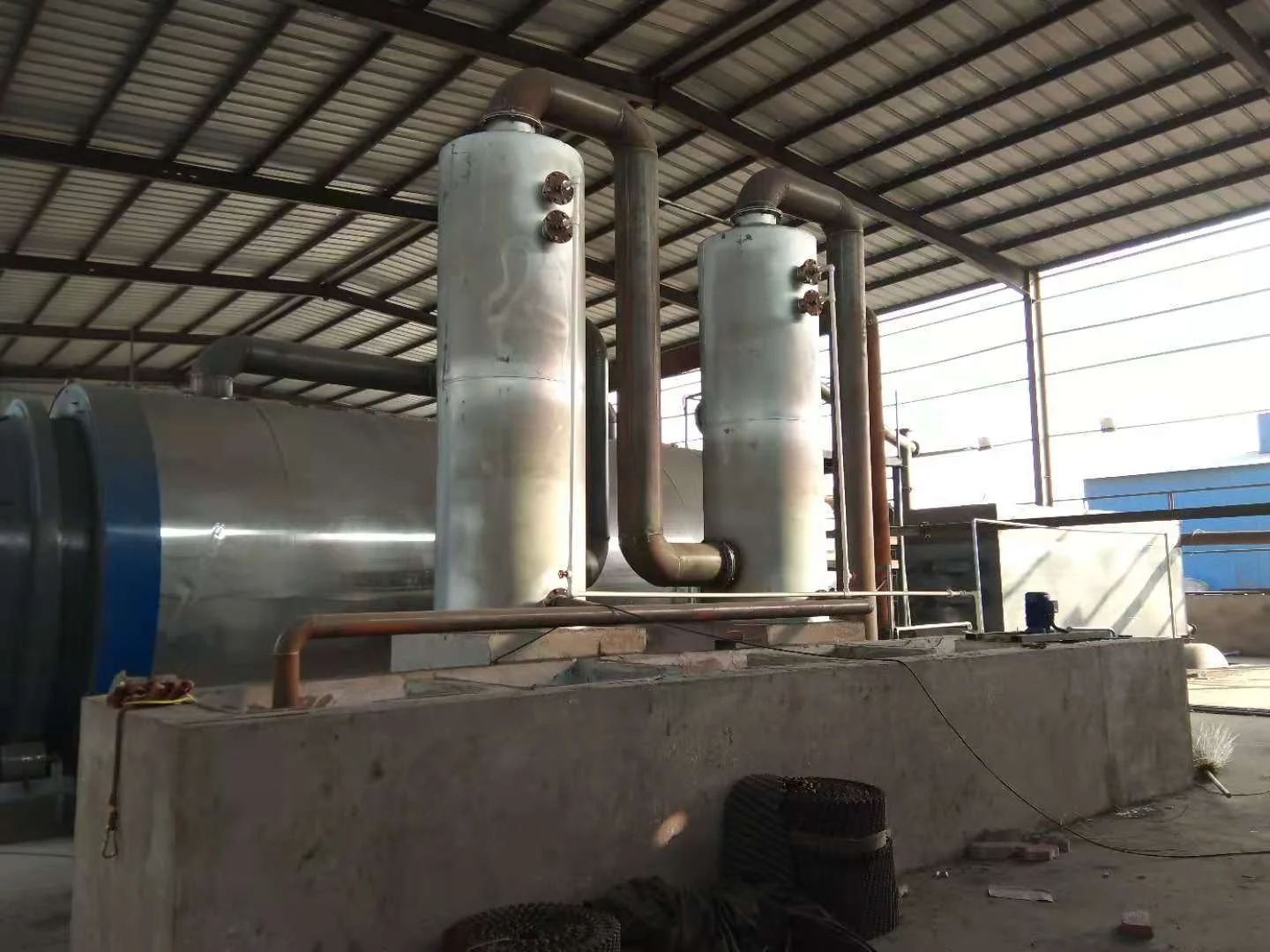
Dandong, Liaoning Province, China - a coastal city on the Yalu River where road, rail, and cross-border freight converge. project equipment

Process detail at the Dandong, Liaoning plant - the batch reactor and its auxiliary systems during installation and commissioning. Photo taken during installation and commissioning in 2018.

Project Specifications

ItemProject specification
LocationDandong, Liaoning Province, China
Project year2018
StatusHistorical/archive project - delivered and commissioned in 2018; current operating status not independently verified
FeedstockWaste tires (whole or pre-cut)
SystemBatch-type horizontal rotary pyrolysis plant (XY-8-P / PB class)
Number of units2
Capacity per unit12 TPD (design capacity)
Combined design capacity24 TPD (design capacity)
Production modelBatch; approximately 22-24 h cycle per reactor, phased across two lines
Main recovered streamsPyrolysis oil (fuel oil), recovered carbonaceous material, steel wire; non-condensable gas may be returned to the heating system where the installed design and operating conditions permit
SupplierShangqiu Jinpeng Industrial Co., Ltd.

What the Project Demonstrates

The Dandong archive entry demonstrates how a two-unit batch configuration answers a border-coastal logistics environment. It shows the value of phasing: staggered cycles convert a discrete batch process into a site designed to be productive through most of the day, and therefore tolerant of irregular inbound truck arrivals. It also shows the importance of planning the outbound side as deliberately as the inbound one - liquid oil storage sized against the cycle, space for carbonaceous material and steel, and dispatch windows that avoid loading hours. For a client considering a similar site near a port or border, the reference points are: how many days of feedstock the yard can buffer, how product storage matches the batch cadence, and whether the two lines can be phased so intake, processing, and dispatch never demand the same hours. Evaluators should watch whether the layout supports that phasing - receiving area, reactor row, and product storage arranged so trucks never compete for the same space.

About Jinpeng

Shangqiu Jinpeng Industrial Co., Ltd. designs and manufactures batch, semi-continuous, and continuous pyrolysis plants, oil distillation systems, and supporting equipment for waste tires, waste plastics, oil sludge, rubber-derived materials, and other suitable carbon-rich feedstocks. Project configuration is developed around material characteristics, production objectives, site conditions, and applicable local requirements. For project discussions, visit www.pyrolysis-machine.com.

Disclaimer

This case study is a retrospective description of a historical project based on Jinpeng's project records and photographs from the delivery and commissioning period. Capacity figures are design values; actual throughput depends on feedstock characteristics and operating conditions. Product yields and properties require on-site testing and are not guaranteed; recovered solids are described as recovered carbonaceous material unless deep-processed and tested to a commercial grade. Energy and emissions performance depends on auxiliary systems and actual operating practice, and the final design must comply with local regulations.

Archive Note: "This retrospective is based on Jinpeng's project records and photographs from the original delivery and commissioning period. It describes the documented project configuration and does not constitute verification of the plant's current operating status."

프로젝트 문의

원료에 맞는 설비 구성 조언이 필요하신가요?

Pyrojin에 문의