Pyrolysis equipment

From the Jinpeng Project Archive: 2×12 TPD Batch Waste Tire Pyrolysis Project in Zhaotong, Yunnan — A First Step into Mountainous Southwest China, 2017

The interesting thing about this archive project is not its headline capacity — 24 TPD of combined design capacity is modest — but the shape of its entry into mountainous southwest China.

2026-08-20 6 minutes
This detailed legacy page is currently preserved in English. The navigation and enquiry flow remain available in your selected language.

Subtitle: Two batch-type reactors, each with a 12 TPD design capacity, configured around dispersed feedstock logistics, on-site fuel availability, and the option of staged growth in a remote mountainous province.

Project Details

Project Location
Zhaotong, Yunnan Province, southwestern China - mountainous terrain with long road hauls between population centers
Configuration
Two batch-type horizontal rotary pyrolysis reactors, 12 TPD design capacity per unit, with condensation, gas handling, and flue-gas treatment
Combined Design Capacity
24 TPD (2 × 12 TPD)
Feedstock
Waste tires (loaded whole or pre-cut, in batches)
Project Year
2017
Original Project Status
Delivered and commissioned in 2017
Current Operating Status
Not independently verified
Supplier
Shangqiu Jinpeng Industrial Co., Ltd. (PYROJIN)

A Modest Plant in a Demanding Place

The interesting thing about this archive project is not its headline capacity - 24 TPD of combined design capacity is modest - but the shape of its entry into mountainous southwest China. Zhaotong sits in the highlands of northeastern Yunnan, where waste tires arise in small, dispersed quantities, roads climb and narrow, and industrial energy supply cannot be taken for granted. One large plant would depend on feedstock and fuel the region may not yet deliver; two 12 TPD batch units represent a more cautious, staged beginning. The case is therefore as much about logistics and energy logic as about pyrolysis: how a batch configuration absorbs a scattered tire supply, limits fuel dependency, and leaves room to grow.

Project Background & Configuration Logic

The archive records a 2017 delivery and commissioning of two batch-type pyrolysis lines in Zhaotong. What the record does not contain - and no archive entry should pretend to contain - is the operator's internal reasoning. What can be said is that the configuration was designed to fit the conditions such a location presents, and those conditions follow from general engineering logic.

Feedstock in a mountainous province is dispersed. Waste tires are bulky and light, so transport cost per tonne rises quickly once hauling involves mountain roads. A plant sized to a smaller collection radius keeps inbound logistics manageable; a much larger one would starve or force uneconomic hauls. Two 12 TPD batch units can be fed by a catchment that builds gradually as collection routes mature.

Fuel availability is the second consideration. A batch line of this class heats its reactor indirectly, and the non-condensable gas produced during pyrolysis may be returned to the heating system where the installed design and operating conditions permit - valuable where external fuel supply is thin or expensive.

The third is growth: batch lines are independent, and further units can in principle be added on the same site as feedstock supply justifies. The 2017 record shows the entry step, not the later history; the configuration logic is what the archive can document. Installation guidance and operator training were part of the delivery scope, as standard for this equipment class.

Core Technology & Production Analysis

Feedstock Logistics in Mountainous Terrain

Tire pyrolysis begins before the reactor, with collection, transport, and storage. In mountainous terrain the practical question is the radius over which tires can be collected economically: whole tires are bulky and light, so transport cost per tonne is high, and wet feed adds moisture load to a batch. The configuration was therefore designed around covered, orderly storage close to the feed point, with tires loaded whole or pre-cut in batches.

The Two-Unit Batch Rhythm

A batch cycle on this class of equipment runs on the order of 22-24 hours - roughly two hours of loading, four of preheat, about ten of pyrolysis, four to six of cooling, and two of discharge - with exact timing depending on feedstock and operating conditions. With two units, the natural production logic is to stagger the cycles: while one reactor is in its long pyrolysis phase, the other can be loaded, cooled, or discharged. The operator works against a rolling schedule even though each line is strictly batch, and the plant never stops fully for a single loading or discharge event. Control is PLC-based, and labor demand stays within the one-to-two operators per plant this class is designed around.

Fuel Availability and the Energy Loop

In a remote province, energy economics are part of a plant's viability. The non-condensable gas generated during pyrolysis may be returned to the heating system where the installed design and operating conditions permit, reducing dependence on purchased fuel - particularly valuable where industrial fuel must be hauled over mountain roads. The liquid product, pyrolysis oil, is a fuel oil: usable for heating or heavy-fuel applications, not a diesel product as produced; reaching diesel fuel grades would require further distillation, refining, and certification testing. Flue gas passes through the installed treatment train - typically a spray stage and an adsorption stage - designed to meet applicable local emission requirements under proper operating conditions.

Product Streams and Their Boundaries

The documented outputs of a waste-tire batch plant of this type are three: pyrolysis oil (fuel oil), recovered carbonaceous material from the solid residue, and steel wire from the tire carcasses. Knowledge-base reference data for passenger and truck tires commonly places the oil fraction in the 40-45% range, but that is design-logic reference material, not a project result; actual yields depend on feedstock and operating conditions and would need on-site testing. The solid residue is recovered carbonaceous material, not automatically commercial carbon black; higher-value use would require further processing and testing. No fixed yield or quality promise is attached to this archive project.

A Configuration Built for Staged Growth

The two-unit arrangement reads as an entry configuration with an expansion path. Because batch lines are independent, additional units can in principle be added on the same site, sharing utilities, storage, and labor. Whether further units were ever added at Zhaotong is not part of the archive record; what the record shows is a configuration whose design intent is consistent with staged growth in a market whose feedstock supply was still forming.

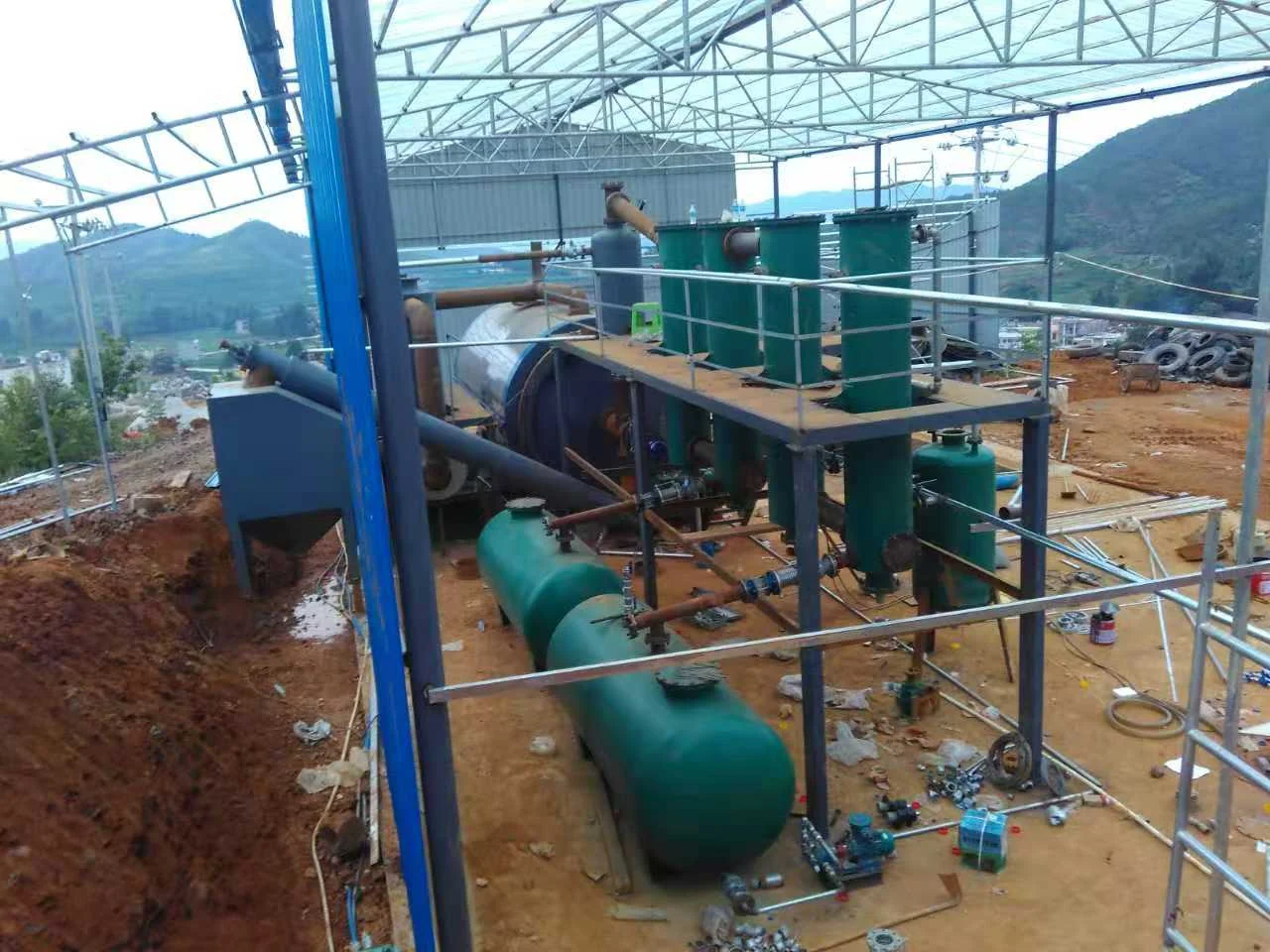
Photo 1

Zhaotong, Yunnan Province, southwestern China - mountainous terrain with long road hauls between population centers project equipment

Overall view of the two-unit batch waste tire pyrolysis plant in Zhaotong, Yunnan, showing both 12 TPD reactors with their condensation and treatment areas. Photo taken during installation and commissioning in 2017.

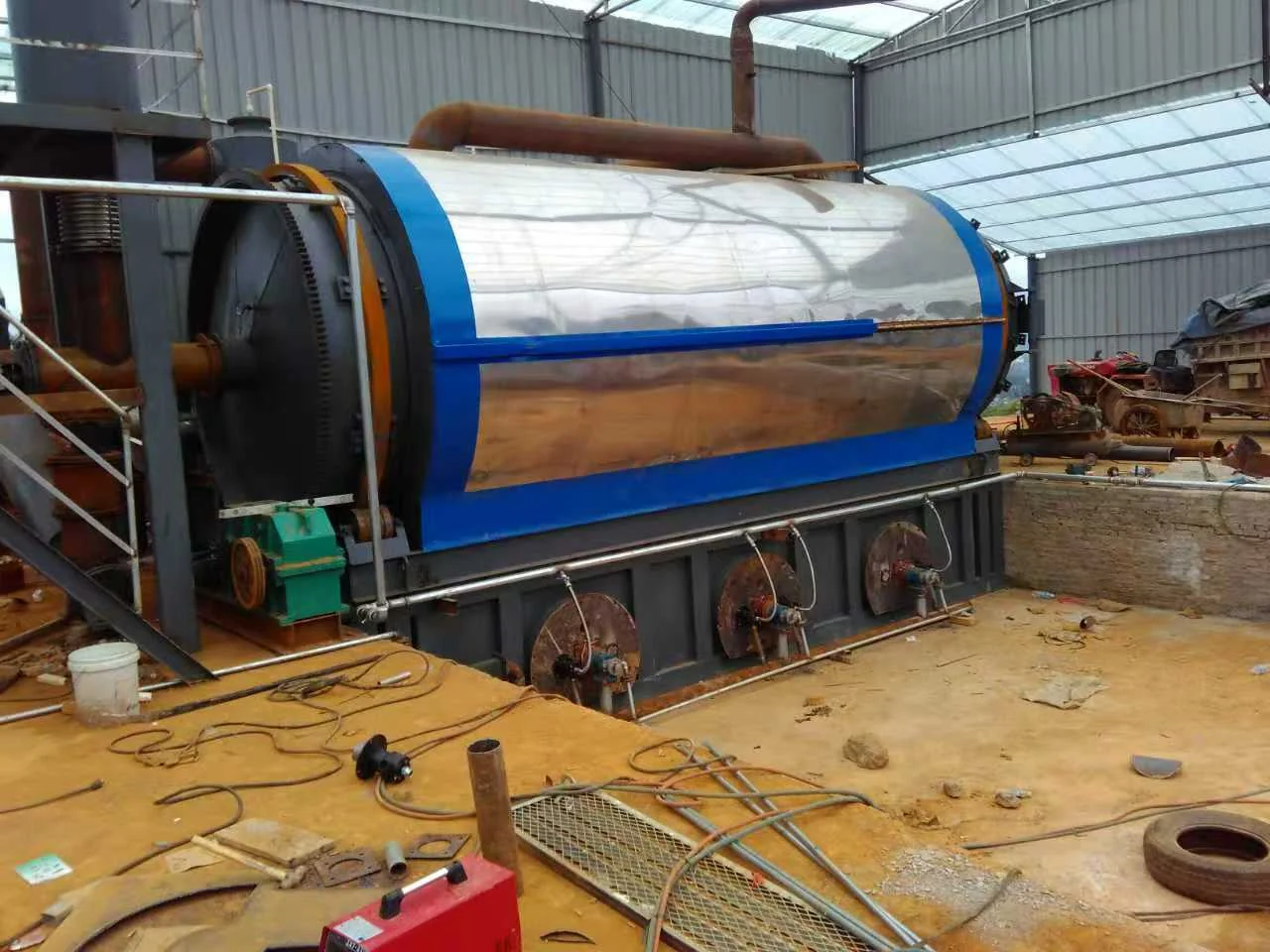
Photo 2

Zhaotong, Yunnan Province, southwestern China - mountainous terrain with long road hauls between population centers project equipment

Process detail of one 12 TPD batch line at the Zhaotong site - reactor feed and the associated heating and condensation connections. Photo taken during installation and commissioning in 2017.

Project Specifications

ItemProject specification
LocationZhaotong, Yunnan Province, China (mountainous southwest)
Project year2017
StatusArchive project - delivered and commissioned in 2017; current operating status not independently verified
FeedstockWaste tires (loaded whole or pre-cut, in batches)
SystemBatch-type pyrolysis with condensation, gas handling, and flue-gas treatment
Number of units2
Capacity per unit12 TPD (design capacity)
Combined design capacity24 TPD
Production modelBatch, with staggered cycles across two independent lines
Main recovered streamsPyrolysis oil (fuel oil), recovered carbonaceous material, steel wire; non-condensable gas returned to heating where design and operating conditions permit
SupplierShangqiu Jinpeng Industrial Co., Ltd. (PYROJIN)

What the Project Demonstrates

This archive entry demonstrates what a two-unit batch plant can be in a remote, mountainous market: an entry configuration sized to a dispersed feedstock supply, energy logic built around the plant's own process gas, and a layout that preserves the option of adding lines. For a prospective operator in a similar region, the reference value lies in how scale was matched to the catchment: two 12 TPD units fed by a gradually forming collection network, covered storage, and a heating system less dependent on externally supplied fuel. Evaluators should watch four things: the real collection radius and transport cost per tonne of tires, the adequacy of covered storage, the actual fuel situation on site, and the gap between the 24 TPD design capacity and achievable throughput. The archive documents the configuration; the plant's current operating record remains not independently verified.

About Jinpeng

Shangqiu Jinpeng Industrial Co., Ltd. designs and manufactures batch, semi-continuous, and continuous pyrolysis plants, oil distillation systems, and supporting equipment for waste tires, waste plastics, oil sludge, rubber-derived materials, and other suitable carbon-rich feedstocks. Project configuration is developed around material characteristics, production objectives, site conditions, and applicable local requirements. For project discussions, visit www.pyrolysis-machine.com.

Disclaimer & Archive Note

This retrospective is based on Jinpeng's project records and photographs from the original delivery and commissioning period. It describes the documented project configuration and does not constitute verification of the plant's current operating status.

All capacities are design values. Actual throughput depends on feedstock quality and operating conditions. Yields and product properties are not guaranteed and require on-site testing. Energy and emissions performance depends on the installed auxiliary systems and on actual operation, and the final design must comply with applicable local regulations.

项目咨询

需要根据原料获得设备配置建议?

联系金蓬