Project Details
- Project Location
- Nanping, Fujian Province, China
- Configuration
- 8 × XY-8-P batch-type horizontal rotary pyrolysis plants (12 TPD design capacity per unit)
- Combined Design Capacity
- 96 TPD (8 × 12 TPD)
- Feedstock
- Waste tires
- Project Year
- 2018
- Original Project Status
- Delivered and commissioned in 2018, per Jinpeng's project records
- Current Operating Status
- Not independently verified
- Supplier
- Shangqiu Jinpeng Industrial Co., Ltd. (PYROJIN)
Opening: Scale in a Wet Mountain Province
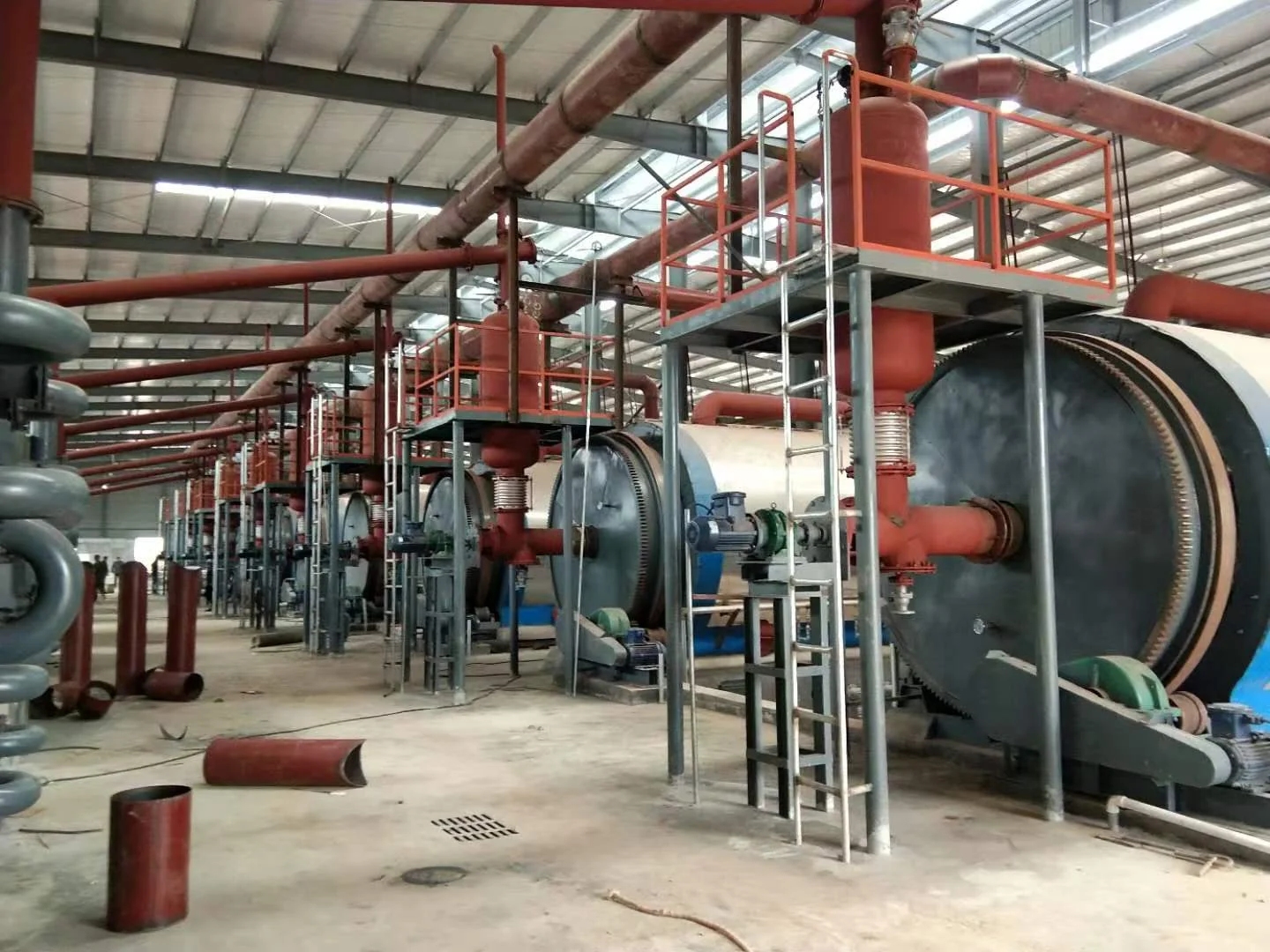
A batch plant is usually assumed to be the small-scale answer to waste tires - one reactor, one cycle, a modest throughput. This project inverts that assumption. Eight batch lines, each with a 12 TPD design capacity, are arranged on a single site in the hill country of northwestern Fujian, for a combined design capacity of 96 TPD with no continuous train in the picture. The interesting question is what changes when the batch idea is scaled eightfold in a wet mountain province. Eight roughly 24-hour cycles must be staggered so loading, preheat, pyrolysis, cooling, and discharge never collide. Feedstock that can sit under heavy rain must be kept dry until charging. Condensation, cooling water, and product storage must all work in humidity that stays high much of the year. Here, scheduling and storage carry as much weight as reactor design.
Project Background & Configuration Logic
Nanping is not an industrial plain. It is a prefecture of the Wuyi ranges, where the Min River's headwaters cut narrow valleys and road transport follows those corridors. In terrain like this, tire arisings tend to arrive from a broad catchment in irregular lots - a truck fleet here, a farming cooperative there - rather than in steady streams. The configuration was designed around that material reality and around the province's climate, with heavy rainfall and high humidity for much of the year.
The scale is built from parallelism. Each XY-8-P unit is a batch-type horizontal rotary reactor with a 12 TPD design capacity, and batch reactors are typically sized in the 1-15 TPD band while continuous plants occupy the 20-50 TPD range - so the site's combined design capacity of 96 TPD is deliberately the sum of eight identical lines rather than the output of one continuous train. That modular architecture suits a hill-country site. Lines can be added in stages as feedstock volume is confirmed, so the final footprint is not fixed at day one. Identical lines share spares, operator skills, and cycle discipline, compressing the learning curve from one reactor to eight. A maintenance stop on one unit does not idle the site.
Core Technology & Production Analysis
Multi-Line Scheduling: Staggering the Cycle
The batch cycle runs roughly 22-24 hours: about two of loading, four of preheat, ten of pyrolysis, four to six of cooling, two of discharge. Run all eight lines on identical timing and every loading, discharge, and demand peak coincides. The production plan is therefore a schedule: lines are phased so that at any hour a few are in pyrolysis while others load, cool, or discharge. Staggering evens out the load on labor, the cooling-water circuit, and the heating side. This is the difference between owning eight reactors and running an eight-unit schedule.
Covered Storage: Keeping Feedstock Dry Before Charging
Fujian's rainfall is a process variable before it ever reaches a reactor. Water trapped in a tire's tread and between its plies enters the charge; inside the reactor it must be vaporized: it absorbs heat during preheat, adds to the vapor load the condensing section must handle, and increases the water fraction separating out with the oil. The site was therefore designed with covered feedstock storage between intake and charging - tires arrive, are staged, and are charged from under cover, so the wet season does not become a feedstock-moisture season. It also keeps the staging area workable in heavy rain and limits mud and contamination carried into the process.
Wet-Climate Process Handling: Condensation, Cooling, and Product Storage
Humidity shapes the back end of the process. In a warm, wet climate the condensing section must reject more latent moisture, and cooling-water circuits operate against higher ambient wet-bulb temperatures, reducing the effectiveness of open heat dissipation. Cooling capacity and water management were therefore first-order design items. Product handling follows the same logic: pyrolysis oil is stored in sealed vessels so rain and condensation cannot enter it, and the recovered carbonaceous material is kept under cover so it does not pick up moisture before testing or dispatch. Control and electrical equipment goes into protected enclosures, standard practice in humid conditions.
Gas Return and the Installed Treatment Train
Each reactor operates as a closed, micro-negative-pressure system with indirect heating, so the material never contacts the flame and the atmosphere stays inert. Non-condensable gas may be returned to the heating system where the installed design and operating conditions permit, and scheduling lets that return smooth the fuel balance across lines. Flue gas from the heating side passes through the installed treatment system - a spray tower with alkali solution followed by an adsorption tower for desulfurization and dedusting - designed to meet local emission requirements under proper operating conditions. The design does not claim absolute cleanliness; it claims a defined treatment train whose performance depends on operation and on the local requirements it must satisfy.
Discharge Rotation and Maintenance Windows
Each line ends its cycle by cooling and then discharging the solids: recovered carbonaceous material and the steel wire separated from the tire structure. With eight lines, discharge is rotated rather than simultaneous, so the labor around solids removal stays within the site's capacity and the products move to their own storage without a bottleneck. Identical lines make maintenance modular: one unit can be taken offline while the others continue, and the parts stock for one reactor serves all eight - losing one line's throughput for a day without losing the site.
Photo 1

Overall view of the eight-unit batch pyrolysis site in Nanping, Fujian - the multi-line reactor layout and covered storage area. Photo taken during installation and commissioning in 2018.
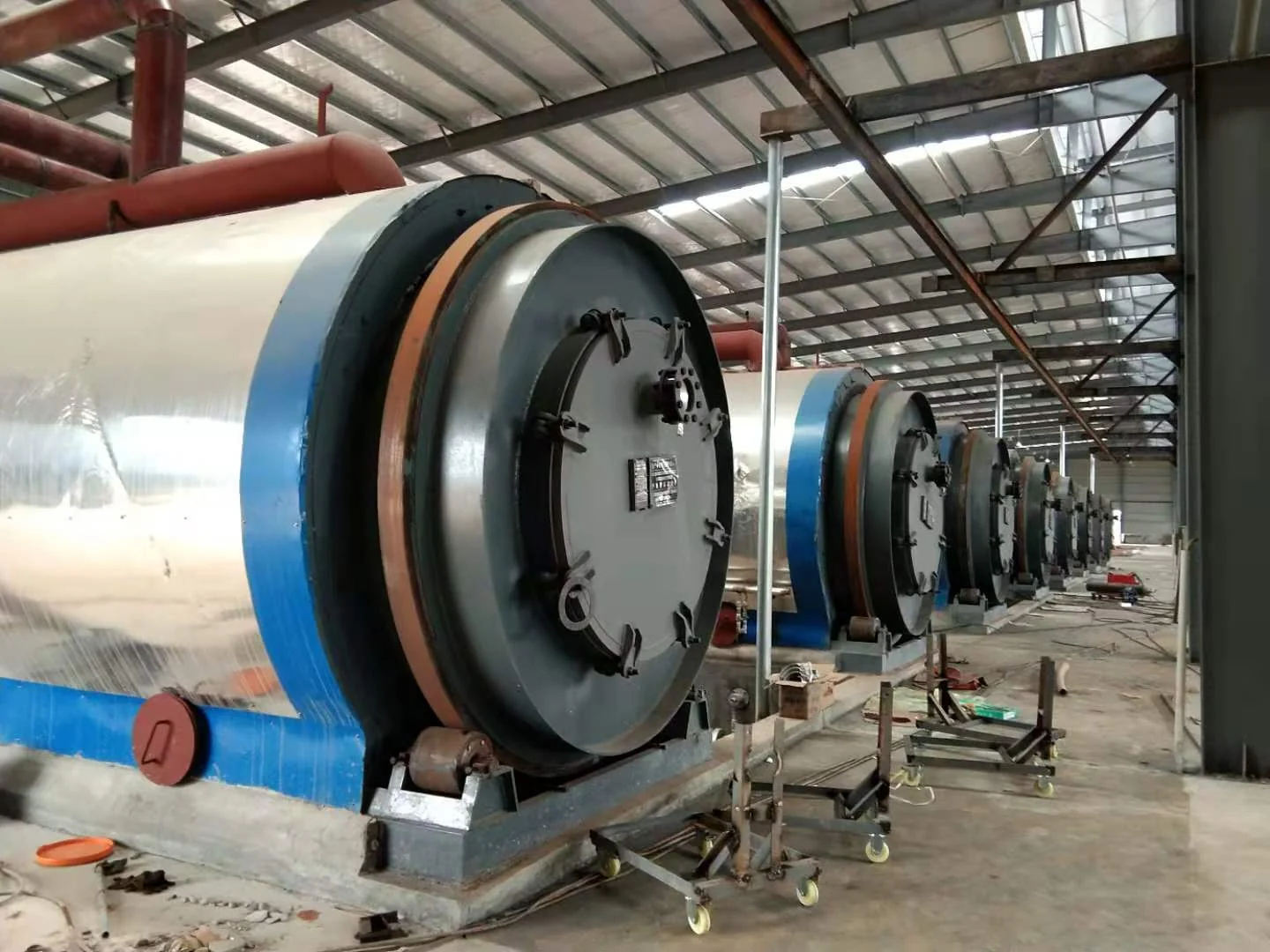
Photo 2

Process detail at Nanping: tires staged under cover for batch charging at the reactor inlet. Photo taken during installation and commissioning in 2018.
Project Specifications
| Item | Project specification |
|---|---|
| Location | Nanping, Fujian Province, China |
| Project year | 2018 |
| Status | Archive project - delivered and commissioned in 2018; current operating status not independently verified |
| Feedstock | Waste tires (whole or cut, batch-charged) |
| System | XY-8-P batch-type horizontal rotary pyrolysis plant; indirect heating; micro-negative pressure |
| Number of units | 8 |
| Capacity per unit | 12 TPD design capacity |
| Combined design capacity | 96 TPD (8 × 12 TPD) |
| Production model | Batch - staged loading, preheat, pyrolysis, cooling, and discharge per roughly 24-hour cycle |
| Main recovered streams | Pyrolysis oil (fuel oil); recovered carbonaceous material; steel wire; non-condensable gas returned to heating where the installed design and operating conditions permit |
| Supplier | Shangqiu Jinpeng Industrial Co., Ltd. (PYROJIN) |
What the Project Demonstrates
This project demonstrates that batch architecture can reach a large combined design capacity through disciplined multi-line scheduling rather than a single continuous train. For clients in hilly or wet regions, it shows why covered storage and condensation/cooling design belong in the site plan from the start, and why a multi-unit site's production plan is a schedule, not a cycle. Evaluators should examine how loading, discharge, and fuel demand are phased across lines, the coverage and drainage of storage areas, and cooling-water design for humid conditions. Eight reactors on a site is a statement of intent; a working eight-unit schedule is the actual capability.
About Jinpeng
Shangqiu Jinpeng Industrial Co., Ltd. designs and manufactures batch, semi-continuous, and continuous pyrolysis plants, oil distillation systems, and supporting equipment for waste tires, waste plastics, oil sludge, rubber-derived materials, and other suitable carbon-rich feedstocks. Project configuration is developed around material characteristics, production objectives, site conditions, and applicable local requirements. For project discussions, visit www.pyrolysis-machine.com.
Disclaimer & Archive Note
All capacities stated in this article are design values; actual throughput depends on feedstock characteristics and operating conditions. Product yields and properties are not guaranteed and must be established by testing the specific feedstock in question. Energy consumption and emission performance depend on the installed auxiliary systems and on actual operation, and the final project design must comply with applicable local regulations and requirements.
Archive Note: This retrospective is based on Jinpeng's project records and photographs from the original delivery and commissioning period. It describes the documented project configuration and does not constitute verification of the plant's current operating status.