
Detalles del Proyecto
- Ubicación del Proyecto
- Yulin, Región Autónoma Zhuang de Guangxi, sur de China
- Configuración
- Dos unidades de pirólisis rotativa horizontal tipo batch XY-8-P/PB, 12 TPD de capacidad de diseño cada una
- Capacidad de Diseño Combinada
- 24 TPD (2 × 12 TPD, operación por lotes)
- Materia prima
- Neumáticos desechados (enteros o cortados, cargados por lotes)
- Año del Proyecto
- 2019
- Estado Original del Proyecto
- Entregado y puesto en marcha en 2019. La guía de instalación y la formación del operador fueron parte del alcance de la entrega.
- Estado de Operación Actual
- No verificado de manera independiente.
- Proveedor
- ShangqiuJinpeng Industrial Co., Ltd. (PYROJIN)
El Clima Es Parte de la Configuración
La mayoría de las descripciones de una planta de pirólisis de neumáticos de desecho comienzan en el tambor del reactor. En un clima subtropical como el de Yulin, la ingeniería más exigente se encuentra fuera de él: en el condensador, que debe licuar una corriente de vapor caliente contra agua de enfriamiento que a su vez está cálida, y en las áreas de almacenamiento, que deben proteger sólidos porosos y calientes del aire que rara vez es seco. La planta de dos unidades entregada al Sr. Liang en Yulin en 2019 es un ejemplo archivado de esa lógica impulsada por el clima: escala modesta y una configuración diseñada alrededor de las estaciones en lugar de en contra de ellas.
Antecedentes del proyecto y lógica de configuración
Yulin se encuentra en el sureste de Guangxi, en una zona subtropical de monzones: veranos calurosos y húmedos, alta humedad relativa durante gran parte del año, e inviernos cortos y suaves. Para un sitio de pirólisis de neumáticos, las consecuencias prácticas son fáciles de enunciar y difíciles de ignorar: el agua de enfriamiento en la temporada cálida está caliente, el aire exterior contiene mucha humedad y cualquier material dejado sin cubrir absorbe agua rápidamente. La base de vehículos y maquinaria agrícola de la región genera un flujo constante de neumáticos al final de su vida útil, lo que proporciona a una planta de lotes de dos unidades una captación realista: suficiente materia prima para mantener ocupados dos reactores 12 TPD sin requerir una red de recolección extensa.
La configuración fue diseñada en torno a ese entorno. Dos unidades de lote dan una capacidad de diseño combinada de 24 TPD, un equilibrio deliberado a esta escala: suficiente rendimiento para justificar el desarrollo del sitio y un pequeño equipo operativo, lo suficientemente pequeño para que la entrada de materia prima y el despacho de productos se mantengan manejables, y estructurado de manera que las líneas adicionales puedan seguir el mismo patrón a medida que crece la captación. Debido a que las plantas de lotes cargan neumáticos completos o cortados directamente, el sitio evita el paso de preparación de trozos asociado con las líneas continuas: entrada más simple, equilibrada con un ciclo de lote definido. Las preguntas de diseño que siguen - condensación en temporada cálida, carga de humedad y disciplina de almacenamiento - son el núcleo de la configuración de este proyecto.
Tecnología Principal y Análisis de Producción
Condensación en la estación cálida: dimensionamiento contra un refrigerante cálido
La recuperación de aceite por pirólisis depende de la diferencia de temperatura entre la corriente de vapor caliente del reactor y el medio de enfriamiento, y esa diferencia se reduce en un clima cálido. En un verano subtropical, el agua de enfriamiento extraída de pozos o fuentes locales puede estar más de diez grados por encima de su valor invernal, mientras que las torres de enfriamiento por evaporación están limitadas por la temperatura de bulbo húmedo del aire húmedo. La lógica de diseño es dimensionar el área de intercambio de calor del condensador y el flujo de agua de enfriamiento considerando la temperatura del refrigerante en la estación cálida en lugar de un promedio anual; el margen al final del período caluroso es lo que mantiene la condensación del vapor. El vapor subcondensado no desaparece: pasa a la línea de manejo de gases y complica todo lo que está aguas abajo.
Humedad en la corriente de vapor: el agua como entrada de diseño
Los neumáticos almacenados al aire libre en un clima húmedo llevan humedad superficial al reactor. En el ciclo por lotes, esa agua se vaporiza durante el calentamiento y se une a la corriente de vapor de pirólisis como vapor, condensándose más tarde como una fase de agua separada que debe separarse del aceite. Por lo tanto, la separación agua-aceite y el manejo del agua separada son partes rutinarias del diseño para climas cálidos, no un pensamiento posterior, sino una entrada de diseño impulsada por el historial de humedad de la materia prima. La corriente de gas no condensable, que puede retornarse al sistema de calentamiento cuando el diseño instalado y las condiciones operativas lo permiten, transporta parte de la misma humedad; los arreglos de eliminación y asentamiento en la línea de gas pertenecen a la misma lógica.
Almacenamiento de productos bajo calor y humedad
Los tres flujos recuperados responden de manera diferente a un sitio cálido y húmedo. El aceite de pirólisis se mantiene fluido en clima cálido, lo que facilita su transferencia, pero un tanque de almacenamiento que se enfría por la noche respira aire húmedo, y ese aire puede condensar agua en el aceite; la ventilación, el secado y la extracción rutinaria de agua son las respuestas en el lado del almacenamiento. El material carbonáceo recuperado sale del reactor caliente y es poroso: en aire húmedo absorbe la humedad rápidamente, y los sólidos apilados y calientes se oxidan lentamente, por lo que la lógica de diseño es enfriarlo antes del almacenamiento y mantenerlo cubierto. El alambre de acero se oxida rápidamente en aire húmedo, y el almacenamiento cubierto protege su valor como flujo de chatarra recuperada.
Programación de dos unidades en clima cálido
El ciclo por lotes - carga, precalentamiento, pirólisis, enfriamiento, descargue - dura aproximadamente 22 a 24 horas, y la fase de enfriamiento es la parte sensible al clima: a 30 °C de temperatura ambiente, un reactor caliente pierde calor mucho más lentamente que en un invierno del norte. Dos unidades hacen que el horario sea un recurso. Mientras un reactor está en la fase de pirólisis caliente, el otro puede estar enfriándose, descargándose o recargándose; los ciclos escalonados distribuyen la demanda de agua de enfriamiento, gas y mano de obra a lo largo del día, manteniendo los picos de servicios públicos más planos de lo que sería con un solo reactor grande. Esta es la lógica de programación que mantiene manejable un sitio de lotes de dos unidades con un pequeño equipo.
Tratamiento de Gases de Combustión en Aire Húmedo
La planta incluye una línea de tratamiento de gases de combustión - torre de pulverización seguida por torre de adsorción - diseñada para cumplir con los requisitos locales de emisiones aplicables bajo condiciones de operación adecuadas. En un clima húmedo, los gases de combustión cálidos y cargados de humedad cambian la manera en que dichos sistemas se operan y mantienen, un aspecto que un sitio en clima cálido debe incorporar en su rutina.
Foto 1
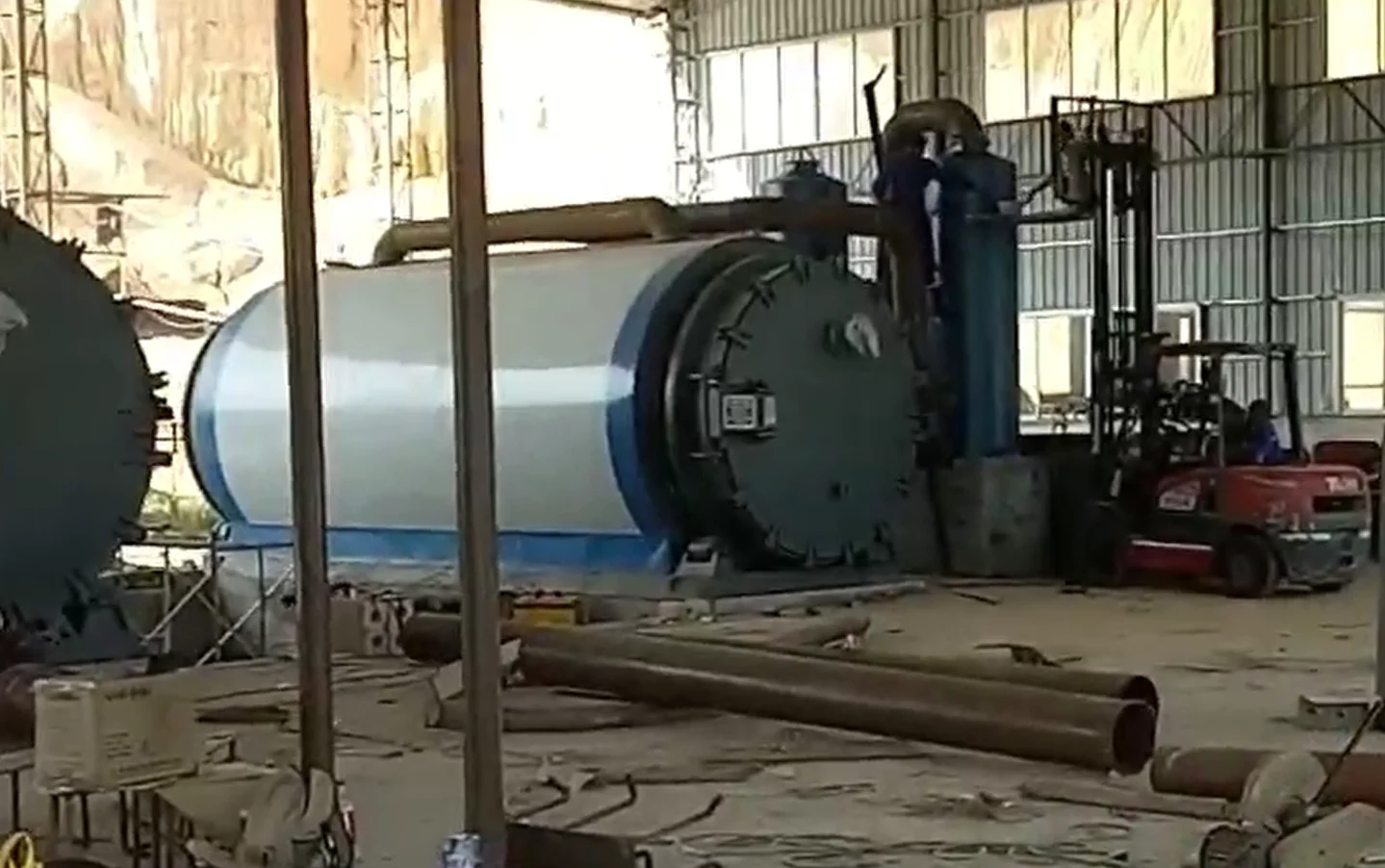
Vista general de la planta de pirólisis de neumáticos usados de dos unidades en Yulin, Guangxi, mostrando ambos 12 reactores TPD y el área de servicios compartida. Foto tomada durante la instalación y puesta en marcha en 2019.
Foto 2
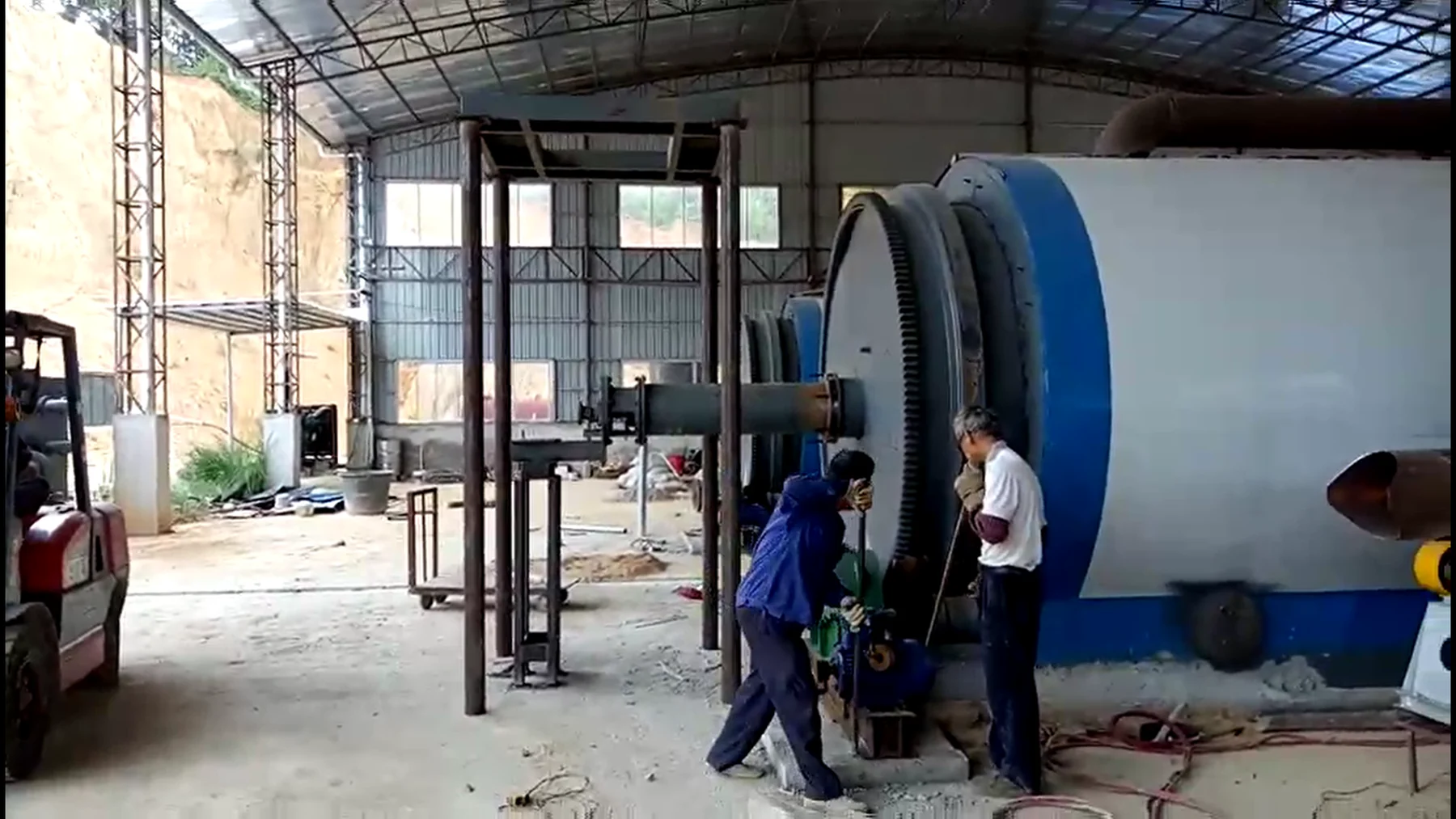
Detalle del proceso del área de condensación de vapores y recolección de productos en la planta de Yulin. Foto tomada durante la instalación y puesta en marcha en 2019.
Especificaciones del proyecto
| Artículo | Especificación del proyecto |
|---|---|
| Ubicación | Yulin, Región Autónoma Zhuang de Guangxi, China |
| Año del proyecto | 2019 |
| Estado | Proyecto de archivo histórico - entregado y puesto en marcha en 2019; estado operativo actual no verificado de manera independiente |
| Materia prima | Neumáticos desechados (enteros o cortados, cargados por lotes) |
| Sistem | Pirólisis horizontal por lotes, calefacción indirecta, micro-presión negativa |
| Número de unidades | 2 |
| Capacidad por unidad | 12 TPD (capacidad de diseño) |
| Capacidad combinada de diseño | 24 TPD (2 × 12 TPD, por lotes) |
| Modelo de producción | Ciclo de lote definido (carga, precalentamiento, pirólisis, enfriamiento, descarga), escalonado en dos unidades |
| Principales flujos recuperados | Aceite de pirólisis (fracción de fuel-oil), material carbonoso recuperado, cable de acero; el gas no condensable puede ser devuelto al sistema de calefacción donde el diseño instalado y las condiciones de operación lo permitan |
| Proveedor | ShangqiuJinpeng Industrial Co., Ltd. (PYROJIN) |
Lo que demuestra el proyecto
Este proyecto de archivo muestra que una planta de lote modesta de dos unidades puede configurarse alrededor de un clima cálido y húmedo en lugar de simplemente emplazarse en uno. La capacidad demostrada es un juicio de diseño: margen del condensador y del agua de enfriamiento para las temperaturas del refrigerante en temporada cálida, gestión de la humedad a través de las líneas de vapor y gas, y disciplina de almacenamiento para el aceite, los sólidos y el acero bajo humedad durante todo el año. Para los clientes en regiones tropicales y subtropicales, el valor de referencia es directo: la misma escala de lote 24 TPD, la misma materia prima de neumáticos y las mismas preguntas impulsadas por el clima que abordó esta configuración de 2019 Yulin. Los evaluadores que comparen configuraciones deben observar los números de la temporada cálida: temperatura del agua de enfriamiento en el mes más caluroso, acercamiento alcanzable de la torre de enfriamiento, y si el almacenamiento del material carbonoso recuperado está cubierto y seco. Esos detalles, más que el tambor del reactor, separan una configuración para clima cálido de una genérica.
Acerca de Jinpeng
Shangqiu Jinpeng Industrial Co., Ltd. diseña y fabrica plantas de pirolisis por lotes, semicontinuas y continuas, sistemas de destilación de aceite y equipos de apoyo para neumáticos desechados, plásticos desechados, lodos de aceite, materiales derivados del caucho y otras materias primas ricas en carbono adecuadas. La configuración del proyecto se desarrolla en torno a las características del material, los objetivos de producción, las condiciones del sitio y los requisitos locales aplicables. Para discusiones sobre el proyecto, visite www.pyrolysis-machine.com.
Exención de responsabilidad y Nota de Archivo
Exención de responsabilidad. Las cifras de capacidad en este retrospectivo son valores de diseño. El rendimiento real depende de la condición de la materia prima y de la práctica operativa. Los rendimientos y las propiedades del producto varían según el tipo de neumático, la humedad y las condiciones del proceso y deben confirmarse mediante pruebas en el sitio. El uso de energía y el desempeño de las emisiones dependen de los sistemas auxiliares instalados y de la operación real, y cualquier diseño final debe cumplir con las normativas locales aplicables.
Nota de archivo. Esta retrospectiva se basa en los registros del proyecto de Jinpeng y fotografías del período de entrega y puesta en marcha originales. Describe la configuración del proyecto documentada y no constituye una verificación del estado operativo actual de la planta.