Subtitle: A four-unit batch installation on the eastern Jiangsu coastal plain, configured around steady intake cadence, deliberate storage layout, and efficient product dispatch.
Project Details
- Project Location
- Yancheng, Jiangsu Province, on the flat coastal plain of eastern China
- Configuration
- Four XY-8-P/PB batch-type horizontal rotary pyrolysis units with staggered batch scheduling
- Combined Design Capacity
- 48 TPD (4 × 12 TPD)
- Feedstock
- Waste tires - whole and cut tires loaded in batches
- Project Year
- 2018
- Original Project Status
- Delivered and commissioned in 2018
- Current Operating Status
- Not independently verified
- Supplier
- Shangqiu Jinpeng Industrial Co., Ltd. (brand PYROJIN)
Opening
Four twelve-tonne batch reactors occupy an unusual middle ground in pyrolysis plant design: numerous enough to justify shared utility and treatment infrastructure, yet few enough that the plant still behaves as a single operation paced by one modest crew. On the flat coastal plain of eastern Jiangsu, terrain imposes few constraints - the ground is level and accessible. The real design problem for this 2018 Yancheng installation was rhythm: matching the lumpy intake of whole and cut tires to staggered loading windows, holding stock to absorb uneven truck arrivals, and moving three recovered streams off the site. Intake, storage and dispatch had to be designed as deliberately as the reactors themselves.
Project Background & Configuration Logic
The configuration was developed around the site's flatland character and the supply-and-demand setting of eastern Jiangsu, one of China's denser transport corridors with nearby industrial consumers for fuel oil, scrap steel and carbonaceous materials. That favors a plant that takes in trucked tires steadily and sends finished streams out without long warehousing - large enough to justify permanent utility and treatment systems, but not dependent on a handful of very large tire suppliers.
Four batch units, each with a design capacity of 12 TPD, gave a combined design capacity of 48 TPD. The batch format suits the feedstock and the operating model: batch reactors accept whole or cut tires without the size-reduction steps that rubber-crumb feeding requires, and each line runs an independent cycle, so the plant tolerates uneven supply. Installation guidance and operator training were part of the delivery scope.
Core Technology & Production Analysis
Four Units as a Mid-Scale Balance
A four-line batch site sits between two regimes: a two-unit plant runs almost like a doubled single line, while a ten-unit site begins to resemble a small factory. Four units split the difference - the plant shares one set of utility and treatment systems sized for the combined 48 TPD design capacity, yet schedules lines far enough apart that loading, cooling and discharge never collide. For a crew of this size, the working day is planned around a few distinct events. The layout also carries a maintenance advantage: one reactor out of service leaves the other three running.
Intake Cadence: Timing Deliveries to Loading Windows
Batch intake is lumpy by nature: each reactor is loaded in a concentrated window of roughly two hours, then sealed for a cycle of about 22-24 hours. The four-unit configuration staggers those loading windows so deliveries spread across the day. Because deliveries arrive in loads of varying size and timing, the design gives the buffering role to storage: enough sorted stock is held ahead of the loading position to ride out quiet days, and enough staging space is kept behind discharge to avoid delaying the next cycle.
Storage Layout on the Coastal Flatland
Flat coastal land removes the constraints of mountain or river-valley sites - no steep ramps or narrow terraces. The remaining discipline is layout. The configuration provides covered feedstock bays where whole and cut tires are segregated before loading; in eastern Jiangsu's humid, wet-season climate, dry storage matters. Stockpiles are kept with fire-safety spacing. Outbound, the three product streams are separated - oil tankage near the condensation side, a covered store for recovered carbonaceous material, and a yard for recovered steel wire - and internal roads keep delivery and collection trucks on separate paths.
Batch Cycle and Four-Line Rotation
Each line is a horizontal rotary reactor heated indirectly, so the material does not contact the flame, operated at low pressure under inert, anaerobic conditions with micro-negative pressure. A typical design cycle runs about 22-24 hours: roughly two hours of loading, four of preheat, ten of pyrolysis, four to six of cooling, and about two of discharge. Offsetting the start of each cycle spreads heat demand across the day, avoids simultaneous cooling that would spike the cooling-water load, and keeps the installed treatment system under a steadier load. The same rotation reduces peak labor: loading and discharge happen one line at a time.
Installed Treatment and Gas Handling
The plant is designed as a fully enclosed system under micro-negative pressure, so process gas is contained at the reactor. Vapors pass through the condensation train, where pyrolysis oil is recovered as a fuel-oil stream; the non-condensable gas may be returned to the heating system where the installed design and operating conditions permit, reducing external fuel demand. Flue gas from the heating side passes through the installed treatment system - a spray tower for alkali neutralization followed by an adsorption tower for desulfurization and dust removal - designed to meet local emission requirements under proper operating conditions.
Product Dispatch in Eastern Jiangsu
The region's dense road network and industrial base give the three recovered streams nearby destinations: pyrolysis oil moves as fuel oil to industrial consumers, recovered carbonaceous material leaves as a solid product whose further use depends on testing and any required processing, and steel wire enters established scrap-recycling channels. The configuration was designed around short, regular dispatch cycles rather than long warehousing: oil tankage sized to the batch rhythm, solids stores that clear between cycles, and truck paths that do not disturb the loading side. The lesson for a similar site: in flat, industrial country, a mid-scale batch plant is often a logistics problem first and a process problem second.
Project Photographs (Installation Period)

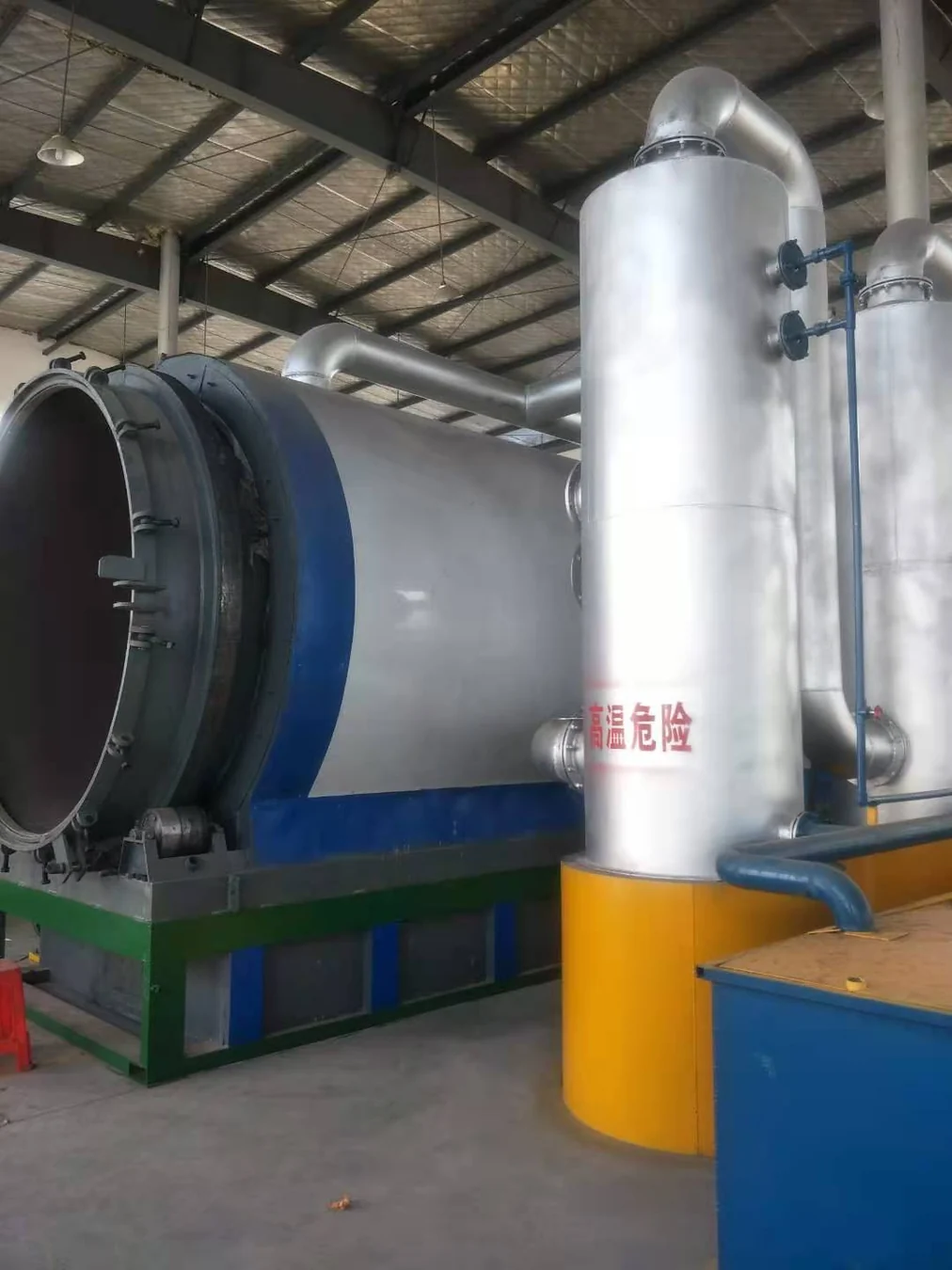
Overall view of the four-unit batch pyrolysis installation at Yancheng, Jiangsu (2018), showing the reactor line and the flat coastal site layout. Photo taken during installation and commissioning in 2018.

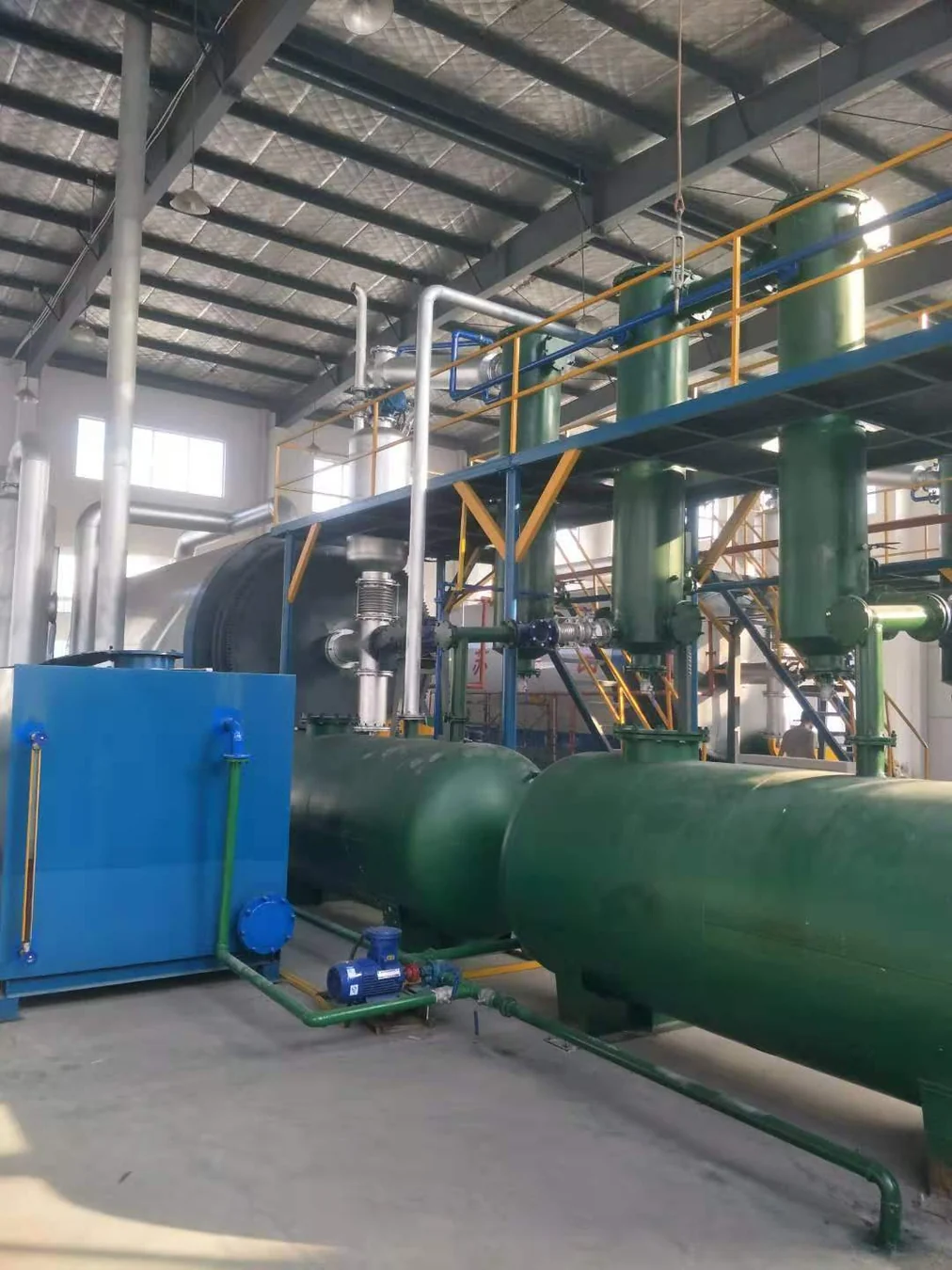
Detail of the feedstock loading area and the horizontal rotary reactor at the Yancheng, Jiangsu project (2018). Photo taken during installation and commissioning in 2018.
Project Specifications
| Item | Project specification |
|---|---|
| Location | Yancheng, Jiangsu Province, China |
| Project year | 2018 |
| Status | Archive project - delivered and commissioned in 2018 |
| Feedstock | Waste tires (whole and cut tires, loaded in batches) |
| System | XY-8-P/PB batch-type horizontal rotary pyrolysis plant |
| Number of units | 4 |
| Capacity per unit | 12 TPD design capacity |
| Combined design capacity | 48 TPD |
| Production model | Staggered batch operation with shared utility and treatment systems |
| Main recovered streams | Pyrolysis oil (fuel oil), recovered carbonaceous material, steel wire; non-condensable gas may be returned to the heating system where the installed design and operating conditions permit |
| Supplier | Shangqiu Jinpeng Industrial Co., Ltd. |
What the Project Demonstrates
This project demonstrates the ability to configure a mid-scale batch site around its logistics rather than around the equipment alone. Four units with a combined design capacity of 48 TPD show how staggered batch scheduling, covered storage and product dispatch balance on flat, accessible coastal land. For a client considering a similar scale, the reference value lies in the intake plan - storage absorbing uneven deliveries - and in the outbound plan, since product offtake in an industrial region lets designed capacity be used. Evaluators should watch whether storage keeps inbound and outbound flows separate, whether the cycle plan matches the available labor, and whether each recovered stream has a realistic dispatch path.
About Jinpeng
Shangqiu Jinpeng Industrial Co., Ltd. designs and manufactures batch, semi-continuous, and continuous pyrolysis plants, oil distillation systems, and supporting equipment for waste tires, waste plastics, oil sludge, rubber-derived materials, and other suitable carbon-rich feedstocks. Project configuration is developed around material characteristics, production objectives, site conditions, and applicable local requirements. For project discussions, visit www.pyrolysis-machine.com.
Disclaimer
All capacities in this article are design values; actual throughput depends on feedstock characteristics, operating conditions and maintenance. Recovered product quantities and properties (including the pyrolysis oil's suitability as a fuel oil) require testing on the actual feedstock and process. Energy consumption and emission performance depend on the auxiliary systems installed and on actual operation, and the final design must comply with the regulations applicable at the site.
Archive Note: This retrospective is based on Jinpeng's project records and photographs from the original delivery and commissioning period. It describes the documented project configuration and does not constitute verification of the plant's current operating status.