Resumen del Proyecto
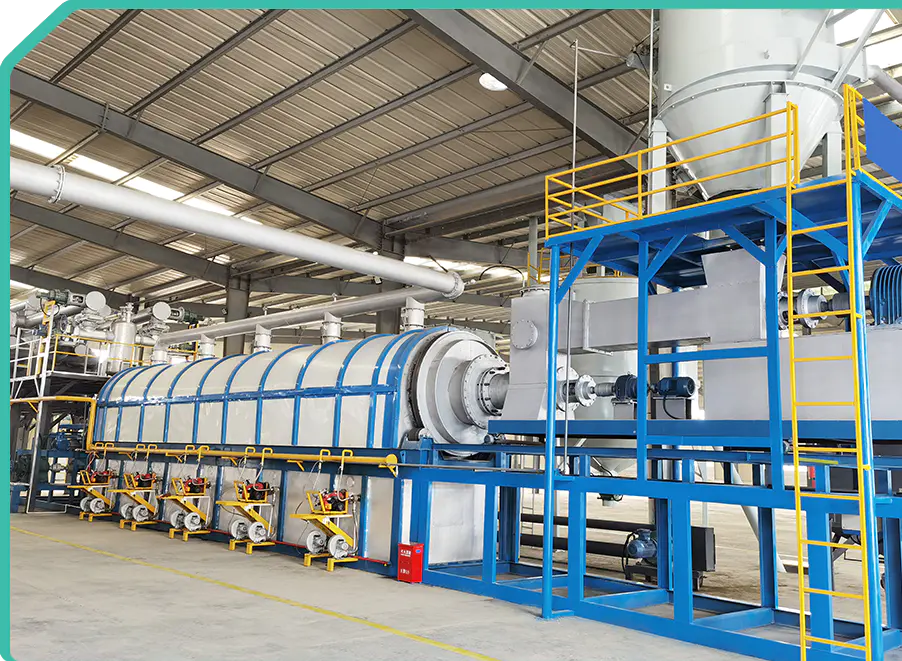
En 2026, Shangqiu Jinpeng Industrial Co., Ltd. entregó dos juegos de plantas de pirólisis semi-continuas de polvo de caucho a un inversor de reciclaje de residuos en Indonesia. Ambas líneas han completado la puesta en marcha y ahora están en producción formal.
Esta instalación fue el primer proyecto del cliente con Jinpeng. Su puesta en marcha exitosa y operación estable llevaron posteriormente al mismo cliente a encargar una instalación de pirólisis de residuos sólidos municipales mucho más grande - 21 juegos de plantas de pirólisis tipo lote de 15 TPD, que desde entonces ha completado la puesta en marcha y la prueba de funcionamiento.
Por qué Tecnología Semi-Continua para Polvo de Caucho
El polvo de caucho, o caucho desmenuzado, es una materia prima procesada derivada de neumáticos usados después de la separación de acero y fibras. Debido a que llega como un material fino, uniforme y de flujo libre, en lugar de como neumáticos completos voluminosos, es particularmente adecuado para el procesamiento semicontinuo.
La pirolisis semicontinua se sitúa entre la tecnología por lotes y la totalmente continua:
La alimentación es continua o casi continua, posible gracias al tamaño uniforme de las partículas del polvo de caucho, lo que permite que sistemas de tornillo automatizados o de transporte cerrado carguen el material de manera constante.
La descarga se realiza en intervalos controlados, proporcionando al operador un control más directo del proceso que un sistema totalmente continuo, mientras se evita el largo tiempo de enfriamiento y recarga de un ciclo completamente por lotes.
El tiempo de retorno del ciclo se acorta significativamente, aumentando la utilización efectiva en comparación con el procesamiento por lotes de la misma materia prima.
Para un cliente que procesa un flujo constante de polvo de caucho pre-tamaño, esta configuración ofrece mayor rendimiento y menor intensidad de mano de obra por tonelada que los reactores por lotes, sin el mayor costo de capital y las demandas más estrictas de uniformidad de materia prima de una planta totalmente continua.
Configuración Técnica
| Artículo | Especificación |
|---|---|
| Ubicación | Indonesia |
| Número de unidades | 2 juegos |
| Tipo de reactor | Pirólisis semicontinua |
| Materia prima | Polvo de caucho / caucho triturado |
| Productos principales | Aceite combustible, negro de carbón, gas combustible |
| Año del proyecto | 2026 |
| Estado | En producción formal |
Principales características del sistema entregadas:
Sistema automático de alimentación sellado adaptado a las características de flujo del polvo de caucho, minimizando la entrada de aire y la manipulación manual
Diseño de reactor semicontinuo con descarga controlada por intervalos, acortando el tiempo de ciclo en comparación con la operación por lotes
Sistema de condensación de múltiples etapas para la recuperación eficiente del aceite de pirólisis del flujo de aceite-gas
Reciclaje de gas no condensable de vuelta al sistema de calefacción, reduciendo el consumo de combustible externo
Sistema de recolección y transporte de negro de humo diseñado para la salida de partículas finas típica del polvo de caucho como materia prima
Sistema de tratamiento de gases de combustión y bloqueos de seguridad configurados según los requisitos de cumplimiento locales del proyecto
Productos recuperados
Procesar polvo de caucho en un entorno sellado y limitado en oxígeno recupera tres corrientes principales de salida:
Aceite combustible de pirólisis - usado como combustible industrial o refinado posteriormente
Negro de carbón - dado que la materia prima ya está libre de alambre de acero y fibras, el negro de carbón recuperado es típicamente más fino y consistente que el de la pirolisis de neumático completo, lo que lo hace más adecuado para su mejora
Gas combustible - recirculado como combustible para calefacción del proceso para mejorar la eficiencia energética general
Cabe destacar que no se requiere una etapa de separación de alambre de acero, ya que el alambre ya ha sido retirado durante la producción upstream de caucho triturado. Esto simplifica tanto la línea de proceso como la manipulación del producto aguas abajo.
Desde el Primer Proyecto hasta la Expansión a Gran Escala
La importancia comercial de este proyecto va más allá de su propia capacidad. Sirvió como instalación de referencia que estableció la confianza del cliente en el equipo, soporte de ingeniería y capacidad de puesta en marcha de Jinpeng.
Gracias a la estabilidad en la producción de estas dos líneas, el mismo cliente decidió invertir en una instalación de pirolisis de residuos sólidos municipales por lotes de 21-conjunto, 15TPD - una de las mayores instalaciones de pirolisis de RSM que Jinpeng ha entregado. Ese proyecto ahora ha completado la puesta en marcha y la prueba de funcionamiento.
Esta progresión ilustra un patrón común en los mercados emergentes de conversión de residuos en energía: los inversores comienzan con un tipo de materia prima bien definida y uniforme, como el polvo de caucho, para validar la tecnología y su propia capacidad operativa, y luego escalan hacia flujos de residuos municipales más complejos y de mayor volumen.
Preguntas frecuentes
¿Qué es la pirólisis semicontinua? La pirólisis semicontinua es un método de procesamiento en el que la materia prima se alimenta continuamente o a intervalos frecuentes al reactor, mientras que la descarga de residuos ocurre a intervalos controlados. Ofrece un ciclo de rotación más corto que la pirólisis por lotes y menores requisitos de uniformidad de la materia prima que los sistemas totalmente continuos.
¿Por qué el polvo de caucho es adecuado para el procesamiento semicontinuo? El polvo de caucho tiene un tamaño de partícula uniforme y fino y fluye libremente, lo que permite que los sistemas de alimentación automatizados y sellados lo carguen de manera constante. Las llantas enteras, en cambio, son voluminosas e irregulares, lo que generalmente hace que los reactores por lotes sean más prácticos para esa materia prima.
¿Cuál es la diferencia entre la pirólisis de polvo de caucho y la pirólisis de llantas enteras? El polvo de caucho ya ha tenido el alambre de acero y las fibras eliminadas en etapas anteriores, por lo que no se necesita una etapa de separación de alambre y el negro de carbón recuperado es típicamente más fino y consistente. La pirólisis de llantas enteras recupera el alambre de acero como un producto adicional comercializable.
¿Qué productos se recuperan de la pirólisis del polvo de caucho? Aceite combustible de pirólisis, negro de carbono y gas combustible no condensable. Los rendimientos reales dependen de la composición del caucho, el tamaño de partícula, el contenido de humedad y los parámetros de operación.
¿Qué equipos de pirólisis suministra Jinpeng? La gama de productos estándar de Jinpeng incluye plantas de pirólisis tipo batch de 10TPD y 15TPD, y plantas de pirólisis tipo continuo de 30TPD y 50TPD, junto con configuraciones semicontinuas para materias primas adecuadas, como polvo de caucho.
Shangqiu Jinpeng Industrial Co., Ltd. es un fabricante de plantas de pirólisis por lotes, semi-continuas y continuas para reciclaje de neumáticos usados, plásticos desechados, polvo de caucho y residuos sólidos municipales. Para discutir un proyecto en su región, por favor visite www.pirólisis-machine.com o contacte a nuestro equipo.
Aviso: Todo el contenido de este documento se genera en base a los estándares públicos y la experiencia en proyectos de ShangqiuJinpeng Industrial Co., Ltd.y se proporciona únicamente con fines de referencia tecnológica y de proyectos. La tasa de producción real, el consumo de energía y la calidad del producto dependen de las condiciones de operación reales. Para más información, por favor visite nuestro sitio web oficial: www.pirólisis-machine.com
Referencia de equipo