Pyrolysis equipment

From the Jinpeng Project Archive: 2×12 TPD Batch Waste-Tire Pyrolysis Project in River-Port Jiujiang, Jiangxi, 2018

A two-unit XY-8-P/PB batch pyrolysis plant delivered and commissioned in 2018 near Jiujiang's Yangtze river port, combining 24 TPD of design capacity with logistics planning built around inbound tire supply and outbound product movement on…

2026-08-20 6 minutes
This detailed legacy page is currently preserved in English. The navigation and enquiry flow remain available in your selected language.

Project Details

Project Location
Jiujiang, Jiangxi Province, China - on the south bank of the Yangtze River
Configuration
Two XY-8-P/PB batch-type horizontal rotary pyrolysis units
Combined Design Capacity
24 TPD (2 × 12 TPD per-unit design capacity)
Feedstock
Waste tires
Project Year
2018
Original Project Status
Delivered and commissioned in 2018; the project archive documents a two-unit batch configuration with two media files from the installation and commissioning period
Current Operating Status
Not independently verified
Supplier
Shangqiu Jinpeng Industrial Co., Ltd. (PYROJIN)

Opening

A two-unit batch plant with 24 TPD of combined design capacity is not, on paper, a large installation. Near a river port on the middle Yangtze, however, its limiting factor is rarely the reactor cycle itself; it is the rhythm of material movement. Waste tires arrive in uneven pulses rather than a steady stream, products leave in dispatch lots rather than as they are produced, and the river corridor shifts with the seasons - water levels, freight availability, and surrounding collection activity all change through the year. This 2018 archive project in Jiujiang, Jiangxi, records how a modest two-unit configuration was planned around that rhythm, and why batch production - often discussed only in terms of cycle time - is equally a logistics choice.

Project Background & Configuration Logic

Jiujiang sits where Poyang Lake drains into the Yangtze, and the city's port is one of the corridor's established handling points for bulk cargo. For a tire pyrolysis operation, the practical consequence is a wider planning horizon than a purely road-served site needs. Waste tires are bulky and low in value per tonne, so freight cost dominates intake economics, and water transport becomes attractive whenever volumes justify consolidation. The configuration was designed around two consequences of that position. First, supply could arrive in large, irregular lots, so intake and storage had to absorb pulses. Second, outbound products would move in lots sized to dispatch schedules, so storage had to decouple production from movement. Two 12 TPD batch reactors rather than one larger line gave the plant batch granularity: each reactor runs an independent cycle of roughly 22-24 hours, so the site can process a charge, pause, wait for feedstock, and resume without idling a continuous line. At this scale, the design intent was a plant whose operating rhythm follows its supply rather than the reverse.

Core Technology & Production Analysis

A Port Corridor Changes the Intake Assumption

On a road-only site, intake planning usually starts from daily collection capacity. On a port-adjacent site it starts from lot size: a barge movement of bulk cargo is far larger than a truck load, and even road collection in a river-port economy tends to consolidate at transfer points before reaching the plant. The design logic for a two-unit plant is that intake planning must accommodate both small local collections and larger consolidated movements, with storage sized for the larger case so that either pattern can feed the reactors without forcing them to wait.

Batch-Sized Intake and Covered Buffer Storage

Each 12 TPD reactor takes its charge in roughly two hours of loading, and the 22-24 hour cycle means the plant consumes tires in discrete, predictable chunks. Covered staging is the link between lumpy supply and discrete consumption. Jiangxi's climate is humid and wet through much of the year; tires held outdoors accumulate moisture, and water in the charge extends the preheat phase and shifts the economics of every subsequent hour of the cycle. A covered buffer holding enough feedstock for several full charges lets the operator load from dry stock regardless of recent weather or arrival timing - a modest design point with a direct effect on cycle consistency.

Outbound Lots: Products That Move in Batches

The same logic applies downstream. Each batch produces its own lot of pyrolysis oil, recovered carbonaceous material, and steel wire, and because batch output is discrete, product accounting is naturally lot-based. Oil is routed to storage tanks; the recovered carbonaceous material is discharged, cooled, and held in covered or contained storage; steel wire is baled for scrap movement. On a river-port corridor, outbound dispatch is scheduled in lots - barge sailings, truck appointments - so tanks and storage areas sized to hold several batches of output decouple production from dispatch. A plant with buffer can keep running while it waits for transport; a plant without buffer must stop.

Seasonal Supply and the River's Annual Rhythm

Two seasonal cycles overlap at this location. The Yangtze's water level is high roughly from June to September and low in winter, which changes barge draft, sailing conditions, and freight availability along the corridor; tire collection itself also varies through the year with weather, agricultural cycles, and transport activity across the surrounding region. The two-unit batch format absorbs this seasonality in a way a continuous line cannot: the reactors can run on a full schedule when supply is strong, and can run one unit at a time - or pause between charges - when supply is thin, with no continuous feed obligation. Feedstock buffer ahead of the reactors and product buffer ahead of dispatch are what keep the schedule flexible rather than fragile.

Two Reactors, Offset Cycles: Matching Production to Dispatch

The two units share the site's utilities - heating, condensation, non-condensable gas handling, and the installed flue-gas treatment system - but their cycles are meant to be offset rather than synchronized. While one reactor is in its pyrolysis phase, the other can be cooling, discharging, or being recharged, so loading and discharge labor spreads across the day and the plant produces output on a near-daily cadence instead of every other day. That cadence matches a dispatch rhythm measured in days rather than hours, which is the tempo of lot-based movement from a river-port site. The offset schedule is a scheduling choice rather than a design necessity - which is precisely the point: batch plants give the operator control over tempo that a fixed continuous duty cycle does not.

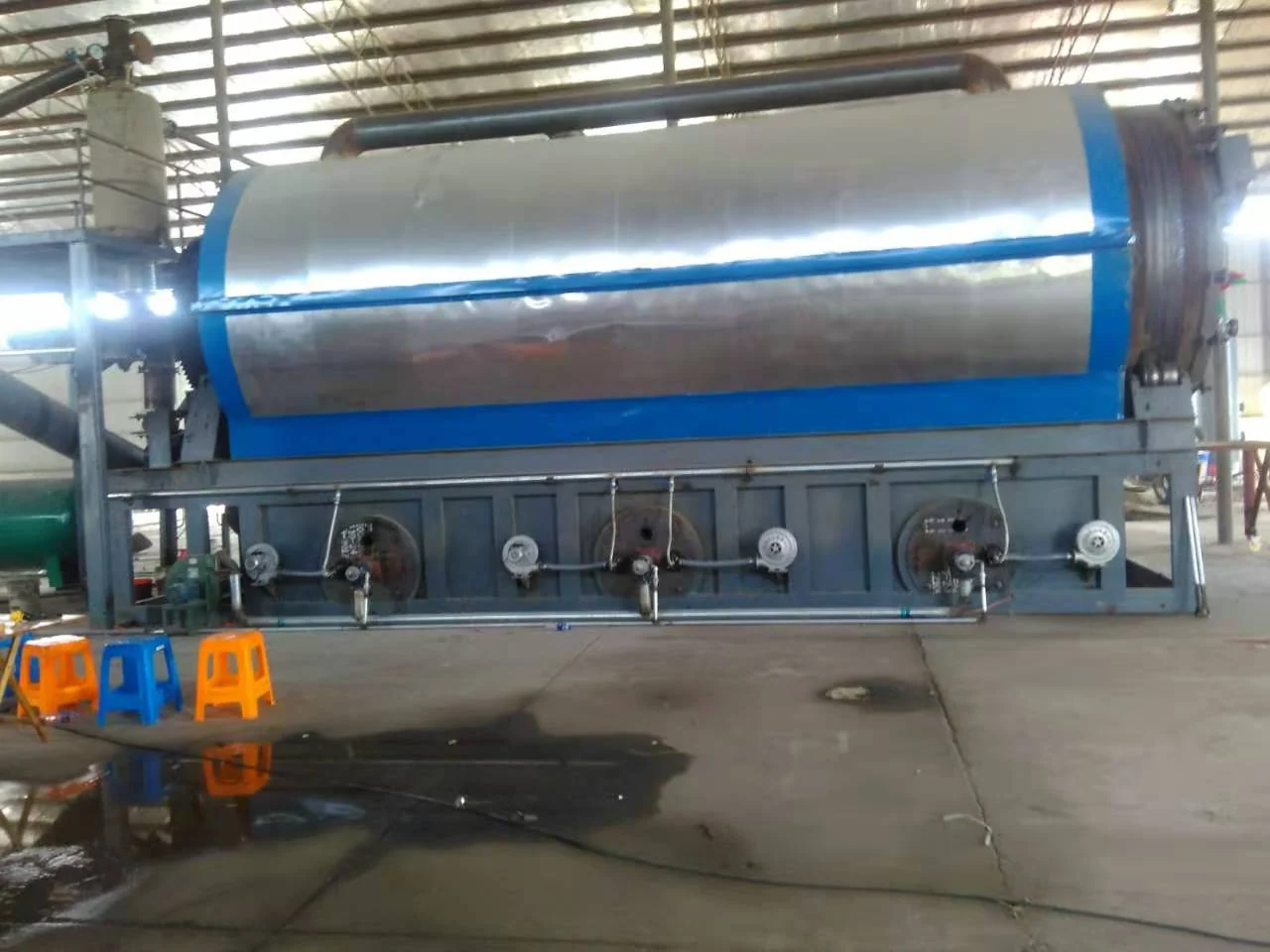
Photo 1

Jiujiang, Jiangxi Province, China - on the south bank of the Yangtze River project equipment

Overall view of the two-unit batch pyrolysis site near Jiujiang, Jiangxi, showing both reactors and the surrounding process area. Photo taken during installation and commissioning in 2018.

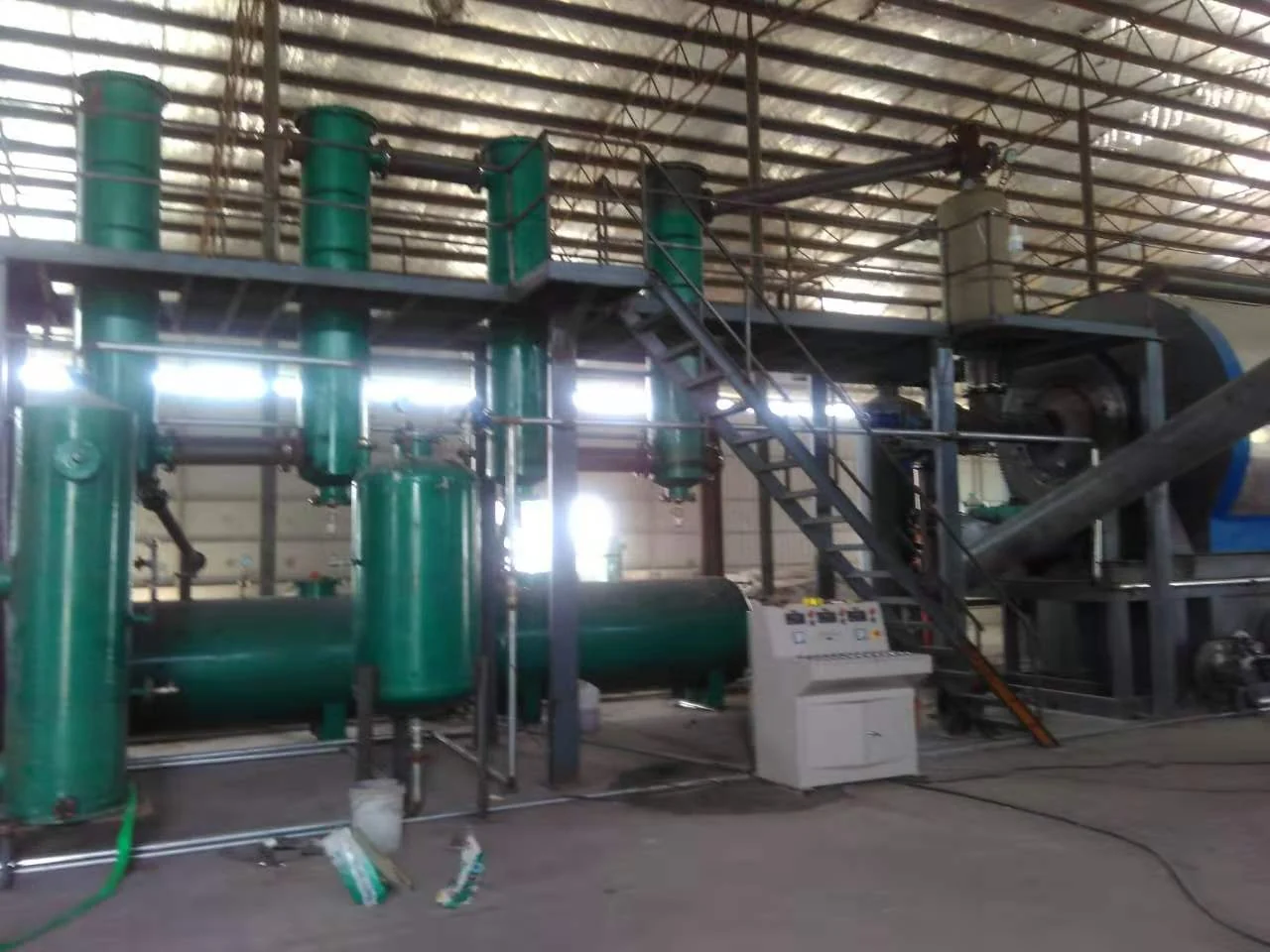
Photo 2

Jiujiang, Jiangxi Province, China - on the south bank of the Yangtze River project equipment

Feedstock staging and reactor loading area at the Jiujiang, Jiangxi project. Photo taken during installation and commissioning in 2018.

Project Specifications

ItemProject specification
LocationJiujiang, Jiangxi Province, China
Project year2018
StatusHistorical archive project - delivered and commissioned in 2018; current operation not independently verified
FeedstockWaste tires (whole or cut, charged in batches)
SystemXY-8-P/PB batch-type horizontal rotary pyrolysis units; indirect heating; low-pressure inert/anaerobic operation under micro-negative pressure
Number of units2
Capacity per unit12 TPD (design capacity)
Combined design capacity24 TPD
Production modelBatch; two reactors on offset cycles of approximately 22-24 hours
Main recovered streamsPyrolysis oil (fuel oil), recovered carbonaceous material, steel wire; non-condensable gas may be returned to the heating system where the installed design and operating conditions permit
SupplierShangqiu Jinpeng Industrial Co., Ltd. (PYROJIN)

What the Project Demonstrates

This archive project shows how a two-unit batch configuration can be matched to a port-adjacent logistics environment. Its reference value for a similar client is the planning pattern rather than the hardware alone: a feedstock buffer that absorbs irregular arrivals, a product buffer that decouples batch output from lot-based dispatch, covered storage suited to a humid climate, and the freedom to run one or two reactors according to supply instead of a fixed duty cycle. Evaluators looking at comparable river-port sites should watch how intake and dispatch are planned - whether storage is sized to the largest plausible lot, whether oil and solids buffers cover dispatch gaps, and whether the batch schedule is allowed to follow seasonal supply. A plant that treats its design capacity as a ceiling rather than an obligation is a plant that fits its material environment.

About Jinpeng

Shangqiu Jinpeng Industrial Co., Ltd. designs and manufactures batch, semi-continuous, and continuous pyrolysis plants, oil distillation systems, and supporting equipment for waste tires, waste plastics, oil sludge, rubber-derived materials, and other suitable carbon-rich feedstocks. Project configuration is developed around material characteristics, production objectives, site conditions, and applicable local requirements. For project discussions, visit www.pyrolysis-machine.com.

Disclaimer

All capacities are design values, not guaranteed outputs; actual throughput depends on feedstock condition and operating practices. Yields and product properties must be confirmed by testing of the specific feedstock. Energy consumption and emission performance depend on auxiliary systems, operating conditions, and the installed treatment equipment, which is designed to satisfy applicable local emission requirements under proper operating conditions. Any final project design must comply with local regulations and site-specific conditions.

Archive Note: This retrospective is based on Jinpeng's project records and photographs from the original delivery and commissioning period. It describes the documented project configuration and does not constitute verification of the plant's current operating status.

项目咨询

需要根据原料获得设备配置建议?

联系金蓬