
Deux 12 unités de pyrolyse par lots de TPD, livrées et mises en service en 2020 sur un site isolé de la steppe de Mongolie intérieure, conçues autour du retour des gaz non condensables au système de chauffage et de la gestion du mouvement des matières premières et des produits tout au long d'une chaîne d'approvisionnement longue et froide.
Détails du projet
- Emplacement du projet
- Ligue de Xilingol (锡林郭勒), Mongolie intérieure, Chine - une région de prairies avec des centres de population dispersés et de longues distances routières.
- Configuration
- Deux unités de pyrolyse rotatives horizontales de type batch (série XY-8-P/PB).
- Capacité de conception combinée
- 24 TPD (2 × 12 TPD, capacité de conception).
- Matière première
- Pneus usagés, entiers ou coupés, chargés par lots.
- Année du projet
- 2020.
- Statut initial du projet
- Livré et mis en service en 2020. Les archives contiennent deux photographies de la période d'installation et de mise en service; aucun document d'exploitation ou de mise en service n'est archivé.
- Statut de fonctionnement actuel
- Non vérifié de manière indépendante.
- Fournisseur
- Shangqiu Jinpeng Industrial Co., Ltd. (marque PYROJIN).
Ouverture
Sur la prairie de Xilingol, la distance est le premier fait de toute opération industrielle. Les villes sont éloignées les unes des autres à travers les pâturages ouverts, le froid arrive tôt et persiste tard, et chaque tonne de carburant, de matière première ou de produit parcourt cette distance deux fois - à l’aller et au retour. Une usine dans un tel endroit réussit ou échoue sur deux questions: combien de sa propre énergie elle peut s’auto-fournir, et comment son rythme de fonctionnement s’adapte à la logistique distante. Cela 2020 projet - la plus récente entrée dans les archives du projet Jinpeng - répond aux deux avec une configuration délibérément modeste: deux 12 réacteurs par lots TPD sur la prairie.
Contexte du projet et logique de configuration
La configuration a été conçue pour un site éloigné plutôt que pour un bassin industriel. Xilingol n'est pas une région de fabrication de pneus, donc les pneus usagés doivent être collectés dans des villes dispersées, des parcs de véhicules et des exploitations agricoles à travers la prairie - un flux dispersé que deux unités de traitement par lots, chacune d'une capacité de conception de 12 TPD, peuvent absorber.
Le modèle de production par lots convient à cet environnement ainsi qu'à cette échelle. Chaque réacteur suit un cycle de chargement, chauffage, pyrolyse, refroidissement et déchargement, créant des fenêtres naturelles entre les lots qui peuvent s'aligner avec l'arrivée des camions de matières premières et le départ des cargaisons de produits - une planification qui compte lorsque manquer une fenêtre de livraison signifie attendre des jours plutôt que des heures. La logique de conception n'est pas « traiter autant que possible aussi rapidement que possible » mais « maintenir le processus alimenté, chauffé et en mouvement sur de longues distances sans interruption. »
Technologie Principale & Analyse de Production
Chauffer l'usine avec son propre gaz de processus
Dans la pyrolyse par lots de pneus, le matériau d'alimentation se décompose dans un réacteur horizontal rotatif sous une atmosphère inerte à micro-pression négative, sans contact direct avec la flamme. La fraction volatile passe par condensation: la partie condensable devient de l'huile de pyrolyse, et le gaz plus léger, non condensable, reste. Sur un site où le carburant livré représente un coût logistique plutôt qu'une connexion à un service public, ce gaz est central dans la logique d'auto-approvisionnement en énergie: il peut être renvoyé dans le système de chauffage lorsque la conception installée et les conditions de fonctionnement le permettent, si bien que la production propre de l'usine contribue à son besoin de chauffage au lieu que chaque mégajoule arrive par camion. Son effet en fonctionnement dépend de l'agencement installé, du matériau d'alimentation et des conditions de fonctionnement - une intention de conception, et non une déclaration de performance mesurée.
Un calendrier par lots dans un climat froid
L'hiver à Xilingol est long, et le froid affecte un site de pyrolyse à des endroits spécifiques: l'efficacité de la condensation dépend de la capacité de refroidissement, les solides chauds sont plus difficiles à manipuler à basses températures, et le stockage de l'eau et des produits nécessite une conception prenant en compte le gel. Le cycle par lot - d'environ 22 à 24 heures du chargement au déchargement - a une conséquence pratique: le planning de chaque réacteur peut être organisé de façon à ce que le travail exigeant tombe à des moments pratiques, et les deux unités peuvent fonctionner décalées, de sorte que le chargement ou le déchargement d'un réacteur n'ait pas à coïncider avec celui de l'autre. La demande en main-d'œuvre, refroidissement et logistique reste équilibrée.
Approvisionnement sur un bassin versant clairsemé
Les pneus entiers ou coupés sont chargés dans le réacteur par lots; ce type d'usine ne nécessite pas de broyage en granulés. Cette simplicité est importante sur un site isolé: aucune étape de préparation demandant sa propre énergie, machinerie et maintenance. Le problème de planification devient alors le volume et le moment de l'approvisionnement plutôt que la préparation: avec des centres de population dispersés, le volume de pneus s'accumule lentement dans chaque ville, et les routes saisonnières limitent leur déplacement. L'échelle à deux unités a été dimensionnée de manière à ce qu'un nombre pratique de trajets de collecte, et non un flot industriel de camions entrants, alimente l'usine, avec un stockage pour la matière première et les produits absorbant l'écart entre l'approvisionnement du bassin versant et la demande du réacteur.
Livraison à long terme: Équipement entrant, produits sortis
Livrer deux lignes complètes de réacteurs à un site de prairie est en soi un exercice logistique: l’équipement voyage de Shangqiu à travers plusieurs provinces, la dernière étape sur des routes desservant une région peu peuplée. L’orientation d’installation et la formation des opérateurs faisaient partie du périmètre de la livraison. Du côté de la sortie, les flux récupérés - huile de pyrolyse, matériaux carbonés récupérés et fils d’acier - reviennent dans le même sens. L’huile de pyrolyse est un jet de qualité fioul combustible, et non un diesel fini; Qu’il soit consommé localement ou transporté par la suite est une décision économique pour le site. La valeur du matériau carboné récupéré dépend également des essais et, lorsque nécessaire, d’un traitement supplémentaire.
La dernière entrée dans les archives
Le projet Xilingol est la dernière entrée dans la série d'archives de Jinpeng concernant les installations de pneus par lots allant de 2017 à 2020, et il est instructif précisément en tant que dernière capture. Les premières entrées montrent des usines à deux unités entrant dans de nouvelles régions; les années intermédiaires montrent la même configuration s'étendant à six et dix réacteurs dans des marchés plus denses. Xilingol revient à la forme à deux unités à l'extrémité du spectre en termes d'éloignement - la plus petite configuration dans l'emplacement le moins connecté. Lue dans son ensemble, l'archive montre un schéma: la configuration suit le bassin et le site, et l'éloignement est compensé par l'échelle, le calendrier et la logique énergétique plutôt que par de plus grandes machines.
Photographies du projet
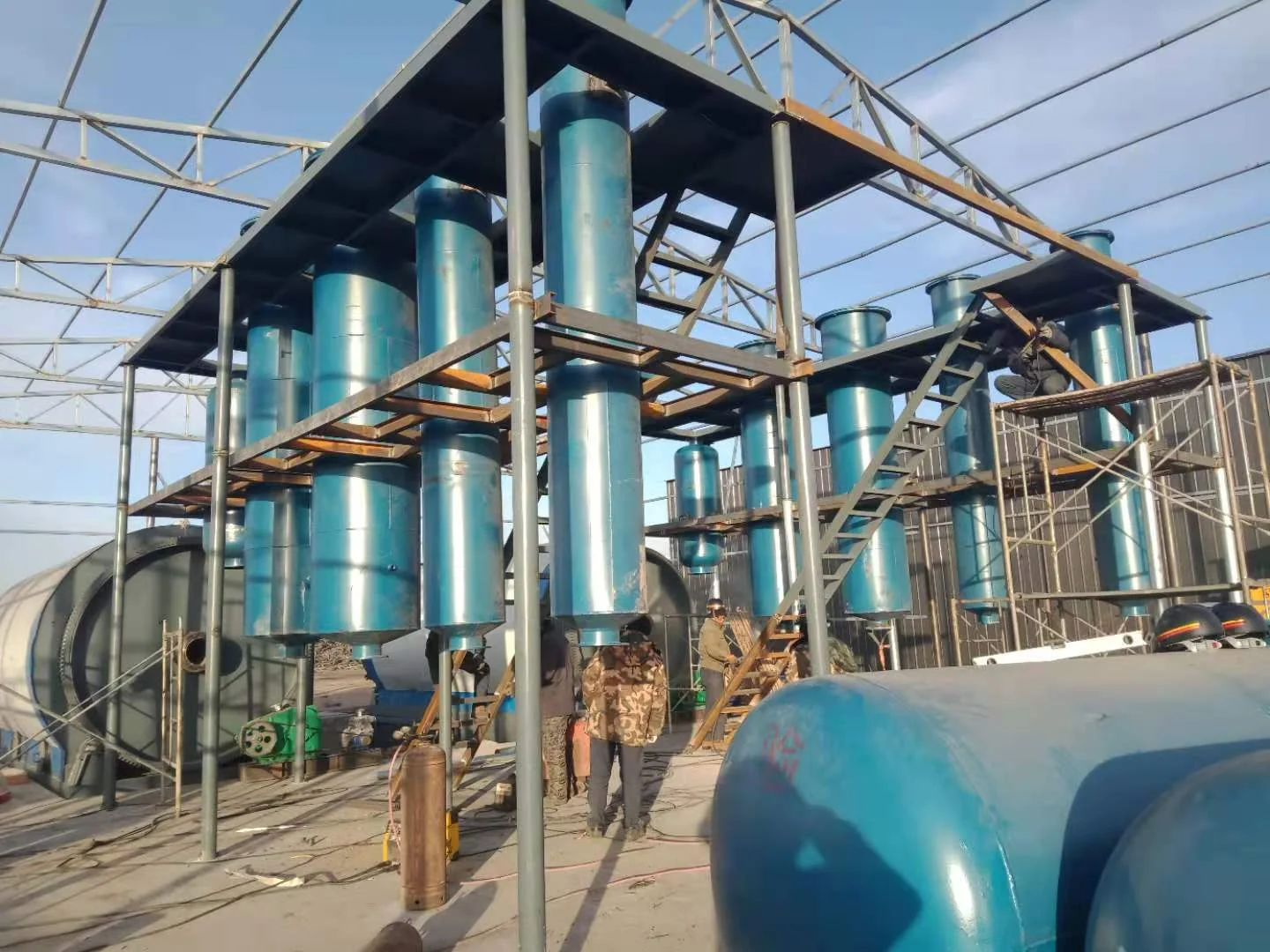
Vue générale du site de pyrolyse par lots à deux unités sur la prairie de Xilingol, Mongolie intérieure, montrant les lignes de réacteurs et l'agencement commun. Photo prise lors de l'installation et de la mise en service en 2020.
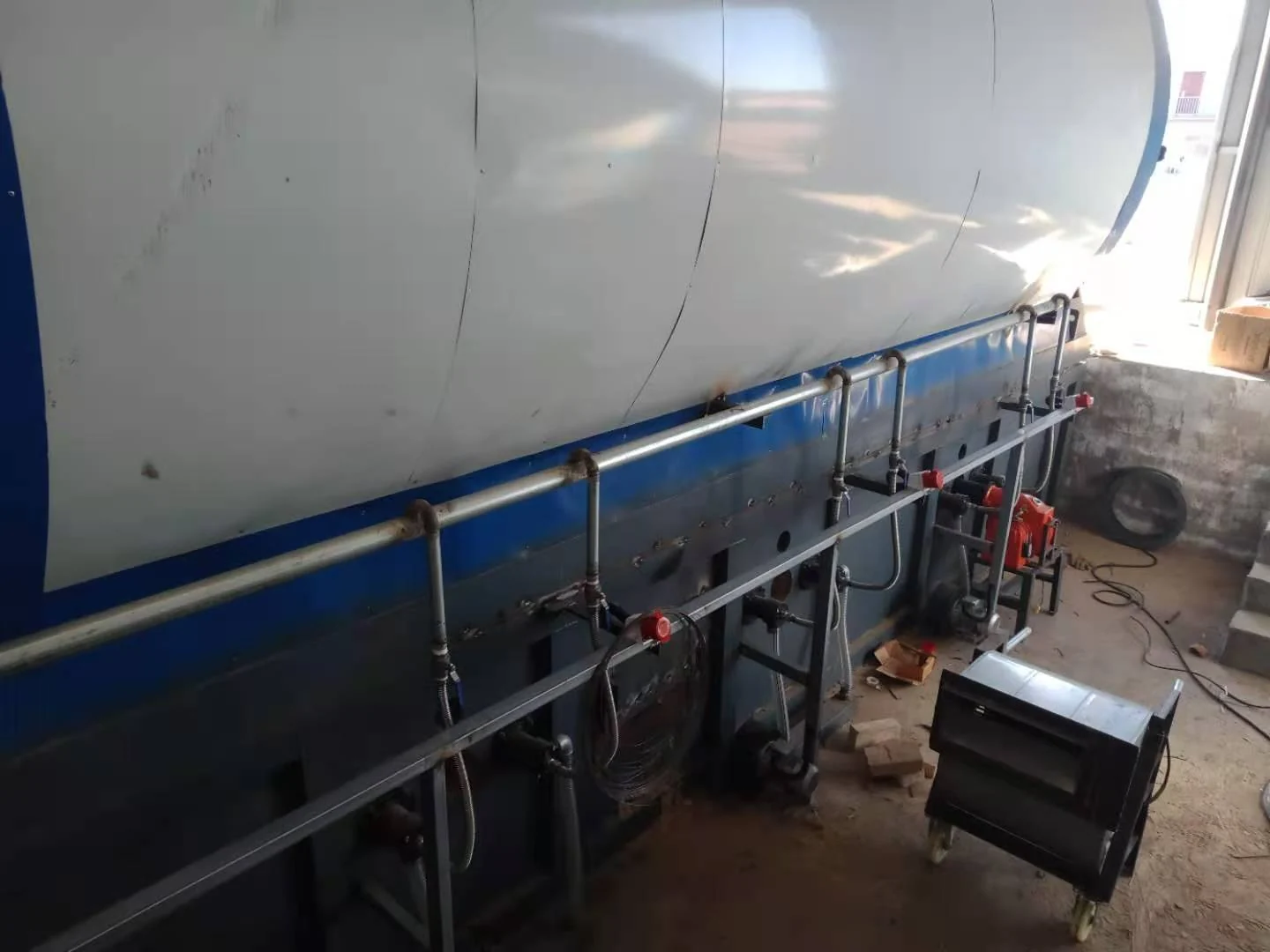
Détail de l'arrangement du réacteur, du chauffage et de la condensation du projet Xilingol, Mongolie intérieure. Photo prise lors de l'installation et de la mise en service en 2020.
Spécifications du projet
| Article | Spécification du projet |
|---|---|
| Emplacement | Ligue de Xilingol, Mongolie intérieure, Chine |
| Année du projet | 2020 |
| Statut | Projet d'archive historique; livré et mis en service en 2020 |
| Matière première | Pneus usagés (entiers ou coupés, chargés par lots) |
| Système | Installation de pyrolyse horizontale rotative de type batch (série XY-8-P/PB) |
| Nombre d'unités | 2 |
| Capacité par unité | 12 TPD (capacité de conception) |
| Capacité nominale combinée | 24 TPD (2 × 12 TPD) |
| Modèle de production | Batch; cycle typique du réacteur d'environ 22-24 heures |
| Principaux flux récupérés | Huile de pyrolyse (mazout), matériau carboné récupéré, fil d'acier; le gaz non condensable peut être renvoyé au système de chauffage lorsque la conception installée et les conditions de fonctionnement le permettent |
| Fournisseur | Shangqiu Jinpeng Industrial Co., Ltd. (PYROJIN) |
Ce que le projet démontre
Ce projet démontre qu’une configuration de pyrolyse de pneus par lots peut être conçue en fonction des contraintes d’un site éloigné en climat froid plutôt qu’en fonction des facilités d’un cluster industriel. L’échelle à deux unités convient à une zone de collecte de matières dispersée; le calendrier par lots offre des fenêtres qui s’alignent avec la logistique à longue distance; et l’agencement de retour de gaz incarne une logique d’auto-approvisionnement énergétique qui réduit la dépendance au carburant livré, en fonction de la conception installée et des conditions de fonctionnement. Pour un client potentiel dans une situation similaire - éloigné des approvisionnements de carburant, matières premières dispersées, hivers longs - cette entrée est le cas de référence: échelle modeste, planification délibérée et conception de chauffage qui permet au processus de contribuer à sa propre énergie. Les évaluateurs devraient observer l’agencement de retour de gaz, la planification de l’alimentation et du stockage des produits autour de la collecte et des saisons, ainsi que la planification qui empêche le cycle d’une unité d’isoler l’autre.
À propos de Jinpeng
Shangqiu Jinpeng Industrial Co., Ltd. conçoit et fabrique des usines de pyrolyse par lots, semi-continues et continues, des systèmes de distillation d'huile, et des équipements de soutien pour pneus usagés, plastiques usagés, boues pétrolières, matériaux dérivés du caoutchouc et d'autres matières premières riches en carbone appropriées. La configuration du projet est développée en fonction des caractéristiques des matériaux, des objectifs de production, des conditions du site et des exigences locales applicables. Pour des discussions sur les projets, visitez www.pyrolysis-machine.com.
Avertissement
Toutes les capacités mentionnées dans cet article sont des capacités de conception. Le débit réel dépend des caractéristiques de la matière première et des conditions d'exploitation. Les rendements et les propriétés des produits dépendent de la matière première et de l'exploitation et doivent être déterminés par des tests. La performance énergétique et en matière d'émissions dépend des systèmes auxiliaires installés, de la configuration du traitement et de l'exploitation réelle; la conception finale doit être conforme aux réglementations locales applicables.
Note d'archive: Cette rétrospective est basée sur les dossiers de projet et les photographies de Jinpeng provenant de la période de livraison et de mise en service initiale. Elle décrit la configuration de projet documentée et ne constitue pas une vérification de l'état de fonctionnement actuel de l'usine.