
Bei vier oder sechs Reaktoren ist eine Reifenpyrolyseanlage immer noch ein Stück Ausrüstung. Bei neun wird sie zu einem Logistikbetrieb.
Das ist das nützlichste, was man über das Liu'an-Projekt verstehen kann. In 2025, Shangqiu Jinpeng Industrial Co., Ltd.lieferte neun Sätze von15TPD Chargen-Reifenpyrolysereaktoren an einen Betreiber in der Provinz Anhui geliefert, wobei der Standort eine Auslegungsdurchsatz von135Tonnen Abfallreifen pro Tag. Die Reaktoren selbst sind die gleichen bewährten15TPD-Chargeeinheiten baut Jinpeng für jedes Projekt in diesem Umfang. Was sich bei neun Linien ändert, ist alles um sie herum.
Die klarste Art, eine Anlage dieser Größe zu erklären, besteht darin, dem Material zu folgen - von den Reifen, die am Tor ankommen, bis zu den Produkten, die es verlassen.
1. Der Annahmehof
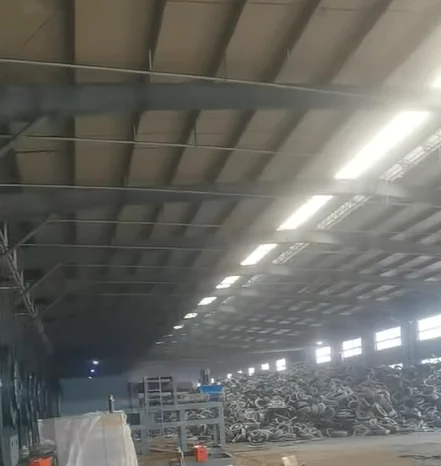
Ein 135Die TPD-Anlage verbraucht ungefähr 4,000Tonnen von Altreifen pro Monat. Dieses Volumen muss ankommen, gewogen und irgendwo gelagert werden, bevor es jemals einen Reaktor erreicht.
Hier unterschätzen die meisten Betreiber, die zum ersten Mal tätig sind, ihren Platzbedarf. Altreifen sind sperrig und schwer zu stapeln, und die Lieferung erfolgt in unregelmäßigen Chargen und nicht kontinuierlich. Eine Anlage mit neun Linien benötigt ausreichend Pufferlager, um jeden Reaktor über eine langsame Sammelwoche hinweg zu versorgen - ohne dass der Hof zu einem unkontrollierten Lagerhaufen wird, der Brandgefahr schafft und die Aufmerksamkeit der Aufsichtsbehörden auf sich zieht.
Der Liu'an-Plan sah die Planung des Eingangsbereichs und der Reaktorbeschickung als separate Zonen vor, sodass Lieferungen niemals die Beladungssequenz unterbrechen.
2. Die Reaktorhalle
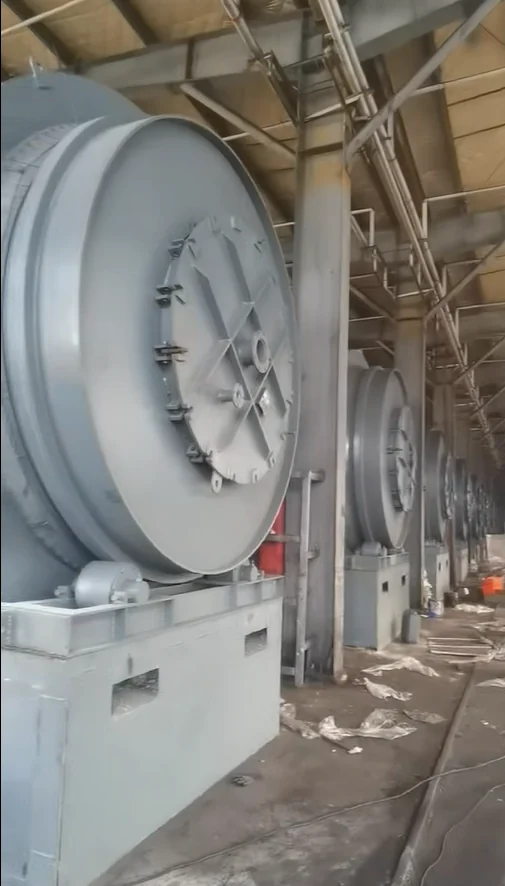
Neun Chargenreaktoren stehen in einer Reihe, jeder durchläuft seinen eigenen Zyklus: Beladen, Abdichten, Erhitzen, Halten, Abkühlen, Entladen.
Die Technik in jeder Einheit ist bei Jinpengs 15TPD-Chargenplattform einheitlich - ein horizontaler Reaktorkörper mit verstärkter Dichtungstür, mehrlagige Isolierung zur Aufrechterhaltung der thermischen Stabilität während des gesamten Zyklus, automatische Beladung und Entladung zur Verkürzung der Umlaufzeit sowie unabhängige Sicherheitsverriegelungen und Druckentlastung bei jedem Gefäß.
Was die neun Linien zum Funktionieren bringt, ist die Abfolge. Wenn alle neun gleichzeitig beladen und gezündet würden, würde die Anlage heftig zwischen Spitzenproduktion von Öl-Gas und vollständigem Stillstand schwanken. Über den Tag verteilt, übergeben die Reaktoren einander - einer entlädt, während der nächste die volle Pyrolysetemperatur erreicht hat und ein dritter beladen wird. Das Ergebnis ist ein kontinuierlich erscheinendes Produktionsprofil aus Chargenanlagen.
Diese Abfolge-Disziplin ist der mit Abstand größte betriebliche Unterschied zwischen einer Vier-Linien-Anlage und einer Neun-Linien-Anlage.
3. Kondensation und Gasrückgewinnung
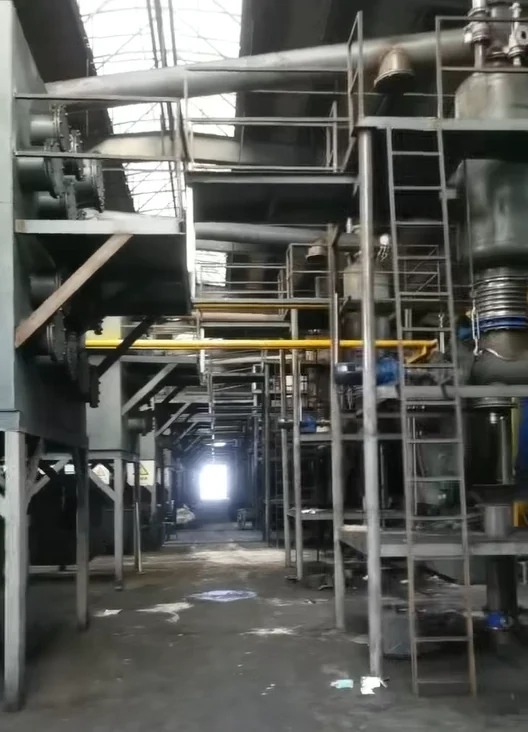
Öl-Gas aus allen neun Reaktoren wird über ein gemeinsames Rohrleitungsnetz gesammelt und in das Kondensationssystem geleitet, wo Heizöl zurückgewonnen und gelagert wird.
Gas, das nicht kondensiert, wird nicht abgeführt - es wird zurück in das Heizsystem recycelt. Bei neun Linien ist dies wichtiger als bei vier. Das zurückgewonnene Gasvolumen aus einer Anlage dieser Größe kann einen bedeutsamen Anteil des gekauften Heizbrennstoffs ersetzen, was die Betriebskosten pro Tonne direkt senkt. Maßstab verbessert die Wirtschaftlichkeit der Gasrückgewinnung, nicht nur die Produktionszahlen.
Das Rauchgasbehandlungssystem ist gemäß den geltenden chinesischen Umweltentladungsstandards konfiguriert - eine nicht verhandelbare Voraussetzung für eine Anlage von dieser Bedeutung im heimischen industriellen Umfeld.
4. Der Produktbereich
Vier Produktionsströme verlassen die Anlage, und jeder hat seine eigene Handhabungslogik.
Heizöl geht in die Tanklagerung und wird per Tankwagen ausgefahren - die größte Einnahmequelle und diejenige, die die benötigte Lagerkapazität der Anlage bestimmt. Ruß wird nach jedem Zyklus abgeführt, gesammelt und in verpackten oder losen Lagerbehältern gelagert. Stahldraht wird sauber aus den Reaktoren zurückgewonnen und direkt an Schrotthändler verkauft, ohne dass eine weitere Verarbeitung erforderlich ist. Brennbares Gas, wie beschrieben, verlässt die Anlage nie.
Bei 135 TPD erzeugen alle vier Ströme ein Volumen in einem Tempo, das Abnahmevereinbarungen wichtiger macht als die Auswahl der Geräte. Eine Anlage dieser Größe kann ihre Lagerung in wenigen Tagen füllen. Betreiber, die Käufer vor der Inbetriebnahme organisieren, vermeiden das klassische Problem einer voll funktionsfähigen Anlage, die gedrosselt werden muss, weil ihr Produktlager voll ist.
| Standort | Liu'an, Provinz Anhui, China |
|---|---|
| Einheiten | 9 Sätze |
| Kapazität pro Einheit | 15 TPD |
| Gesamtkapazität | 135 TPD |
| Reaktortyp | Chargen |
| Rohstoffe | Altreifen |
| Produkte | Heizoel, Ruß, Stahldraht, brennbares Gas |
| Jahr | 2025 |
Was Nine Lines lehrt
Jinpeng baut Chargenreaktoren mit 10 TPD und 15 TPD und kontinuierliche Systeme mit 30 TPD und 50 TPD. Die Wahl zwischen ihnen wird normalerweise als technische Frage dargestellt. Liu'an schlägt vor, dass sie eher eine logistische Frage ist.
Neun15TPD-Chargenlinien geben einem Bediener granulare Kontrolle: Kapazität wird in definierten Schritten hinzugefügt, Wartung wird aufgenommen, ohne die Produktion zu stoppen, und die Zyklussequenz wird an das angepasst, was das Sammelnetz in dieser Woche tatsächlich liefert. Der Kompromiss ist, dass der Bediener einen echten Planungsbetrieb durchführen muss, anstatt einfach die Ausrüstung einzuschalten.
Für jeden, der eine Pflanze über... bewertet100TPD, der Liu'an-Fall macht den Punkt deutlich. Die Reaktoren sind der einfache Teil. Lagerplatz, Bereitstellung, Zyklusabfolge und Produktabnahme bestimmen, ob die installierte Kapazität tatsächlich erreicht wird.
ShangqiuJinpeng Industrial Co., Ltd.stellt Chargen-, halbkontinuierliche und kontinuierliche Pyrolyseanlagen für Altreifen, Kunststoffabfälle, Gummipulver und die Wiederverwertung von kommunalen Feststoffen her. Um ein Projekt in Ihrer Region zu besprechen, besuchen Sie www.Pyrolyse-machine.com oder kontaktieren Sie unser Team.
Haftungsausschluss: Alle Inhalte in diesem Dokument werden basierend auf Shangqiu erstelltJinpeng Industrial Co., Ltd.Die öffentlichen Standards und Projekterfahrungen werden bereitgestellt und dienen nur zu Technologie- und Projektreferenzzwecken. Tatsächliche Ausstoßrate, Stromverbrauch und Produktqualität hängen von den realen Betriebsbedingungen ab. Für weitere Informationen besuchen Sie bitte unsere offizielle Website: www.Pyrolyse-machine.com