Pyrolysis equipment

From the Jinpeng Project Archive: A Two-Unit 12 TPD Batch Waste-Tire Pyrolysis Project in Tonghua, Jilin, 2018

A batch pyrolysis plant is a heat-transfer problem before anything else: the reactor must be brought to pyrolysis temperature, held there through the active phase of the cycle, and then cooled enough to be discharged safely.

2026-08-20 7 minutes
이 상세 자료의 본문은 현재 영어 원문으로 제공됩니다. 내비게이션과 문의 절차는 한국어로 이용할 수 있습니다.

Two batch reactors with a combined design capacity of 24 TPD, configured around the condensation, cooling-water, and winter handling demands of a cold-climate site in northeast China.

Project Details

Project Location
Tonghua, Jilin Province, China
Configuration
Two batch-type horizontal rotary pyrolysis units from the XY-8-P/PB equipment family, each sized on the 12 TPD design line (Φ2800×8800-class reactor in Q345R boiler steel)
Combined Design Capacity
24 TPD (2 × 12 TPD, design capacity)
Feedstock
Waste tires
Project Year
2018
Original Project Status
Delivered and commissioned in 2018 as a two-unit batch installation
Current Operating Status
Not independently verified
Supplier
Shangqiu Jinpeng Industrial Co., Ltd. (PYROJIN)

A batch pyrolysis plant is a heat-transfer problem before anything else: the reactor must be brought to pyrolysis temperature, held there through the active phase of the cycle, and then cooled enough to be discharged safely. In Tonghua, Jilin Province, where winter temperatures fall far below freezing for months at a time, that heat logic runs in both directions at once - the process that needs sustained heating must also shed heat through a condensation train and a cooling-water circuit that keep working when the ambient temperature is the coldest thing on site. This two-unit batch installation, delivered and commissioned in 2018 with a combined design capacity of 24 TPD, concentrates the questions that matter for any cold-region project: how to condense reliably in winter, how to keep cooling water liquid, and how to handle feedstock and products on a frozen site.

Project Background & Configuration Logic

The site was built around two batch reactors rather than a single larger line. For an operator in a cold region, the two-unit arrangement is more than a way to double capacity: it creates an independent rhythm per line, with loading on one unit able to overlap pyrolysis on the other. In the worst weeks of winter, one unit can even be idled and protected while the other runs. The configuration was designed around a nominal batch cycle of roughly 22-24 hours per unit, divided into loading, preheat, the pyrolysis phase, cooling, and discharge. Offsetting the two cycles spreads the demand for labor, heating fuel, and cooling-water capacity across the day. For a cold-climate site this matters twice over: a predictable cycle gives the operator fixed windows to drain and protect water circuits, inspect insulation, and prepare the next batch, instead of improvising against the weather.

The Batch Cycle as a Winter Planning Tool

Each 12 TPD design line follows the same staged cycle: roughly two hours of loading, four hours of preheat, ten hours of main pyrolysis, four to six hours of cooling, and two hours of discharge. These are design-cycle reference figures, not promises of output. What matters for cold-climate operation is that the cycle is a schedule the operator controls. Preheat is the most fuel-intensive stage, so in winter the two units can be started in sequence rather than together, smoothing the heating load. The cooling stage is where cold weather can help or hurt: a deep-freeze ambient temperature accelerates heat removal, but rapid or uneven cooling can be as problematic as slow cooling, which is why the condensation train is managed as a controlled system, not left to the outdoor temperature.

Condensation: Holding the Temperature Band

Pyrolysis vapor leaving the reactor carries the oil fraction that the condensation train must recover. In a warm climate the concern is removing enough heat; in a northeastern winter it flips to removing too much, too unevenly. Heavy, waxy components of tire-derived oil thicken and can solidify as temperatures drop, and vapor lines cooling unevenly can drop condensate in the wrong place. The design logic for a cold site is to hold condensate temperatures inside a working band - using cooling-water flow as a controlled variable - and to insulate vapor and condensate lines so that condensation happens in the condensers, where it can be collected, rather than along the pipe run. Water knockout points in the vapor system serve the same purpose: moisture that drops out of the gas phase in freezing weather must be drained deliberately, not left to freeze inside a line.

The Cooling-Water Circuit in Freezing Conditions

Cooling water is the workhorse of the condensation train, and standing water is the most vulnerable element on a winter site. An open cooling pool or an uninsulated loop can skim over with ice, restrict flow, and in the worst case freeze solid during an idle period. The design approach for this configuration follows the general cold-climate logic: closed-loop circulation where possible, insulation on exposed piping, antifreeze measures where the circuit permits them, and drainage points at the low spots so no water is left standing when a unit is shut down. The two-unit layout makes this practical: one unit's circuit can be drained, checked, and refilled while the other runs its cooling phase. This is site-level engineering judgment applied to a documented configuration, not a record of a specific winter event at the plant.

Winter Handling: Feedstock, Discharge, and Product Storage

Winter changes the behavior of everything the plant touches. Frozen tires are stiffer and harder to handle, so covered intake and storage areas keep snow and ice off the feedstock before it is loaded in batches, whole or cut. At discharge, hot solids meet cold air and produce visible steam and condensate; the recovered carbonaceous material and steel wire must be moved promptly to covered storage to avoid freezing into the handling equipment. Product storage has its own cold-weather logic: pyrolysis oil thickens as it cools, so tanks typically need insulation or heating to stay pumpable for dispatch, and recovered carbonaceous material should be kept dry - damp material that freezes becomes hard to screen and load.

Gas Return and Emission Treatment at Low Temperature

The non-condensable gas generated during pyrolysis may be returned to the heating system where the installed design and operating conditions permit, which cuts the fuel the site must buy - useful where winter heating demand is high. Gas lines carrying moisture need the same freeze protection as water lines, with knockout and drainage provisions. The flue gas from the heating system passes through the installed treatment train - a spray tower for alkali neutralization followed by an adsorption tower for desulfurization and dedusting - designed to meet local emission requirements under proper operating conditions. In winter the scrubbing liquid is itself a freeze risk, so the treatment area must be protected or heated enough to keep the solution liquid before full output is reached. None of this is a claim about measured emissions at this project; it describes the design considerations that a cold-site configuration has to answer.

Tonghua, Jilin Province, China project equipment

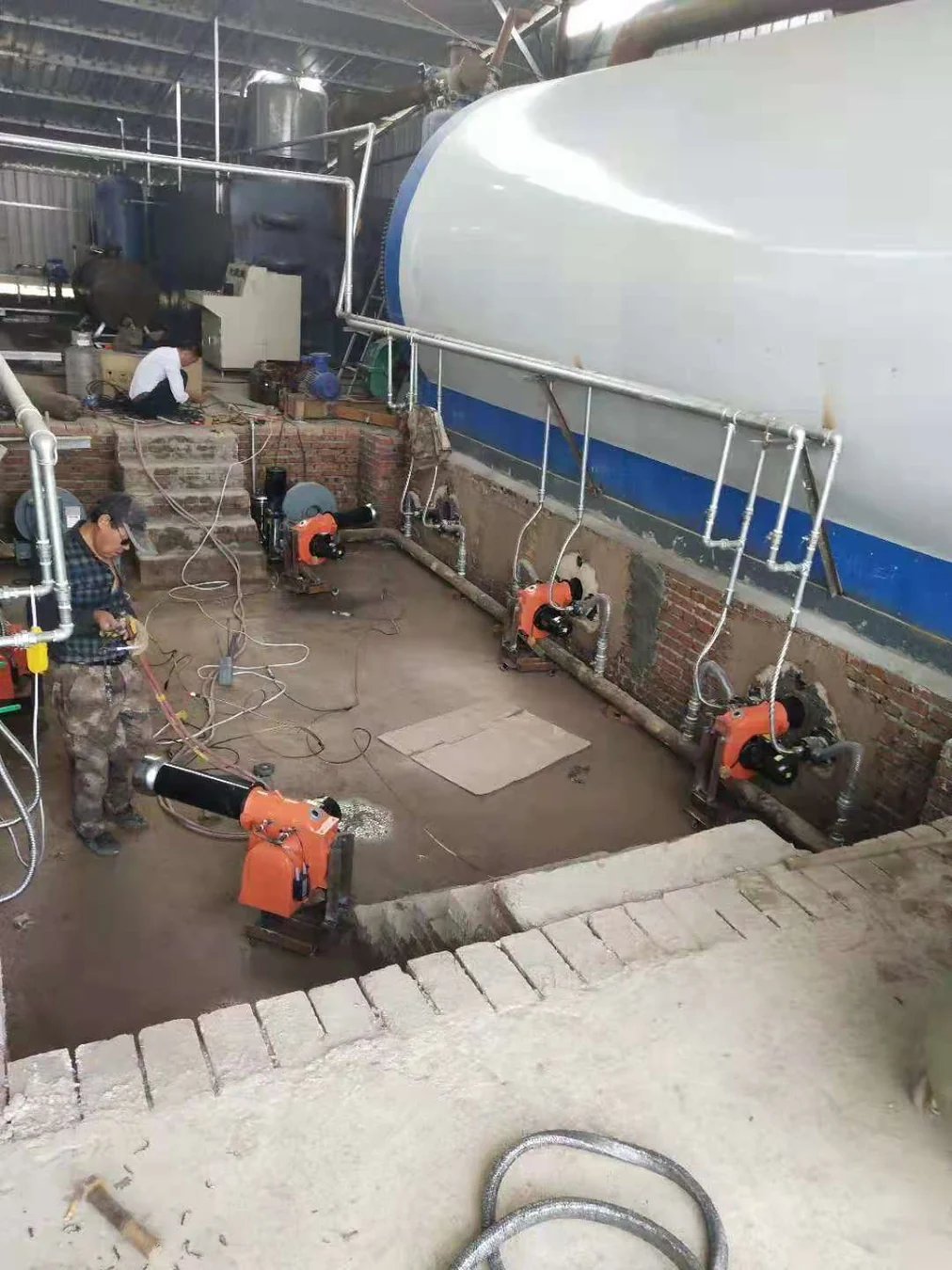
Overall view of the two-unit batch pyrolysis site in Tonghua, Jilin, delivered and commissioned in 2018, showing the scale of the two 12 TPD design lines. Photo taken during installation and commissioning in 2018.

Tonghua, Jilin Province, China project equipment

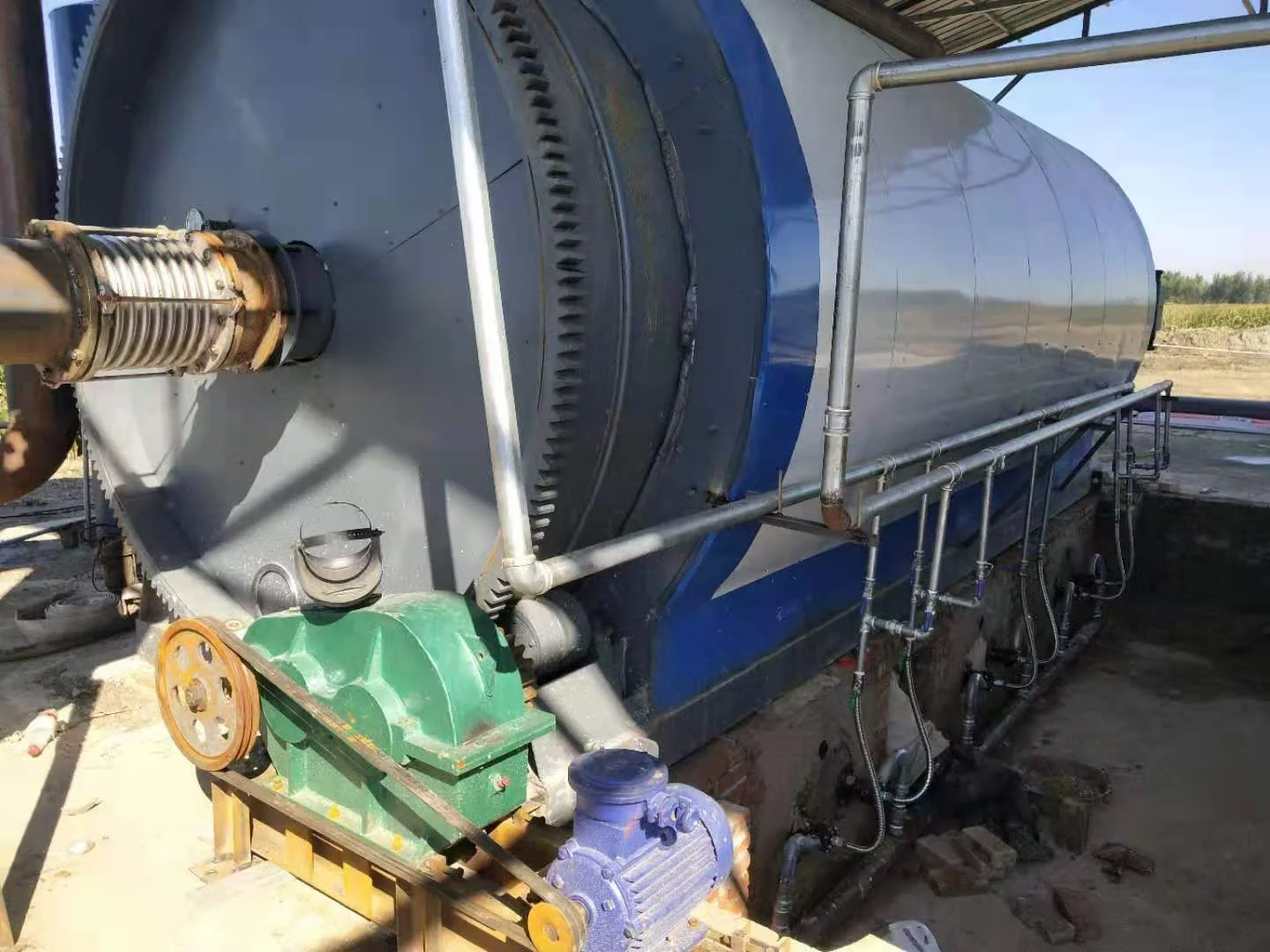
Process detail at the Tonghua site: the condensation and cooling-water area of one batch unit, the part of the process train most affected by cold-climate operation. Photo taken during installation and commissioning in 2018.

Project Specifications

ItemProject specification
LocationTonghua, Jilin Province, China
Project year2018
StatusHistorical archive project; delivered and commissioned in 2018
FeedstockWaste tires
SystemBatch-type horizontal rotary pyrolysis (XY-8-P/PB equipment family)
Number of units2
Capacity per unit12 TPD (design capacity)
Combined design capacity24 TPD (design capacity)
Production modelBatch operation, two independently schedulable lines
Main recovered streamsPyrolysis oil, recovered carbonaceous material, steel wire; non-condensable gas may be returned to the heating system where the installed design and operating conditions permit
SupplierShangqiu Jinpeng Industrial Co., Ltd. (PYROJIN)

What the Project Demonstrates

This project shows that a modest two-unit batch plant can be configured for a climate where the biggest operational threats are freezing water and thickening oil. Three things stand out for a prospective cold-region client. First, condensation control: the value of holding condensate temperatures in a working band and insulating vapor lines, so winter produces manageable, evenly collected condensate rather than blockages. Second, cooling-water discipline: closed-loop circulation, insulation, antifreeze measures, and drainage points are not luxuries at such a site; they are the difference between a line that starts on schedule and one that waits for a thaw. Third, the two-unit rhythm: with independent batch cycles, one line can be protected or serviced while the other produces, which keeps the site alive through the worst weeks. Evaluators reviewing a cold-climate proposal should look at how the condenser, the water circuit, and storage tanks are protected below freezing, and whether the operator has a written winter procedure for draining idle equipment. This archive project does not verify the plant's current operating status, but it documents a configuration built to answer those questions in 2018.

About Jinpeng

Shangqiu Jinpeng Industrial Co., Ltd. designs and manufactures batch, semi-continuous, and continuous pyrolysis plants, oil distillation systems, and supporting equipment for waste tires, waste plastics, oil sludge, rubber-derived materials, and other suitable carbon-rich feedstocks. Project configuration is developed around material characteristics, production objectives, site conditions, and applicable local requirements. For project discussions, visit www.pyrolysis-machine.com.

Disclaimer

All capacities stated in this article are design capacities, not guaranteed outputs; actual throughput depends on feedstock characteristics, batch discipline, and operating conditions. Recovered product yields and properties vary with feedstock and process conditions and must be verified by testing for any specific application. Energy consumption and emission performance depend on the auxiliary systems installed and on actual operating practice; the process is designed to comply with applicable local requirements, and final project design must be confirmed against local regulations at the planning stage. This article contains no operating data from the plant and makes no claim about its current status.

Archive Note: This retrospective is based on Jinpeng's project records and photographs from the original delivery and commissioning period. It describes the documented project configuration and does not constitute verification of the plant's current operating status.

프로젝트 문의

원료에 맞는 설비 구성 조언이 필요하신가요?

Pyrojin에 문의