Pyrolysis and distillation equipment

Beyond the Catalogue: A Customized Waste Oil Processing Plant in Xuzhou, Jiangsu

The client's waste oil stream carried a sludge fraction containing valuable metals. The commercial value of the project sat in that sludge — but the metals could not be recovered efficiently while still bound up in the oil.

2026-08-20 3 minutes
This detailed legacy page is currently preserved in English. The navigation and enquiry flow remain available in your selected language.

Not every project starts with a model number.

Most enquiries Jinpeng receives can be answered from the standard range - 10TPD or 15TPD batch units, 30TPD or 50TPD continuous systems, configured for tires, plastics, rubber powder, or municipal solid waste. The client in Xuzhou arrived with a different kind of problem.

They were not trying to produce fuel oil. They were trying to reach what was underneath it.

A Different Objective

The client's waste oil stream carried a sludge fraction containing valuable metals. The commercial value of the project sat in that sludge - but the metals could not be recovered efficiently while still bound up in the oil.

What they needed, therefore, was not a conventional pyrolysis plant optimized for oil yield. They needed a system engineered to cleanly separate the oil phase from the sludge phase, delivering a sludge fraction in the condition their own downstream metal extraction process required.

That reframes the entire design brief. In a standard tire or plastic plant, the oil is the product and the solid residue is a secondary stream. Here, the priority is inverted: the solid fraction is where the value lies, and the separation quality determines whether the client's extraction process works at all.

Jinpeng designed and supplied two customized units to meet that specification.

Why This Project Is Described Briefly

Jinpeng has signed a technology agreement with the client covering this application. The process configuration, operating parameters, and design details of the two units are therefore not published.

This is a normal feature of custom engineering work. When a client's competitive position depends on a process developed jointly with their equipment supplier, protecting that process is part of the supplier's obligation. We describe the project's shape and outcome; the specifics remain with the client.

Prospective customers evaluating a confidential or proprietary application should read this as an indication of how such projects are handled - not as a limitation on what Jinpeng can discuss with them directly under appropriate agreement.

What Custom Engineering Actually Involves

For clients whose requirements sit outside the standard range, the working process generally follows a familiar path:

The starting point is the client's material, not a catalogue. Feedstock characteristics, the condition of the required output, and the demands of any downstream process the equipment must feed are all established first.

From there, the design question becomes how much of the standard platform still applies. Reactor body, sealing systems, heating arrangement, and safety architecture are proven components that rarely need reinvention. What changes is the configuration around them - separation logic, discharge handling, thermal profile, and materials selection appropriate to the specific stream.

The result is equipment that looks recognizably like a Jinpeng pyrolysis system while doing a job no standard unit performs.

LocationXuzhou, Jiangsu Province, China
Units2 sets
TypeCustomized pyrolysis system
FeedstockWaste oil
FunctionOil-sludge separation for downstream metal recovery
Process detailsConfidential under technology agreement

The Point of Including This Case

A project showroom naturally fills with repeatable configurations - two lines here, nine lines there, familiar feedstocks and predictable outputs. Those cases are useful precisely because they are repeatable.

Xuzhou is included for the opposite reason. It shows that when a client's requirement does not match anything in the catalogue, the answer is not necessarily no. It may simply be a longer conversation, an engineering agreement, and a plant built for one purpose that nobody else has needed yet.

If your material or your objective does not fit a standard pyrolysis configuration, that is worth a conversation rather than an assumption.

Shangqiu Jinpeng Industrial Co., Ltd. manufactures batch, semi-continuous, and continuous pyrolysis plants for waste tires, waste plastics, rubber powder, and municipal solid waste recycling, and undertakes customized engineering for non-standard applications. To discuss a project in your region, visit www.pyrolysis-machine.com or contact our team.

Disclaimer: All content in this document is generated based on Shangqiu Jinpeng Industrial Co., Ltd.'s public standards and project experience, and is provided for technology and project reference purposes only. Actual output rate, power consumption, and product quality depend on real operating conditions. For further information, please visit our official website: www.pyrolysis-machine.com

Equipment reference

Representative Pyrojin equipment
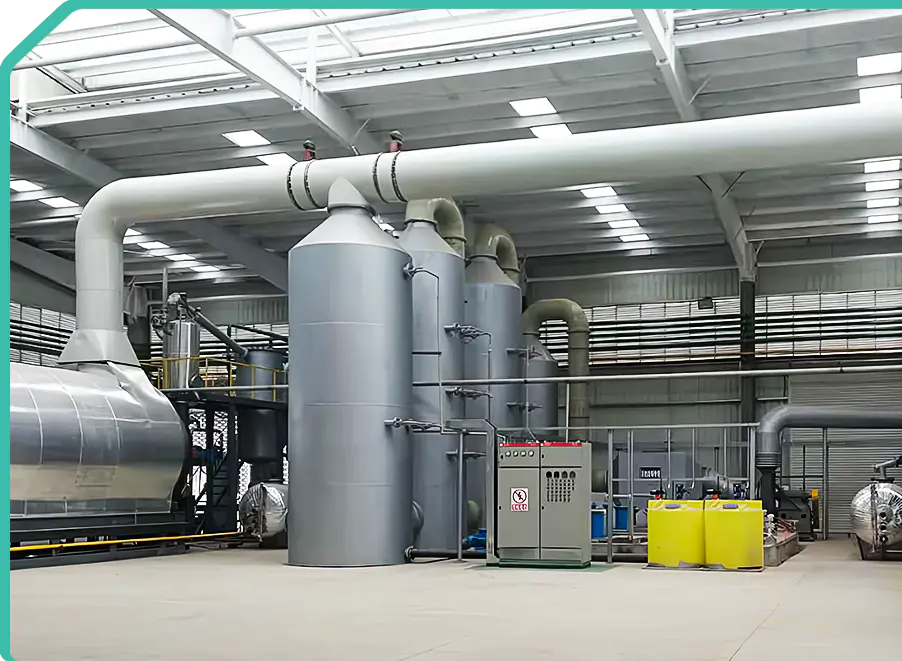
Representative equipment image; the source project document does not publish a project-site photograph.
Representative Pyrojin equipment
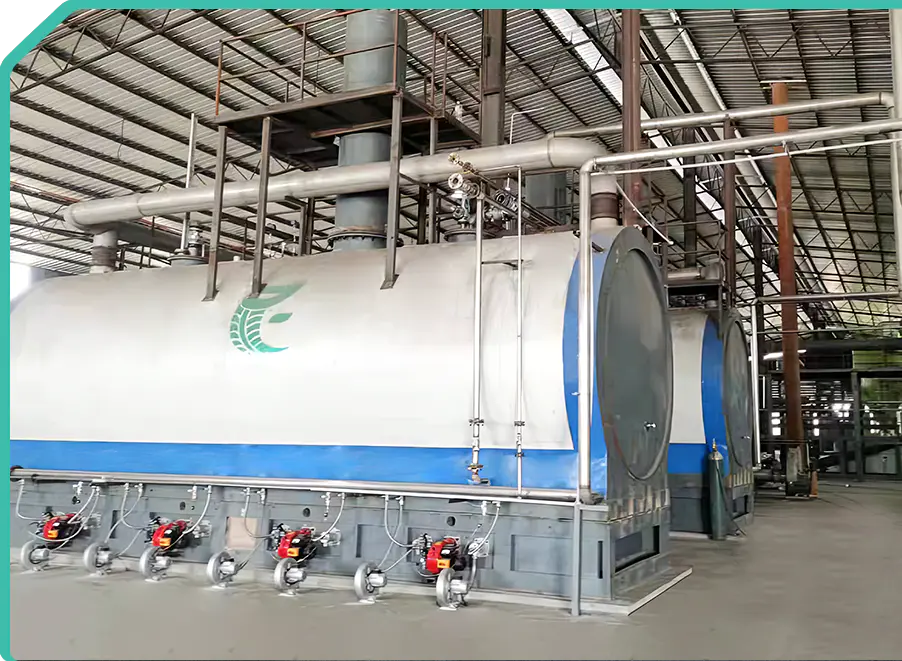
Representative equipment image; the source project document does not publish a project-site photograph.
プロジェクトのお問い合わせ

原料の構成に関するアドバイスが必要ですか?

お問い合わせPyrojin