
Most of what is written about pyrolysis assumes waste tires. The reactor looks similar, the process sounds similar, and buyers often assume a tire plant and a plastic plant are the same machine with a different label.
They are not - and the Binzhou project is a useful place to explain why.
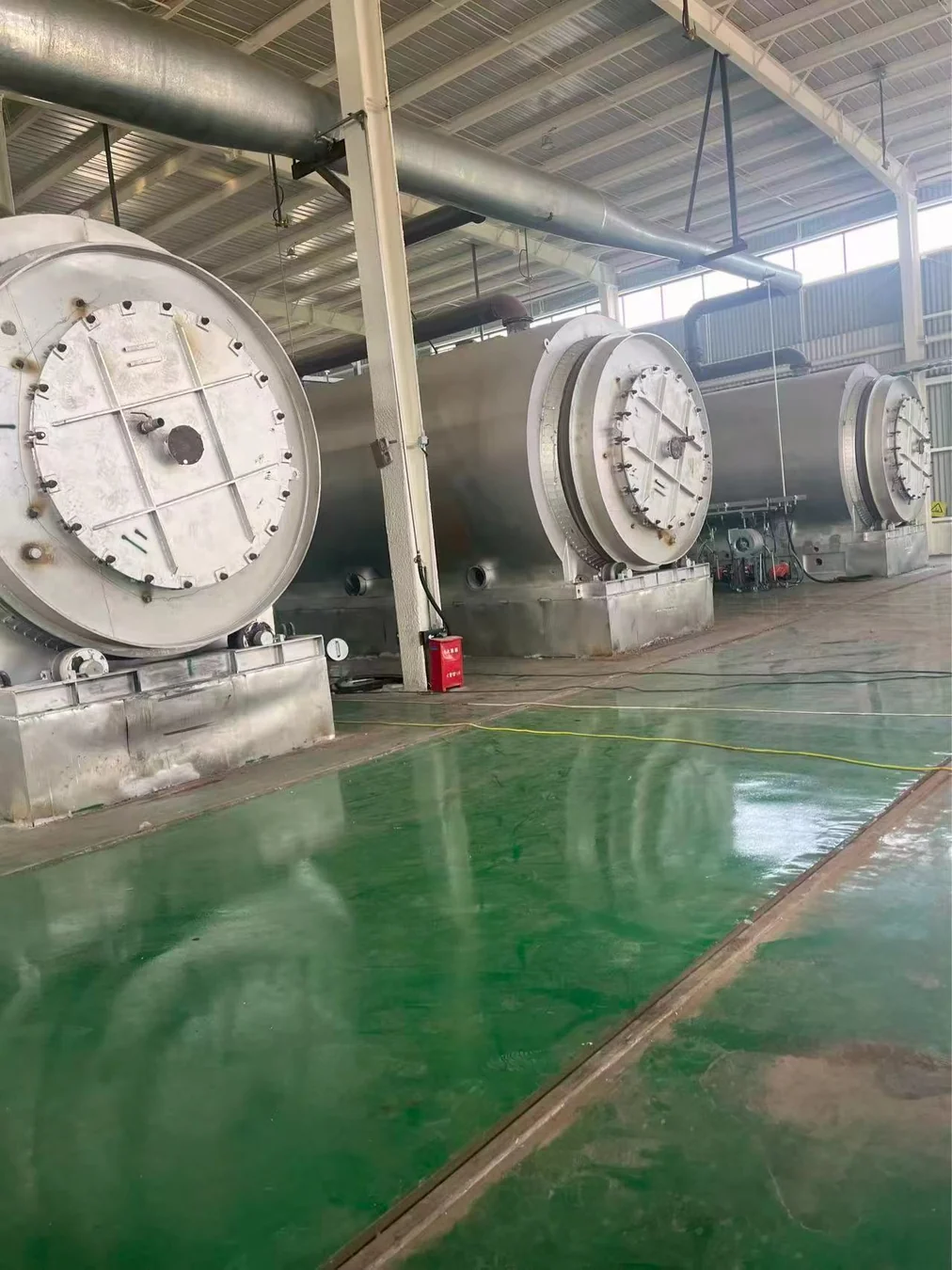
In 2026, Shangqiu Jinpeng Industrial Co., Ltd. supplied four sets of 15TPD batch-type waste plastic pyrolysis plants to an operator in Binzhou, Shandong Province, for a combined design capacity of 60 tons per day. Binzhou sits within Shandong's petrochemical and plastics-processing belt, which means both a steady supply of post-industrial plastic waste and a nearby market for recovered oil.
Three Differences That Change the Plant
There is no steel wire - and that changes the economics
Tire pyrolysis recovers four products. Plastic pyrolysis recovers three: fuel oil, carbon residue, and combustible gas. There is no steel wire revenue stream and no wire separation step.
That subtraction cuts both ways. The plant is simpler - no wire handling, no wire storage, less abrasive wear inside the reactor. But it also means the project's economics rest much more heavily on oil yield and oil quality. In a tire plant, steel wire is a reliable secondary income; in a plastic plant, oil carries the business.
Oil yield is higher - but only if the feedstock is clean
Plastics are hydrocarbon polymers with far less inorganic filler than tire rubber, so a well-sorted plastic feed converts a substantially larger share of its mass into oil than a tire feed does. This is the main commercial attraction of plastic pyrolysis.
The qualifier matters enormously. That advantage exists only when the input is properly sorted. Contaminants behave badly in a plastic reactor: PVC introduces chlorine that can corrode equipment and degrade oil quality, PET contributes very little oil, and soil, moisture, or paper reduce yield while consuming heat. A plastic plant is far more sensitive to feedstock preparation than a tire plant, where a tire is essentially always a tire.
This is why the Binzhou site's location matters. Post-industrial plastic waste from a processing belt arrives more uniform and less contaminated than mixed post-consumer plastic - which is precisely the condition under which plastic pyrolysis performs at its best.
Melt behavior demands different handling
Rubber holds its shape as it decomposes. Plastic softens, melts, flows, and can foam before it cracks into vapor. Feeding, heating profile, and reactor internals all have to account for a feedstock that turns liquid on its way to becoming gas.
Handled correctly, this is manageable. Handled as if it were tire, it produces sticky residue, blocked lines, and unstable cycles.
What Was Delivered
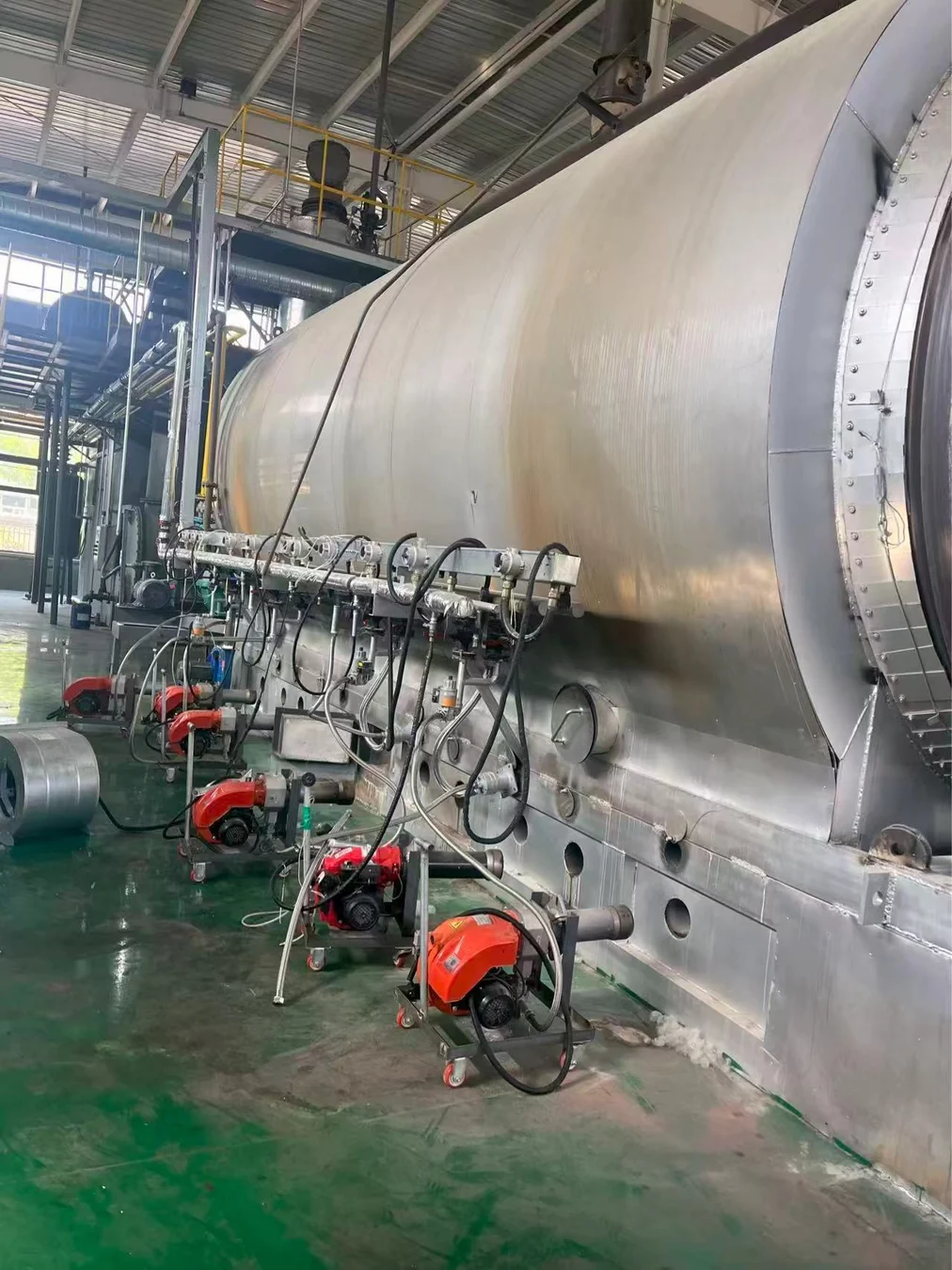
Four 15TPD batch reactors, each built on Jinpeng's standard batch platform and configured for plastic feedstock:
Horizontal batch reactor with reinforced sealing door and multi-layer insulation
Feeding and discharge systems specified for the melt-and-flow behavior of plastic feed
Multi-stage condensing and oil collection, recovering fuel oil from the oil-gas stream
Non-condensable gas recycled into the heating system, reducing purchased fuel consumption
Flue gas treatment configured to applicable Chinese environmental discharge standards
Independent safety interlocks and pressure relief on every reactor
| Location | Binzhou, Shandong Province, China |
|---|---|
| Units | 4 sets |
| Capacity per unit | 15 TPD |
| Total capacity | 60 TPD |
| Reactor type | Batch |
| Feedstock | Waste plastics |
| Products | Fuel oil, carbon residue, combustible gas |
| Year | 2026 |
Why Four Lines Was the Right Size Here
Four 15TPD batch reactors give this operator staggered cycles and steady daily output, maintenance on one unit without stopping the plant, and room to add lines if plastic supply grows.
But the more important sizing logic for a plastic project is upstream. Capacity should be matched to how much sorted, suitable plastic the operator can secure - not how much plastic waste exists in the region. Those are very different numbers. A plant sized to raw availability rather than sorted availability will either run below capacity or be tempted to accept contaminated feed, and the second option damages both equipment and product value.
Sixty tons per day, drawn from an established plastics-processing region, reflects that discipline.
The Broader Point
Jinpeng manufactures batch plants at 10TPD and 15TPD and continuous systems at 30TPD and 50TPD, and supplies them for tires, plastics, rubber powder, and municipal solid waste. The reactor platform is shared across feedstocks; the configuration around it is not.
For anyone evaluating a waste plastic pyrolysis project, the Binzhou case reduces to one practical instruction: solve your sorting before you size your reactors. Plastic pyrolysis rewards clean feedstock more generously than tire pyrolysis does - and punishes dirty feedstock more severely.
Shangqiu Jinpeng Industrial Co., Ltd. manufactures batch, semi-continuous, and continuous pyrolysis plants for waste tires, waste plastics, rubber powder, and municipal solid waste recycling. To discuss a project in your region, visit www.pyrolysis-machine.com or contact our team.
Disclaimer: All content in this document is generated based on Shangqiu Jinpeng Industrial Co., Ltd.'s public standards and project experience, and is provided for technology and project reference purposes only. Actual output rate, power consumption, and product quality depend on real operating conditions. For further information, please visit our official website: www.pyrolysis-machine.com