Project Overview
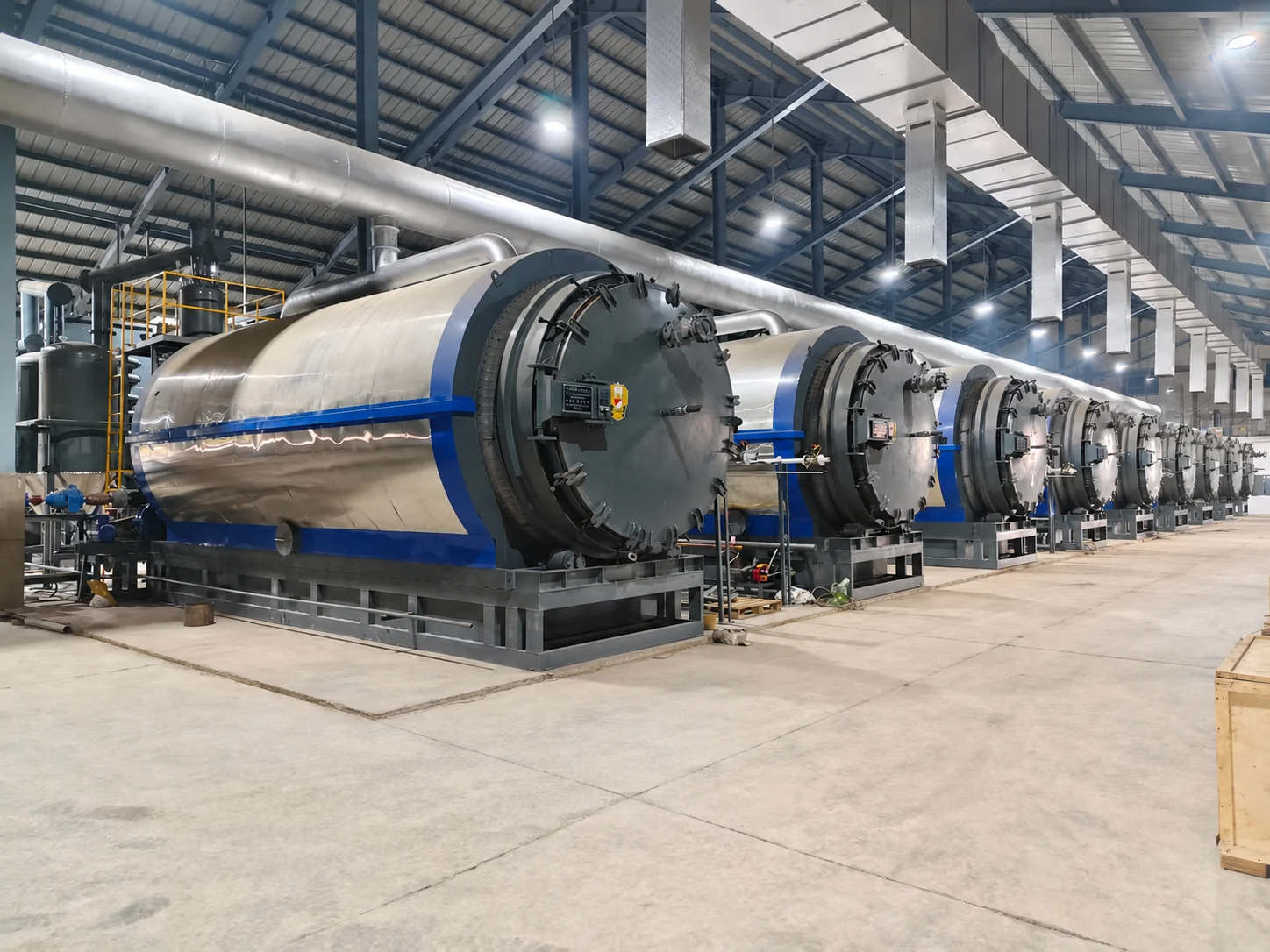
In 2026, Shangqiu Jinpeng Industrial Co., Ltd. completed the manufacturing, delivery, installation, and commissioning of 21 sets of 15TPD batch-type municipal solid waste pyrolysis plants in Indonesia. The facility has now finished commissioning and trial run, with a combined design capacity of approximately 315 tons of municipal solid waste per day.
This is a follow-on project from the same client who previously commissioned two semi-continuous rubber powder pyrolysis lines from Jinpeng - an installation that has been in stable formal production since earlier in 2026. Having validated both the technology and their own operating capability on a uniform, well-defined feedstock, the client scaled up to a far larger and more complex municipal waste stream.

The Challenge: Indonesia's Municipal Solid Waste Pressure
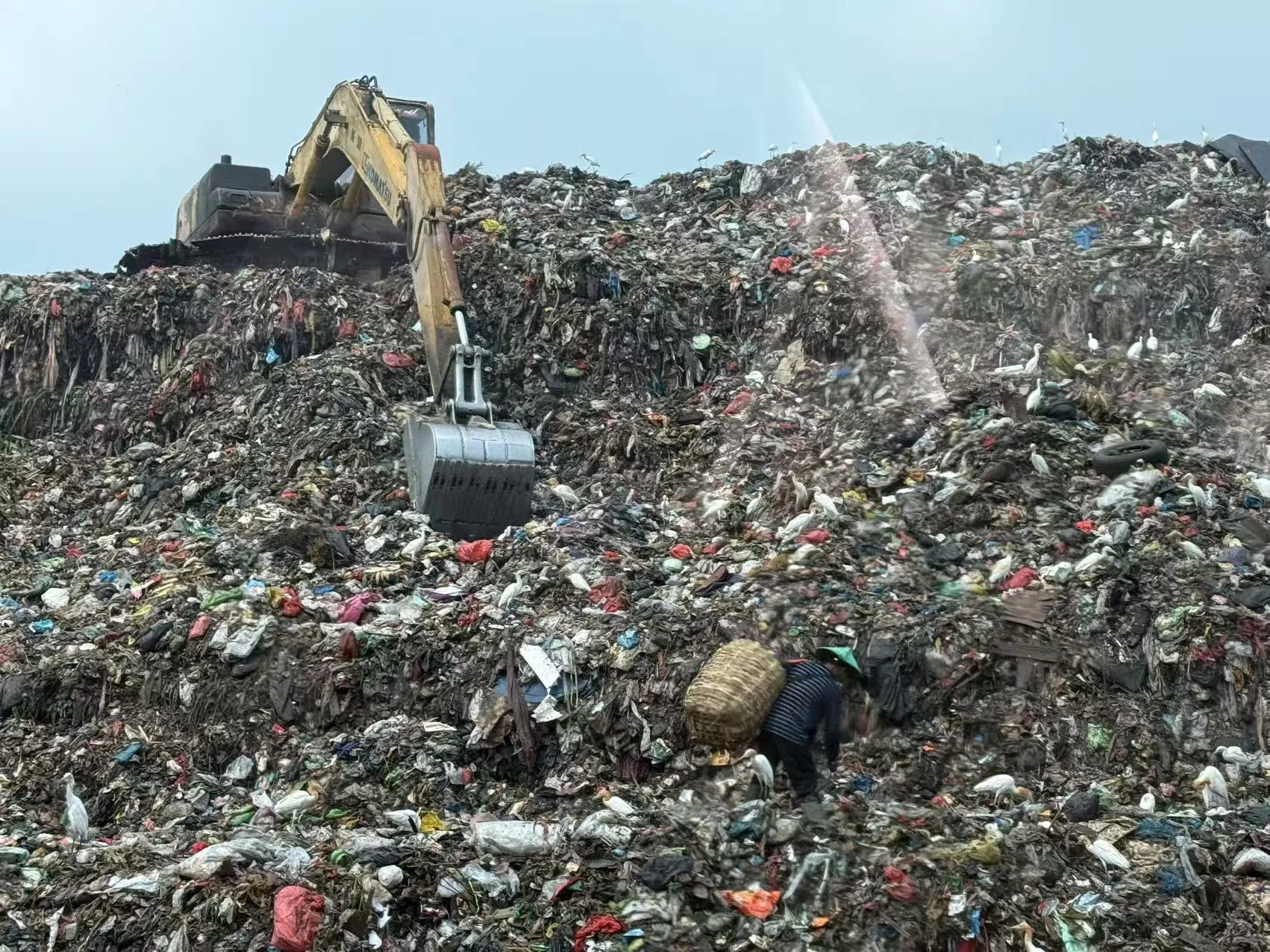
Indonesia, like many rapidly urbanizing countries, faces intense pressure from municipal solid waste. Open dumpsites, informal waste picking, and constrained landfill capacity are widespread realities across the archipelago. Site photographs from the region show mountains of unsorted municipal waste worked by excavators, with waste pickers manually sorting recyclables by hand - a direct illustration of why industrial-scale processing capacity is needed.
Landfilling offers no resource recovery and consumes increasingly scarce land. Pyrolysis provides an alternative pathway: converting the combustible fractions of MSW - plastics, rubber, and other organic residues - into fuel oil, carbon black, and combustible gas, reducing landfill volume while recovering usable energy value.
Technical Configuration
| Item | Specification |
|---|---|
| Location | Indonesia |
| Number of units | 21 sets |
| Capacity per unit | 15 TPD (tons per day) |
| Total daily capacity | 315 TPD |
| Reactor type | Batch-type pyrolysis |
| Feedstock | Municipal solid waste (sorted combustible fractions) |
| Main products | Fuel oil, carbon black, combustible gas |
| Project year | 2026 |
| Status | Commissioning and trial run completed |
Key system features delivered:
21 independent batch reactors, each running its own loading, heating, pyrolysis, cooling, and discharge cycle
Horizontal reactor design with reinforced sealing doors and multi-layer insulation for thermal stability across each batch cycle
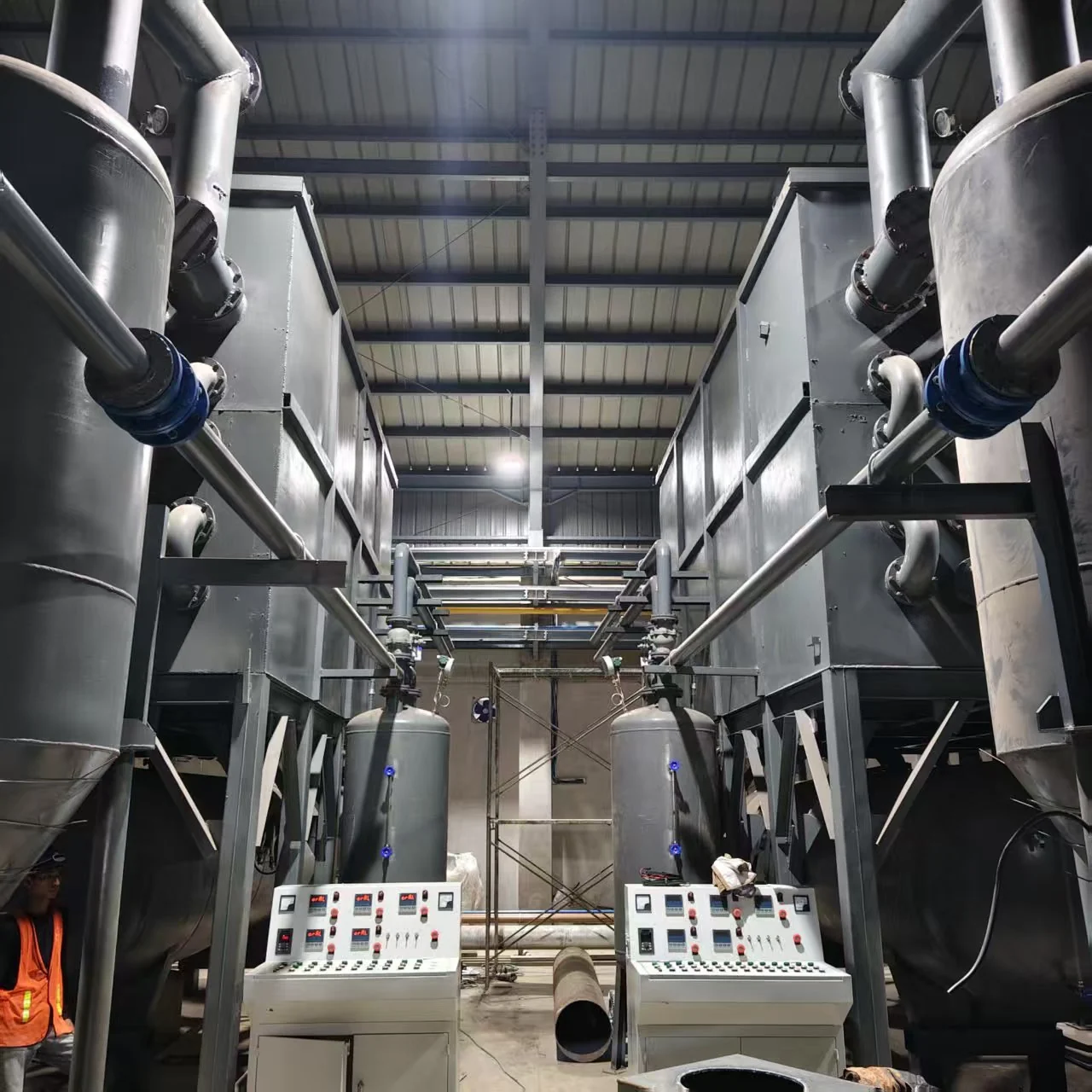
Centralized oil-gas collection piping, connecting all 21 units to shared condensing and purification systems
Non-condensable gas recycling to the heating system, reducing external fuel consumption
Flue gas treatment systems configured to the project's local environmental compliance requirements
Safety interlocks and pressure relief devices on every reactor
Heavy-duty steel support frames and enclosed steel-framed workshop housing, enabling weather-protected operation year-round

Why 21 Batch Lines Instead of Fewer, Larger Units
Jinpeng's standard product range includes 10TPD and 15TPD batch-type plants and 30TPD and 50TPD continuous-type plants. For this project, a large array of 15TPD batch reactors was selected for reasons specific to municipal solid waste:
Feedstock variability - MSW composition fluctuates significantly by season, source district, and sorting quality. Batch reactors handle this variability well, since each load is managed as a discrete, individually controllable cycle.
Operational resilience at scale - With 21 independent reactors, maintenance or downtime on any single unit has minimal effect on total plant throughput.
Staggered cycle scheduling - Sequencing the loading and discharge cycles across 21 units allows the facility to maintain steady daily output rather than experiencing production peaks and idle gaps.
Phased ramp-up - A multi-line layout allows the operator to bring units online progressively during trial run and to expand as sorted waste supply volumes stabilize.

Recovered Products
Once in full operation, the facility is designed to process sorted combustible MSW fractions into:
Pyrolysis fuel oil - usable as an industrial fuel or further refined
Carbon black - applicable in industrial and construction materials
Combustible gas - recirculated as process heating fuel, improving overall plant energy efficiency
This resource recovery model allows municipalities and waste management operators to reduce landfill volumes while generating economic return from material that would otherwise be discarded.
Project Significance
With 21 sets of 15TPD batch reactors commissioned, this facility ranks among the largest MSW pyrolysis installations Jinpeng has delivered, and demonstrates that industrial-scale, multi-line batch pyrolysis is a technically and commercially viable route for large municipal waste volumes - not merely a pilot-scale concept.
The project also illustrates a practical investment progression: the client began with two semi-continuous rubber powder lines on a uniform feedstock, established stable production, and then scaled into a substantially larger and more complex municipal waste application with the same equipment supplier.
For municipalities, investors, and EPC contractors across Southeast Asia evaluating waste-to-energy options, this installation serves as a working reference for what multi-line MSW pyrolysis looks like at genuine industrial scale.
Frequently Asked Questions
What is a batch MSW pyrolysis plant? A batch MSW pyrolysis plant processes municipal solid waste in discrete cycles. Each reactor is loaded with a fixed quantity of sorted combustible waste, sealed, and heated in an oxygen-limited environment to thermally decompose the material. After the cycle completes and the reactor cools, residue is discharged and the reactor is reloaded for the next batch.
How much waste can this Indonesia facility process? Each of the 21 units is designed to process approximately 15 tons per 24-hour operating period, giving a combined design capacity of up to 315 tons per day.
Does municipal solid waste need to be sorted before pyrolysis? Yes. Pyrolysis processes the combustible fractions of MSW - plastics, rubber, and other organic residues. Upstream sorting to remove inert materials such as glass, metal, and construction debris is necessary for stable operation and product quality.
What products are recovered from MSW pyrolysis? Pyrolysis fuel oil, carbon black, and non-condensable combustible gas. Actual yields depend heavily on waste composition, moisture content, sorting quality, and operating parameters.
Why did this client choose Jinpeng for such a large project? The client had previously commissioned two semi-continuous rubber powder pyrolysis lines from Jinpeng, which entered stable formal production in 2026. That successful first project established the basis for scaling up to the 21-set MSW facility.
What pyrolysis equipment does Jinpeng supply? Jinpeng's standard product range includes 10TPD and 15TPD batch-type pyrolysis plants and 30TPD and 50TPD continuous-type pyrolysis plants, along with semi-continuous configurations for suitable feedstocks such as rubber powder.
Shangqiu Jinpeng Industrial Co., Ltd. is a manufacturer of batch, semi-continuous, and continuous pyrolysis plants for waste tires, waste plastics, rubber powder, and municipal solid waste recycling. To discuss a project in your region, please visit www.pyrolysis-machine.com or contact our team.
Disclaimer: All content in this document is generated based on Shangqiu Jinpeng Industrial Co., Ltd.'s public standards and project experience, and is provided for technology and project reference purposes only. Actual output rate, power consumption, and product quality depend on real operating conditions. For further information, please visit our official website: www.pyrolysis-machine.com