
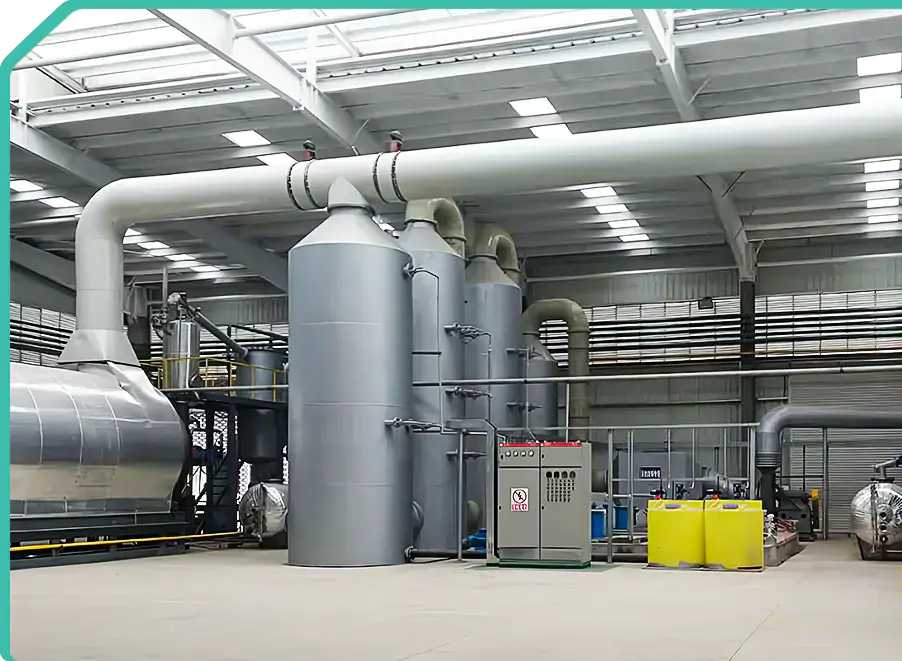
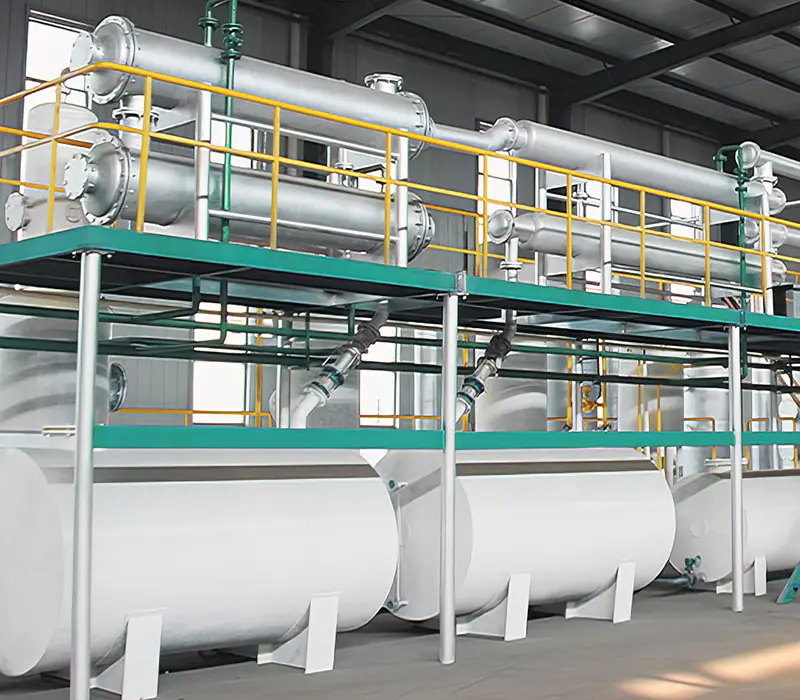
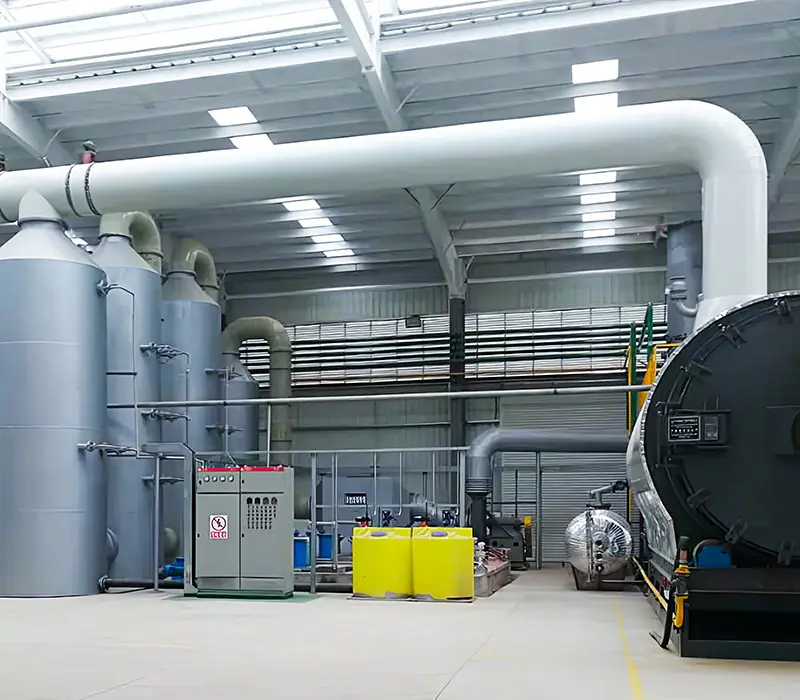
يقوم هذا النظام بمعالجة نفايات الزيوت المتنوعة بكفاءة (بما في ذلك الأجزاء الحساسة حراريًا) من خلال المراحل الجوية والفراغية المتكاملة. على عكس الوحدات الجوية القياسية، فإنه يحقق استردادًا للوقود بنسبة 98% مع استهلاك أقل للطاقة بنسبة 20% من خلال التجزئة بمساعدة التفريغ. يتميز بتصميم معياري مدمج لتوسيع نطاق السعة بشكل مرن (10-50T/يوم)، وتعديل الضغط الآلي، وأنظمة أمان مقاومة للانفجار. تنتج مراحل التكثيف القابلة للتخصيص مخرجات من فئة الديزل (95% نقاء) أثناء التعامل مع مدخلات اللزوجة المتغيرة. CE-معتمد بنسبة 30% أصغر من المحطات الجوية التقليدية. يتم استخدام مرحلة الضغط الجوي لإجراء الفصل الأولي للمكونات الخفيفة، ويتم استخدام مرحلة الفراغ لإجراء تجزئة عميقة فعالة للمكونات الثقيلة عن طريق خفض نقطة الغليان، والاحتفاظ بشكل فعال بالمكونات الحساسة للحرارة، وتجنب التكسير الحراري والكربنة، وضمان جودة الزيت المستقرة. يعمل برج التجزئة المدعوم بالضغط السلبي ونظام التكثيف متعدد المراحل على تحسين كفاءة التقطير وتقليل معدل البقايا، مما يجعل معدل استرداد الوقود أعلى بكثير من المعدات التقليدية. يعمل نظام التفريغ على خفض درجة حرارة التشغيل الإجمالية ويقلل من استهلاك طاقة التدفئة؛ بفضل وحدة التحكم التلقائي في درجة الحرارة والضغط ووحدة استعادة الحرارة، تتمتع الآلة بأكملها باستهلاك طاقة تشغيل أقل.
-
يتخصص النظام في إعادة تدوير نفايات مواد التشحيم (مثل زيت المحرك وزيت التروس) من خلال عملية حرارية تحفيزية منخفضة الحرارة...عرض المزيد
-
مصممة لتكرير زيوت الانحلال الحراري (على سبيل المثال، من الإطارات/البلاستيك)، يستخدم هذا النظام الترقية التحفيزية لتحقيق الاستقرار في...عرض المزيد

تأسست الشركة
تقنية أفضل تصنع منتجات أنظف
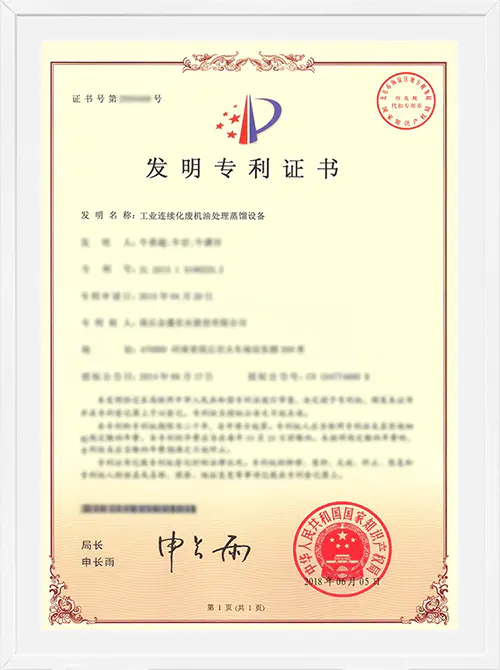
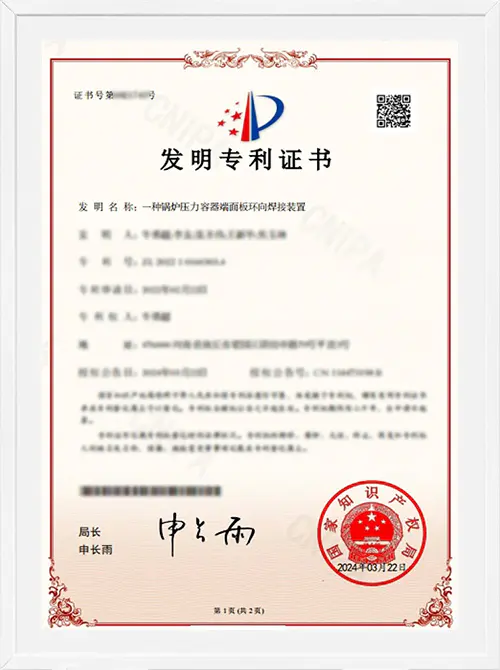
-
2026-07-20"دفعة أم مستمرة - أيهما أفضل؟" هذا هو السؤال الذي نسمعه كثيرًا، والأصعب في الإجابة عليه بشكل مباشر. لأنهما ليسا "جيد مقابل أفضل" - فهما تصميمان مصممان من أجل...استكشف المزيد
-
2026-07-17ما الذي تقوم به آلة صنع الفحم الحيوي فعليًا بتغذية الكتلة الحيوية في أحد الطرفين، والحصول على مادة صلبة مستقرة غنية بالكربون من الطرف الآخر - هذه هي النسخة القصيرة. تقوم آلة صنع الفحم الحيوي بإغلاق المواد الخام داخل غرفة...استكشف المزيد
-
2026-07-07ما هو زيت الانحلال الحراري البلاستيكي في الواقع؟ تسخين نفايات البلاستيك إلى مكان ما بين 300 درجة مئوية و500 درجة مئوية مع عدم وجود أكسجين في المفاعل، و سلاسل البوليمر الطويلة لا تحترق، بل تتفكك. تلك الحرارة الحرارية...استكشف المزيد
-
2026-07-02الدور الحاسم لآلات تمزيق الإطارات في إدارة النفايات تعد آلات تمزيق الإطارات هي الآلات الأساسية في صناعة إعادة تدوير المطاط، حيث تقوم بتحويل النفايات الضخمة غير القابلة للتحلل إلى مواد خام يمكن التحكم فيها...استكشف المزيد
كيف يعمل التقطير بالضغط الفراغي على تحسين جودة الزيت وتقليل التكسير الحراري
معدات التقطير بالضغط الجوي والفراغي أصبح حجر الزاوية في معالجة نفايات الزيوت الحديثة، مما يوفر للصناعات حلولاً تزيد من استخلاص الوقود إلى الحد الأقصى مع الحفاظ على جودة الزيت. على عكس أنظمة الغلاف الجوي التقليدية فقط، تستخدم هذه الوحدات المتقدمة مزيجًا من الفصل الجوي والتجزئة بمساعدة الفراغ، مما يسمح بالتحكم الدقيق في درجة الحرارة وظروف الضغط أثناء التقطير. يضمن هذا النهج ثنائي المرحلة معالجة أجزاء الزيت الحساسة للحرارة دون الخضوع للتكسير الحراري أو الكربنة، مما يحافظ على سلامة وقيمة المنتج النهائي.
المرحلة الجوية في هذه الأنظمة هي المسؤولة عن الفصل الأولي للمكونات الخفيفة، مثل الهيدروكربونات منخفضة الغليان. بمجرد إزالة هذه الأجزاء، تتولى مرحلة الضغط الفراغي، مما يؤدي إلى تجزئة عميقة للمكونات الأثقل في درجات حرارة منخفضة بشكل كبير. من خلال خفض نقطة الغليان، يعمل التقطير بمساعدة الفراغ على تقليل الضغط الحراري على المركبات الحساسة، مما يمنع التدهور ويضمن جودة الزيت المستقرة. تعد هذه الإدارة الدقيقة لدرجة الحرارة أمرًا بالغ الأهمية لإنتاج وقود الديزل بدرجة نقاء عالية، تصل غالبًا إلى 95% أو أعلى، مع الحفاظ على لزوجة ثابتة حتى عند معالجة المواد الأولية المتغيرة.
تعد كفاءة الطاقة ميزة رئيسية أخرى لـ الغلاف الجوي والفراغ معدات التقطير بالضغطتسمح أنظمة التفريغ بدرجات حرارة تشغيل منخفضة والذي بدوره يقلل من متطلبات طاقة التدفئة. غالبًا ما تدمج الوحدات الحديثة التحكم التلقائي في درجة الحرارة والضغط، مدمجًا مع آليات استعادة الحرارة، مواصلة خفض استهلاك الطاقة وتحسين الكفاءة التشغيلية بشكل عام. مقارنة بالنباتات الجوية التقليدية يمكن لهذه الأنظمة تحقيق ما يصل إلى 98% من استرداد الوقود مع استهلاك 20% تقريبًا من الطاقة، يمثل ميزة كبيرة لكل من الربحية الصناعية والاستدامة البيئية.
لقد أحدثت التصميمات المعيارية المدمجة أيضًا تغييرًا في قابلية استخدام وحدات التقطير هذه. يمكن أن تتراوح قدرات المعدات من 10 إلى 50 طن يوميًا، مما يسهل على المشغلين توسيع نطاق العمليات بناءً على متطلبات الإنتاج. تضمن أنظمة التكثيف متعددة المراحل الاسترداد الفعال لجميع الأجزاء القيمة، وتقليل البقايا وتقليل النفايات. تساهم أبراج التجزئة المدعومة بالضغط السلبي في زيادة كفاءة الفصل، مما يوفر بيئة تشغيل أكثر أمانًا واستقرارًا. العديد من هذه الأنظمة CE معتمدة وتتميز بآليات أمان مقاومة للانفجار، مما يدل على التزام قوي بالسلامة الصناعية والامتثال التنظيمي.
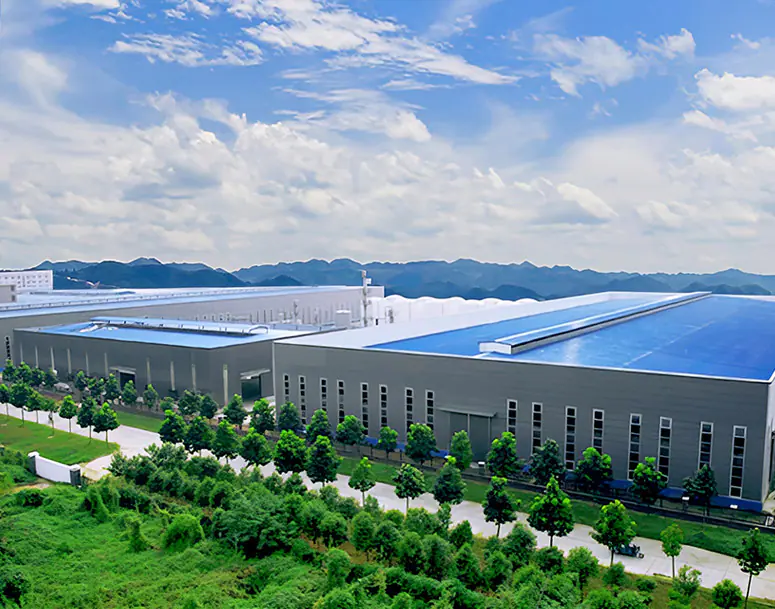
شركات مثل Pyrojin، ومقرها في شانغكيو، الصين، كانت في طليعة تطوير هذه الحلول المبتكرة لمعالجة نفايات الزيوت. بفضل ما يزيد عن عقد من الخبرة في أنظمة حماية البيئة، تستفيد Pyrojin من البحث والتطوير لتقديم المعدات التي تدعم أهداف الاقتصاد الدائري العالمي. تم تصميم كل نظام ليس فقط لاستعادة الوقود عالي النقاء بكفاءة ولكن أيضًا لتقليل استخدام الطاقة وتقليل التأثير البيئي وتزويد المشغلين بحلول مرنة وقابلة للتطوير لمجموعة واسعة من مدخلات نفايات الزيوت.
باختصار، توفر معدات التقطير بالضغط الجوي والفراغي أسلوبًا متميزًا لاستعادة الزيت من خلال الجمع بين التحكم الدقيق في درجة الحرارة والتجزئة بمساعدة الفراغ وتكنولوجيا التكثيف المتقدمة. تمنع هذه الأنظمة التشقق الحراري، وتحمي المكونات الحساسة للحرارة، وتوفر وقود الديزل عالي النقاء، كل ذلك مع تقليل استهلاك الطاقة وتقليل تكاليف التشغيل. مع استمرار الصناعات في إعطاء الأولوية للكفاءة والاستدامة، يظل التقطير بالضغط الفراغي تقنية أساسية لتحقيق هذه الأهداف.
